Follow Us on Google

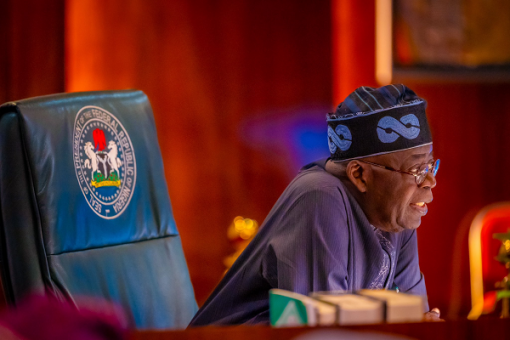
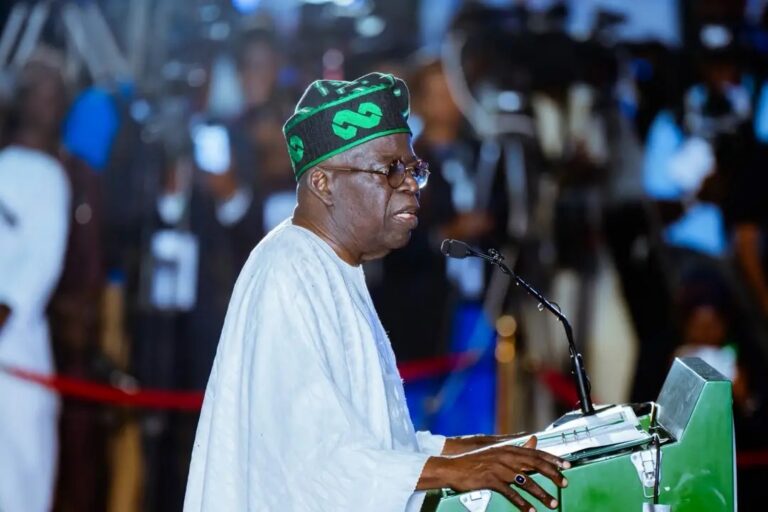
On May 29, 2026, President Bola Tinubu addressed the nation to mark his third anniversary in office. In the national broadcast, he spoke about federal government’s activities in the last 1,095 days, that day, and the achievements recorded. He scored himself high, painting a picture of being the country’s messiah at the time he assumed office, even though he did not say it.
President Tinubu talked about how his courageous removal of fuel subsidy saved Nigeria from economic collapse. He spoke about how the merger of exchange rate windows, for a single regime, caused stability therein. He boasted that his government has made giants strides in transportation, agriculture, education, investment, telecommunication, youth empowerment, etc. He talked about reforms in many sectors, which have set the stage for transformation. He then called on Nigerians for support, charging them: “Let us reject cynicism and division. Let us move forward together, united in purpose, disciplined in effort, compassionate toward one another and confident in the greatness that lies ahead.”
It was well-spoken for the President, although those who have not seen much of the positive impact of the acclaimed achievements in the lives of ordinary Nigerians say that talk is really cheap. However, there was something many Nigerians were eager to hear from the President, which was missing. It is something that is fundamental, something of great importance, something that would not only help the government in planning but also address some myths and assumptions in the country. It is national census.
For nearly two decades, Nigeria has operated without a credible and up-to-date population census. The country is estimated as having about 250 million people, but the question is: Who counted Nigerians to come up with that figure? The fact remains this: Nobody can say for sure the population of Nigeria. Nobody knows the number of Muslims, Christians and people of other faiths in the country. Nobody can say the exact number of Igbo, Hausa, Fulani, Yoruba, Ibibio, Tiv, Efik and all tribes, each, in the country, no matter where they live. Nobody knows the accurate number of men, women, youths, etc. Nobody knows the populations of each geopolitical zone of South East, South-South, South West, North East, North West and North Central. Government officials, development agencies, investors and policymakers continue to rely on estimates, projections and assumptions in planning for a country that has the biggest population in Africa.
It must be said that, in a nation grappling with insecurity, unemployment, housing deficits, poor healthcare and educational challenges, working without accurate census and operating in guesswork are both dangerous and unacceptable. National census is not merely an exercise in counting heads. It is the foundation upon which serious nations build their development strategies. It provides accurate data about who the people are, where they live, what they do, their age distribution, educational status, living conditions, etc. Without such information, planning becomes an exercise in speculation.
It is really strange that Nigeria is operating without an accurate census. The last time the country conducted a national head count was in 2006. That was 20 years ago, during the government of President Olusegun Obasanjo. The exercise recorded a total population of about 140 million. Ever since, plans for another census have failed, with the last postponement done in 2023, which then President Muhammadu Buhari said became necessary because of that year’s general election. Without an accurate census, how can government effectively plan schools, for example, when it does not know the exact number of school-age children? How can healthcare facilities be properly distributed when authorities lack reliable information about population concentrations? How can roads, housing projects, electricity infrastructure and social welfare programmes be designed without knowing the actual needs of the people?
The consequences of operating without credible population data are visible across the country. Schools are overcrowded, with decayed infrastructure. Hospitals are overstretched and patients do not have bed spaces. Urban centres are expanding without adequate infrastructure. Resources are allocated, where they are, based on available statistics, outdated figures and political considerations, rather than current realities. This is why the country is not working. The absence of reliable census data weakens economic planning. Investors seeking opportunities in Nigeria encounter conflicting statistics regarding population size, purchasing power and demographic trends. This discourages them, as nobody is ready to base decisions on assumptions or outdated data.
Beyond economic considerations, a census has important implications for national security. Nigeria faces serious security challenges, ranging from terrorism and banditry to kidnapping and communal conflicts. Effective security planning requires accurate knowledge of population movements, settlement patterns and demographic changes. Security agencies cannot effectively protect what they do not adequately understand. If we take the United Nations’ baseline of one police officer to 450 citizens, with a police population of fewer than 400,000, how would the Nigeria Police plan, in terms of recruitment and deployment, without knowing the population of the country and the distribution? Without such figures, it is tantamount to planning blind.
Other News
There is also the issue of representation and resource allocation. Population figures influence constituency delineation, revenue sharing and political representation. When these figures are outdated or disputed, tensions and suspicions naturally arise among different regions and groups. Kano State, for instance, has 44 local government areas, owing to its alleged large population. Lagos, on the other hand, with almost equal population, more or less, has only 20 local government areas. Any argument as to the fairness of this disparity would be a matter of conjecture because there are no accurate and up-to-date population figures of Kano and Lagos. A transparent and credible census can help address this disparity and strengthen national cohesion.
Among Nigeria’s three largest ethnic groups – the Hausa-Fulani, Yoruba and Igbo – there is no consensus on their exact numbers. Different groups and commentators frequently cite varying figures to support political, economic or regional arguments. In the North, some maintain that the Hausa-Fulani population is significantly larger than that of any other ethnic group, citing the region’s vast landmass and high birth rates. In the South West, many argue that the Yoruba population has been historically underestimated due to migration patterns and urbanisation. Among the Igbo, there are longstanding complaints that previous population figures did not accurately reflect their numerical strength, with the argument that the Igbo live in all parts of the country in large numbers.
These claims and counterclaims would persist, regarding which ethnic group is the largest, whether the Hausa-Fulani outnumber the Yoruba and Igbo combined, and whether Muslims constitute a majority over Christians or vice versa. Because Nigeria has not conducted a universally accepted census in recent times, these debates are often fuelled by speculation, politics and sectional interests rather than verifiable data. A new census exercise would address this.
One recalls that one-time chairman of the National Population Commission (NPC), Mr. Eze Festus Odimegwu, indicated that tribe and religion, among others, would be part of the then proposed exercise and this was opposed by a section of the country, which eventually led to his resignation. The question is: Why would they oppose inclusion of tribe and religion in census, if they have nothing to hide? Every claim and belief should be verified and ascertained, so that the status of every component of Nigeria would be known. The tribes of Nigeria should be counted and recorded, no matter where they live. If, for instance, we have 25 million people living in Kano State, how many of them are Hausa? How many are Fulani? How many are Yoruba? How many are Igbo?
The time has come when we should stop living a lie. The controversy surrounding the population of major ethnic and religious groups in Nigeria is one of the strongest arguments for conducting a credible, transparent and technology-driven census. Until that happens, debates over the populations of Hausa-Fulani, Yoruba, Igbo, etc, will likely remain guesses rather than established reality. Equally contentious is the question of whether Nigeria is predominantly Muslim or Christian.
Some critics may argue that conducting a census is too expensive, given Nigeria’s economic challenges. Such arguments are untenable. As they say, whoever says education is expensive should try illiteracy. The cost of ignorance is far greater than the cost of information. Billions of naira are wasted annually on poorly targeted policies and programmes because planners lack accurate demographic data. A credible census should, therefore, be viewed not as an expense but as a necessary investment.
In census matters, one must admit that there are fears that political and ethnic interests may attempt to manipulate the process. This concern is legitimate, given Nigeria’s history. However, modern technology has significantly reduced opportunities for manipulation. Countries now use properly deployed digital mapping, biometric verification, satellite imagery and electronic data collection, in addition to physical counting, to guarantee transparency and credibility.
One of the legacies President Tinubu would leave for Nigeria is the conduct of a census. He should exercise the required political will to do this before the expiration of his tenure next year or in his second term, if he is so re-elected. The President must demonstrate the courage to conduct a census that is transparent, professional and insulated from political interference. The media, traditional rulers, religious leaders and civil society organisations must play active roles in mobilising public participation and monitoring the process. Where the baton changes at the federal level, after the 2027 elections, whoever would be President of Nigeria must also make the conduct of census a priority.
No nation can successfully plan its future while remaining uncertain about its present realities. Nigeria’s quest for economic growth, national security, social development, peaceful coexistence, mutual respect among the ethnic groups and democratic consolidation depends largely on the availability of accurate population data. The time for postponement and excuses has passed. Nigeria has to conduct a credible census as a matter of urgent national priority. A credible census may not eliminate all political disputes but it would provide a factual foundation for national discourse. In a country as diverse as Nigeria, facts are often the best antidote to suspicion.
It must be said that a country that does not know its numbers cannot truly know itself. A nation that does not know itself cannot effectively plan for greatness. The time to conduct another census is now. Census is as important to the country as conducting elections, evolving policies and recording diplomatic feats.