Follow Us on Google
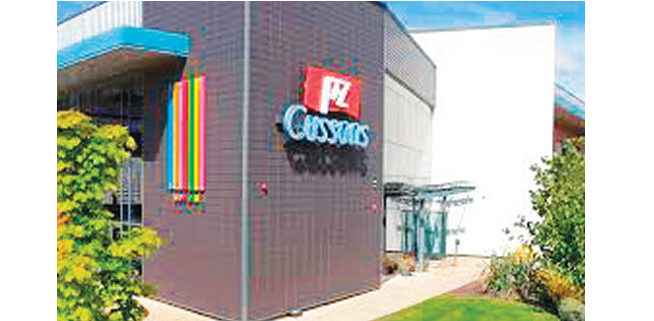
No fewer than seven multinational companies have either left or announced plans to leave Nigeria in the past few months. This has led to a drastic reduction in their involvement in the Nigerian equities market, and threatens the government’s target of a $1trillion economy in 2026, and $3trillion in the next ten years. Some of the multinational firms that had left, and those planning to leave early next year include GlaxoSmithkine Plc, Sanofi Aventi, Unilever Nigeria Plc, PZ Cussons, Proctor & Gamble (P&G), Equinox Energies, among others. A total of 200,000 jobs are expected to be lost on account of their exit from Nigeria. This trend is worrisome for the economy, which the government wants to rejig with foreign investments.
For instance, in March, Unilever, which was founded in 1923, announced plans to shut down its plants across the country. In August, GSK Plc, the second biggest pharmaceutical company said it would end its business operations after 51 years of doing business in Nigeria. A statement by its management said henceforth, its prescription medicines and vaccines in the country will be sold through a third-party distributorship. Soon after, Sanofi-Aventi, a French pharmaceutical company announced its exit with effect from February 2024. Like GSK, it said it would appoint a third-party distributor to solely handle all its commercial portfolio of medicines. In September, PZ Cussons, another consumer products manufacturer, announced plans to delist from Nigerian Stock Exchange (NSE). In October, Guinness Nigeria Plc said it will stop the importation and distribution of certain Diageo premium spirits that had over the decades been top of the range of its global brands. This indicates a drastic scale-down of its operations in Nigeria. These companies claimed that Nigeria’s business environment was no longer friendly for their business operations to thrive. Also, Equinox, a Norwegian energy company in Nigeria has, after three decades in the country, announced its divestment in Nigeria and sold its shares to Chappel Energies, a Nigerian-owned company. Until now, Equinox held a 53.85 per cent stake in the Oil Mining Lease (OML)128 , and 20.21 per cent stake in the Agbemi oil field, operated by Chevron.
Most recently, Proctor & Gamble (P&G) followed suit, and announced its decision to leave Nigeria. Chief Financial Officer of the company, Andre Schulten, said at a conference in New York, that doing business in Nigeria has become very difficult to create value, citing the volatility in the foreign exchange market as one of the key reasons for the decision to leave Nigeria. Before now, both local and multinational companies in Nigeria have consistently complained about lack of ease of doing business in the country. These include power supply crisis, drastic depreciation of the naira, forex scarcity, insecurity, and other ‘unfriendly’ economic policies of government. The exit of the multinational companies coming at a time President Tinubu has been wooing foreign investors to invest in the economy is disturbing. There is no doubt that the exit of these multinational companies will hurt Nigeria’s economy, especially at a time that it is in dire need of huge foreign investors for economic recovery and growth. The exit of GSK and Sanofi-Aventi, for example, has resulted in rising price of drugs. The price of some drugs has since increased by over 400 per cent. There have been reported cases of fake and unbranded drugs in the market, capable of endangering the lives of patients.
The exit of the multinational companies could further reduce direct foreign inflows, particularly at this time when foreign investment inflows in Nigeria are very low. According to data from the National Bureau of Statistics (NBS), investors’ inflows declined by 33 per cent to $1.03billion in the second quarter, 2023, from $1.54billion recorded in the same period in 2022. The Tinubu administration must do something urgently to check the exit of more foreign companies. A recent report by the United Nations Conference on Trade and Development (UNCTAD) revealed that Foreign Direct Investment to Nigeria turned negative (-$187 million) in 2022 for the first time in 33 years.
It points to the fact that the administration will find it very difficult to achieve its target of $1trillion economy in the next three years. It will also be hard to achieve the much-needed inclusive, sustainable and competitive growth when foreign investors are leaving the country in droves. The economy cannot grow at the projected $1trillion without a strong manufacturing sector base. Statistics show that P&G invested about $300 million in a new factory in Nigeria, and within a year, it was reportedly shut as a result of harsh economic environment, occasioned by rising inflationary pressures and cost of raw materials due to scarcity of forex.
To make matters even worse, two successive recessions in Nigeria between 2016 and 2017 affected the ability of the economy to grow less than $500billion. According to the World Bank report, the last time the economy grew above $500billion mark was in 2014, when the Gross Domestic Product (GDP) was $574.2billion. In 2022, the economy grew $440.8billion, and projected to end 2023 at $477.38billion. Nigeria is currently ranked 31 of the major economies in the world, outside the five fastest growing economies in Africa.
To overcome the challenges that led to the exit of the multinational companies, the government needs to address the lingering forex shortages, power supply crisis, port congestion, multiple taxation and insecurity. The Nigeria Employer’s Consultative Association(NECA) and the Manufacturers Association of Nigeria (MAN) have warned that exit of more multinational companies is imminent in the months ahead with more job losses in a country that already has a conservative unemployment rate of over 35 per cent.
Already, the growth rate of the manufacturing sector in the Q3’23 was 0.48 per cent. It is lower than the preceding quarter by 2.39 percentage points, and 1.72 percentage points in 2022. Failure to immediately address the causes of the exit of the multinational firms will further weaken the productivity capacity of our economy. Today, businesses are grappling with higher operating costs since the removal of subsidy on petrol. Exchange rate has increased at both the official window and the parallel market. The high cost of FX has pushed inflation rate in November to 28.2 per cent. We urge the government to initiate reforms that will rekindle foreign investors’ interest in Nigeria.