Follow Us on Google
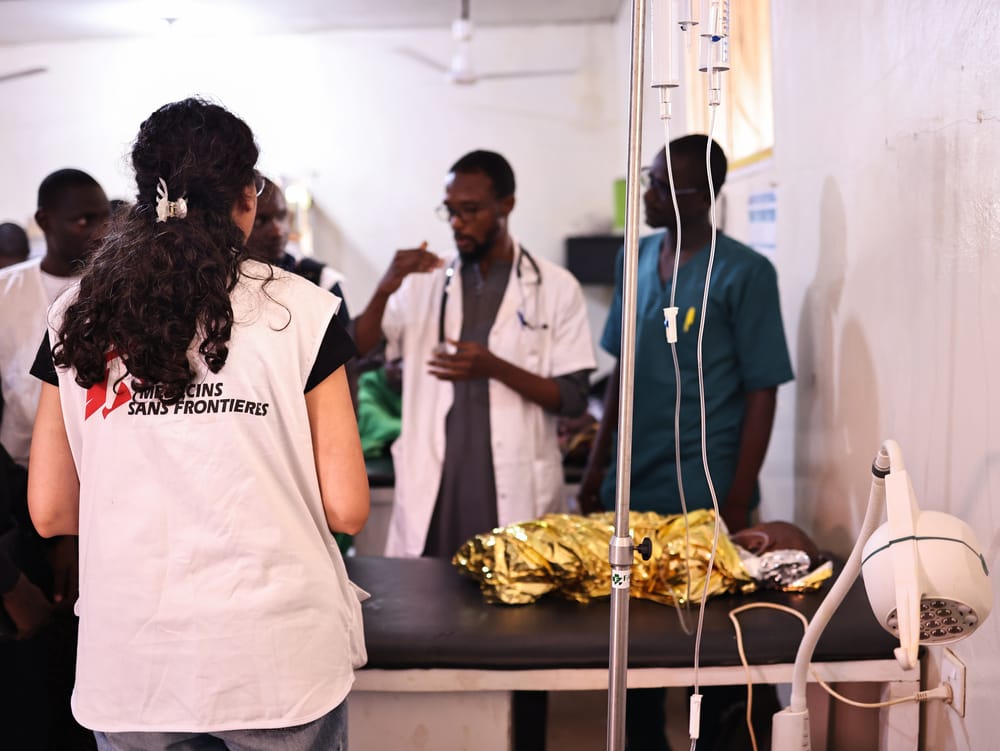
Nigeria is sitting on a ticking humanitarian time bomb. The latest report by Médecins Sans Frontières (MSF) should jolt the nation into urgent action. According to the organisation’s 2025 Country Activity Report, Nigeria recorded the highest burden of child malnutrition among the 77 countries where MSF operates. More than 440,000 Nigerian children were treated for malnutrition in 2025 alone, the highest admission figure the organisation has recorded in recent years.
The statistics are horrifying, but behind every number is a child condemned to hunger, weakness, disease and, too often, death. MSF Country Representative in Nigeria, Ahmed Aldikhari, captured the tragedy succinctly when he declared: “The 2025 data tells a harrowing story.” Indeed, it does.
What is perhaps most painful is that this catastrophe is unfolding in a country blessed with enormous agricultural potential. Nigeria possesses vast arable land, favourable weather across many regions and millions of energetic young people who could transform agriculture into a national strength. Yet millions of children cannot access basic nutrition. This contradiction is both shameful and dangerous.
A malnourished child does not merely suffer temporary hunger. Malnutrition permanently damages cognitive development, weakens immunity, reduces educational attainment and diminishes productivity later in life. A nation that allows widespread child malnutrition is effectively sabotaging its own future workforce. The consequences are profound: lower economic productivity, rising healthcare costs, increased poverty and a generation unable to compete effectively in a rapidly changing global economy.
The MSF report also highlighted the vicious cycle between malnutrition and disease. Children weakened by poor nutrition become more vulnerable to malaria, measles, diphtheria and other preventable illnesses. Nigeria already carries one of the world’s heaviest burdens of preventable child diseases. Allowing malnutrition to worsen will deepen this national shame.
Sadly, government priorities do not reflect the gravity of the crisis. The allocation of about ₦2.1 trillion to health in the 2026 budget — roughly 3.6 per cent of total expenditure — and approximately ₦1.4 trillion to agriculture, about 2.4 per cent, is grossly inadequate for sectors that are central to national survival. These are not ordinary sectors. Health and agriculture determine whether children live or die, whether families thrive or sink deeper into despair.
The inadequate funding exposes a disturbing lack of urgency about feeding and nourishing Nigeria’s young population. A serious government confronting a nutrition emergency would place agriculture, healthcare and food security at the centre of national planning.
Other News
Primary healthcare centres across the country remain in deplorable condition. Many lack medicines, equipment, electricity and qualified personnel. Health workers are poorly paid and overstretched, prompting many professionals to flee abroad in search of dignity and better opportunities. Yet primary healthcare facilities are the first line of defence against malnutrition and childhood disease. Nigeria urgently requires massive investment in these centres, alongside improved remuneration and welfare for health workers.
Food insecurity is another major driver of the crisis. Terrorism, banditry and violent attacks on farming communities continue to cripple agricultural production, particularly in the Middle Belt. Benue State, once proudly regarded as the nation’s food basket, has become a killing field where many farmers are too afraid to cultivate their land. Thousands have been displaced from fertile farmlands by criminal violence.
No country can achieve food security while farmers are running for their lives. The Nigerian government must reclaim rural communities from terrorists and armed gangs. Farmers must return safely to their farms. Security is no longer merely a defence issue; it is now directly linked to food availability and child survival.
Nigeria must also abandon outdated agricultural practices and embrace mechanised farming on a large scale. Smallholder farmers need access to tractors, irrigation systems, improved seedlings, fertilisers, storage facilities and rural roads. States relatively free from insecurity should be transformed into major food production hubs capable of feeding the nation and supplying agro-industrial value chains.
The tragedy is that other nations have demonstrated that child malnutrition can be drastically reduced through deliberate policies. Countries such as Finland, Norway and Japan consistently rank among nations with the lowest child malnutrition rates because they invest heavily in maternal healthcare, school feeding programmes, universal healthcare access and strong social welfare systems. They prioritise child nutrition as a national development strategy, not charity. Their governments understand that healthy children are national assets. Nigeria must learn from such examples. Hunger should never become normal in a country so richly endowed with human and natural resources.
This crisis demands emergency-level intervention. Federal and state governments must immediately scale up nutrition programmes, strengthen immunisation campaigns, improve maternal healthcare and expand school feeding initiatives. International partners can assist, but the primary responsibility rests squarely on Nigerian authorities.
No nation can claim progress when its youngest citizens are malnourished, stunted and condemned to a future of diminished potential. The alarm has been sounded loudly by MSF. Let Nigerian leaders frontally address the scourge.