Follow Us on Google

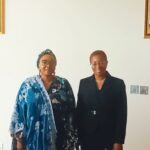
Recently, Nigeria’s First Lady, Mrs. Aisha Buhari, and the Minister of Labour and Employment, Senator Chris Ngige, deplored the rising cases of child labour in the country. The duo, who spoke at the commemoration of the National Children’s Conference held at State House, Abuja, said that in spite of measures put in place to address the menace, it remained a major threat to the achievement of the United Nations (UN) Sustainable Development Goals (SDGs).
Generally, child labour is regarded as the exploitation of children through any form of work that deprives them of their childhood, interferes with their ability to attend regular school. It can also be harmful to their physical and mental development. Globally, about 218 million children between five and 17 years are said to be in employment. About one in four children in the world’s poorest countries are engaged in work that is potentially harmful to their health. Among 152 million children in child labour, 88 million are boys, while 64 million are girls. In Africa, one in five children works in child labour.
The situation in Nigeria is scary. The country is among developing nations where child labour is still pervasive. The practice cuts across the 36 states of the federation. According to International Labour Organisation (ILO), Nigeria has about 15 million child workers as at 2020. At a staggering 43 per cent of the total population of minors, it is said to be the highest recorded rate of child labour in West Africa. The UN had predicted that the absence of mitigating strategies could see an increase in the number of children engaged in child labour by the end of 2022.
The United Nations children’s Fund (UNICEF) stated that about 3,500 children enlisted as child soldiers in Nigeria between 2013 and 2017. At present, Nigeria is grappling with how to bring to the classroom the over 20 million children said to be outside the school system. Many of these children are from the northern parts of the country.
Despite the signing of the Child Rights Act in 2003, the government has done little or nothing to enforce the provisions of the Act. Nigerian children are exposed to unskilled and labour-intensive tasks. They include being engaged in cocoa farming, gold mining, sediment sifting, street peddling and domestic servitude. With rising poverty, it is likely that many children will take to child labour in the absence of schooling. Some of the children are trafficked and exposed to modern slavery. Others, especially girls, are sexually abused. Children from poor families are exposed to child labour as parents need their assistance in household chores as well as taking care of their younger siblings. Insecurity has also exacerbated the child labour menace as many families are displaced by insurgency and food insecurity.
We decry the increasing cases of child labour in the country and urge the government to respect all international agreements against the menace. It is unconscionable that children should be exposed to early employment. Their involvement in child labour will undermine their development and the future of the country. At the same time, we enjoin companies to employ only adults, while consumers should boycott products of companies that engage child labour.
Let those involved in child labour desist from the practice. It is against ILO protocols and international conventions on the rights of the child. We call on the government to rise up to its responsibility in protecting children from being enslaved by child employers. There is need for adequate enlightenment and awareness campaign on the menace. Let community and religious leaders be carried along in the campaign. The government must enforce the relevant provisions of the Convention on the Rights of the Child (CRC) and the Child’s Right Act (CRA). The law forbids engagement of children below 18 in commercial activities.
Although many of the states have adopted the Child Rights Act, their attempt to implement it has been feeble. That can possibly explain the rising cases of child labour in the country. Therefore, we call on the states that are yet to domesticate the Act, to do so without delay. Since child labour is unacceptable, all stakeholders must work in concert to eliminate the scourge. No Nigerian child should be allowed to roam the streets when they are supposed to be in schools. Therefore, the government should reduce the high level of poverty in the country to enable parents educate their children.