Follow Us on Google
• Takes innovation drive to 45 tertiary institutions
From Fred Ezeh, Abuja
The Tertiary Education Trust Fund (TETFund) is stepping up its drive to turn academic research into economic wealth, with the establishment of Innovation Hubs in 45 beneficiary tertiary institutions across Nigeria, in a strategic push to accelerate the development and commercialisation of home-grown technologies.
Through its Research for Impact (R4i) Initiative, the Fund is equipping academics with practical innovation skills, technical expertise and mentorship to transform research ideas into marketable products, viable enterprises and solutions to pressing societal challenges. The intervention thus underscores TETFund’s growing emphasis on making research a driver of technological advancement, enterprise creation and sustainable national development.
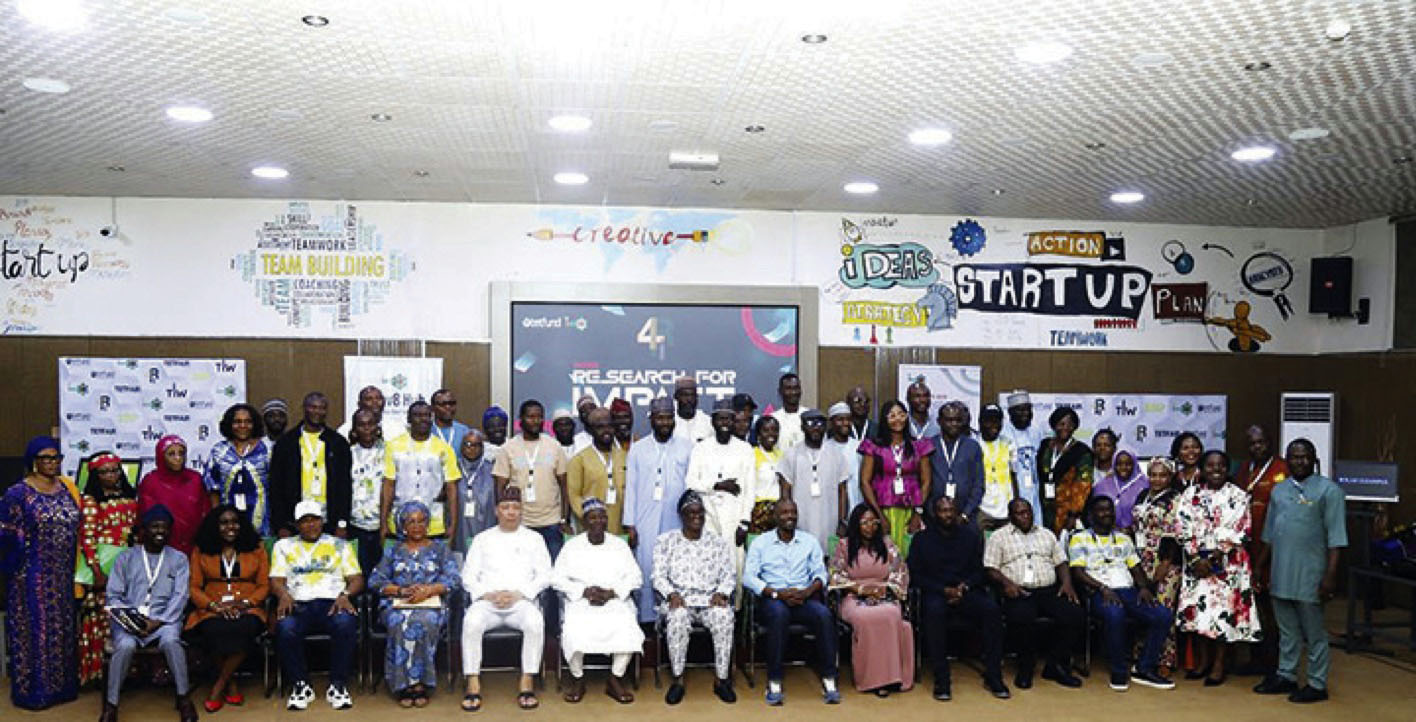
The initiative was highlighted on October 9, at the closing ceremony of Cohort 34 of the R4i programme, held at Innov8 Technology Hub, Abuja. The programme brought together researchers and academics from TETFund beneficiary institutions for intensive training designed to bridge the gap between academic knowledge and practical innovation.
Speaking at the ceremony, TETFund Executive Secretary, Arc. (Dr) Sonny S. T. Echono, represented by the Director of Monitoring and Evaluation, Arc. Babatunde Olajide, said the initiative was part of the Fund’s broader commitment to ensuring that research produces tangible benefits for society.
He said rhe R4i programme, implemented in partnership with Innov8 Technology Hub, seeks to build the capacity of academics to develop research outputs that address real-world problems, respond to market needs and offer opportunities for commercialisation.
From academic knowledge to practical solutions
It was noted that for years, research conducted in tertiary institutions has often remained within academic publications, conference presentations and institutional laboratories, with limited translation into products and services that directly improve lives or create economic opportunities.
TETFund’s R4i Initiative was, therefore, designed to address this gap by exposing academics to the processes required to move from identifying a problem and developing a research idea to designing, testing and refining a practical solution.
The programme places emphasis on innovation, problem-solving, interdisciplinary collaboration and the commercial potential of research. Rather than treating research as an end in itself, participants are encouraged to consider how their findings can be developed into products, services, technologies and enterprises.
Through the partnership with Innov8, participants are exposed to practical training, access to modern innovation facilities and guidance from experts with experience in developing and advancing innovative ideas.
The two-week intensive programme provides an environment in which researchers can test assumptions, refine concepts and learn how to approach the development of solutions beyond the conventional academic setting.
The objective was to strengthen the capacity of Nigerian tertiary institutions to generate research that responds to the needs of communities, industries and the wider economy.
For TETFund, this represents a shift towards a research culture in which academic excellence is complemented by practical relevance, with the potential for innovations to contribute to productivity, job creation and national development.
Innovation hubs in 45 institutions
A major component of the intervention is TETFund’s funding for the establishment of Innovation Hubs in 45 beneficiary institutions spread across the six geopolitical zones of the country.
The hubs are intended to provide spaces and facilities where academics can develop, test and improve research-based solutions, while encouraging collaboration between researchers from different disciplines.
The investment is also expected to strengthen the innovation infrastructure available within tertiary institutions, giving researchers more opportunities to translate ideas into prototypes and, ultimately, commercially viable products.
The spread of the hubs across the six geopolitical zones reflects the Fund’s effort to extend innovation capacity beyond a limited number of institutions and create a broader foundation for research-led development.
By supporting infrastructure alongside capacity building, TETFund is addressing two related needs: equipping academics with the skills to develop innovations and providing institutional environments in which those skills can be applied.
The hubs are expected to support a more practical approach to research, where ideas can be developed collaboratively and evaluated for their potential usefulness to society and the market.
Their success, however, will depend not only on the facilities established but also on how consistently institutions use them to nurture research teams, support experimentation and pursue the development of promising ideas.
More researchers, stronger collaboration
TETFund has also expanded participation in the R4i programme by increasing the number of participants selected from each participating institution from one to four.
The change is intended to encourage teamwork and bring together academics with complementary scientific and technical backgrounds. By involving researchers from different disciplines, the programme seeks to improve the quality of ideas generated and strengthen the capacity of teams to address complex problems.
It noted that innovation frequently requires knowledge that cuts across conventional academic boundaries. “A researcher may understand the scientific basis of a problem, while colleagues from other disciplines may contribute expertise in engineering, design, technology, business development or other areas needed to turn an idea into a workable solution.”
Hence, the expanded participation model is therefore designed to help institutions build teams rather than rely on individual researchers working in isolation.
It also provides an opportunity for participants to share knowledge with colleagues after completing the programme, and to encourage younger academics to embrace practical, impact-driven research.
Through this approach, the R4i Initiative seeks to embed innovation practices within participating institutions, rather than confining the benefits of training to those who attend a particular cohort.
The wider ambition is to develop a sustainable culture in which researchers collaborate, learn from one another and assess their work in terms of both academic merit and its potential to address societal needs.
Prototypes and push for commercialisation
Olajide said previous cohorts of the R4i programme had recorded encouraging progress, including the development of prototypes, some of which were reportedly patented.
He described the feedback received from participants and the progress made by earlier cohorts as positive signs that the programme was helping academics move beyond theoretical research towards practical application.
He said the development of prototypes is an important stage in the innovation process because it enables researchers to demonstrate how an idea could work in practice. “Patenting, where applicable, can also help protect intellectual property and provide a basis for further development.
“However, turning a prototype into a commercially successful product often requires additional work, including testing, refinement, investment, production planning, market assessment and engagement with potential users or industry partners.”
Olajide urged participants to sustain the momentum gained during the training and continue developing their ideas beyond the programme.
His message highlighted a central challenge for research-based innovation: training and prototype development are important milestones, but their broader economic value depends on whether promising ideas can progress towards practical use and commercialisation.
For the participating academics, the next stage will involve applying the knowledge acquired, strengthening their research teams and identifying viable pathways through which their innovations can reach intended beneficiaries.
TETFund’s wider investment in Innovation Hubs is expected to provide an institutional foundation for this work, although sustained commitment from the institutions and researchers will remain essential.
TURNING IDEAS INTO ACTION
Ssimilarly, Deji Ige, Deputy General Manager of Innov8 Technology Hub, commended TETFund for investing in the capacity of Nigerian researchers and supporting efforts to make academic research more responsive to societal needs.
He described the R4i Initiative as a “lamp unto the path” for academics seeking to translate ideas into innovation, practical solutions and action.
Ige encouraged participants to approach innovation with determination and an openness to experimentation. He cautioned against allowing the fear of failure to prevent them from testing ideas, learning from setbacks and improving their work.
The process of developing new solutions, he noted, requires persistence and a willingness to refine concepts as researchers discover what works and what needs to change.
His remarks reinforced the practical orientation of the programme, which exposes participants to approaches that differ from research activities focused primarily on producing academic papers.
He said the partnership between TETFund and Innov8 is intended to combine the Fund’s investment in tertiary education and research capacity with Innov8’s innovation facilities, practical training and technical expertise.
Edward Singhatey, Director of Innov8, also reaffirmed the organisation’s commitment to the partnership, pledging continued support for relevant programme content and the use of cutting-edge technology to strengthen participants’ learning experience.
The commitment, he said, reflects the importance of equipping researchers with skills and tools that can help them respond to changing technological demands and develop solutions with practical value.
SUSTAINING THE DRIVE FOR RESEARCH IMPACT
The R4i Initiative reflects TETFund’s broader effort to make research an instrument for solving problems and creating value beyond the boundaries of tertiary institutions.
Its combination of intensive training, interdisciplinary teamwork and investment in Innovation Hubs provides a framework for strengthening the relationship between academic research, technological development and enterprise creation.
The expansion to 45 institutions offers an opportunity to build innovation capacity across the country, while the increase in participants per institution is designed to encourage collaboration and knowledge-sharing.
The progress reported from previous cohorts, including prototypes and some patents, provides an encouraging indication of what researchers can achieve when they receive practical guidance and opportunities to develop their ideas.
Yet, the ultimate measure of success will be the extent to which these efforts produce solutions that are adopted, products that reach the market, enterprises that become sustainable and technologies that improve lives.
For the researchers completing Cohort 34, the training marks the beginning of that process rather than its conclusion. Their challenge is to turn the skills and ideas acquired into sustained research and development, working with their institutions and potential partners to advance promising innovations.
As TETFund expands its innovation drive, the expectation is that tertiary institutions will increasingly become not only centres of teaching and scholarship but also sources of practical solutions, technological advancement and economic opportunity.
The Fund’s ambition is clear: to help ensure that research conducted in Nigerian institutions does not end on library shelves but contributes more directly to wealth creation, national development and the resolution of pressing societal challenges.