Follow Us on Google
By Chinenye Anuforo,[email protected]
Nigerians may soon experience worse phone services as telecom companies cut back on spending due to record losses fuelled by tumbling naira, raging inflation and generally suffocating operating environment.
Daily Sun learnt that the telcos; MTN, Airtel, and others, in a strategic effort to stay afloat, are hitting the brakes on capital expenditure, which means less money would be available for network upgrades and expansion.
This slowdown resonates harshly with subscribers, who are already frustrated by worsening telephone services accentuated by incessant call drops and slow internet.
While the federal government nurses ambitious plans to expand broadband access, stakeholders are worried that the lofty goal may be at risk.
Industry watchers note that the mobile industry is not as profitable as it used to be, no thanks local and global economic volatilities.
Top on telcos’ worry list is naira’s sharp decline against the dollar which has eaten into telcos’ earnings, just as rising inflation makes it more expensive to maintain and expand networks. As a result, both MTN and Airtel reported significant losses in 2023.
Cutting back on investments
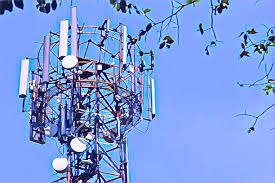
To save money, telcos are spending less on infrastructure. MTN, for example, plans to reduce capital expenditure for 2024 and rely more on existing infrastructure. This means there will be less investment in new cell towers, fiber optic cables, and other network improvements.
This spending slowdown is likely to worsen network quality in the short term. With less investment, call drops and slow internet speeds could become even more common. This, in turn, could lead to customer frustration and churn (loss of subscribers).
Government intervention
Industry players are calling for government’s intervention. Telcos on their part are seeking government’s nod to raise tariffs for the first time in a decade. They argued that a price hike is necessary to keep the industry sustainable and attract new investments.
The government, however, is hesitant to raise prices for consumers already facing economic hardship.
The GSMA, a global industry body, suggests other solutions. They recommend removing price controls, allowing for periodic tariff reviews, or setting a competitive price band for telcos.
Angela Wamola, head of Sub-Saharan Africa at the GSMA, said: “High-speed connectivity is the bedrock of any digital nation. Future policies should be geared towards reducing the cost and complexity of infrastructure rollout to encourage investment and boost the adoption of mobile broadband.”
In his remarks at the GSMA event, Karl Toriola, MTN Nigeria’s chief executive officer, noted that the telecom sector was faced with numerous challenges, including insecurity, high operation costs, and taxation.
He said: “The return In the telecommunication sector is poor, and there are no dividends for investors, but on the contrary, other sectors are declaring bumper profit, we are continuously investing massive amounts on infrastructure.”
“The industry is not sustainable, we need a tariff hike, other sectors are increasing theirs, we are the only ones restricted and it is placing us in a very difficult space,” Toriola said.
Gbenga Adebayo, Chairman of the Association of Licensed Telecom Operators of Nigeria, noted, “The industry can only be sustained if we have a continuous flow of investments. As we speak, people are cautious to invest because of the many challenges that we have had from currency devaluation to high cost of business.”
Adebayo, argued that a price review should be a simple regulatory process and that the government should not use the sector as a palliative to solve people’s problems. “We must price right to sustain the industry; we must price right to have the right investment,” he said.
However, Bosun Tijani, minister of communication, innovation and digital economy, argued that rising tariff prices is not the singular solution to mobile operators’ problems.
The bottom line is that Nigeria faces a tough choice: allow network quality to decline or raise prices for consumers. Finding a solution that balances the needs of both telcos and Nigerians will be crucial for the country’s digital development.