Follow Us on Google
From George Onyejiuwa, Owerri
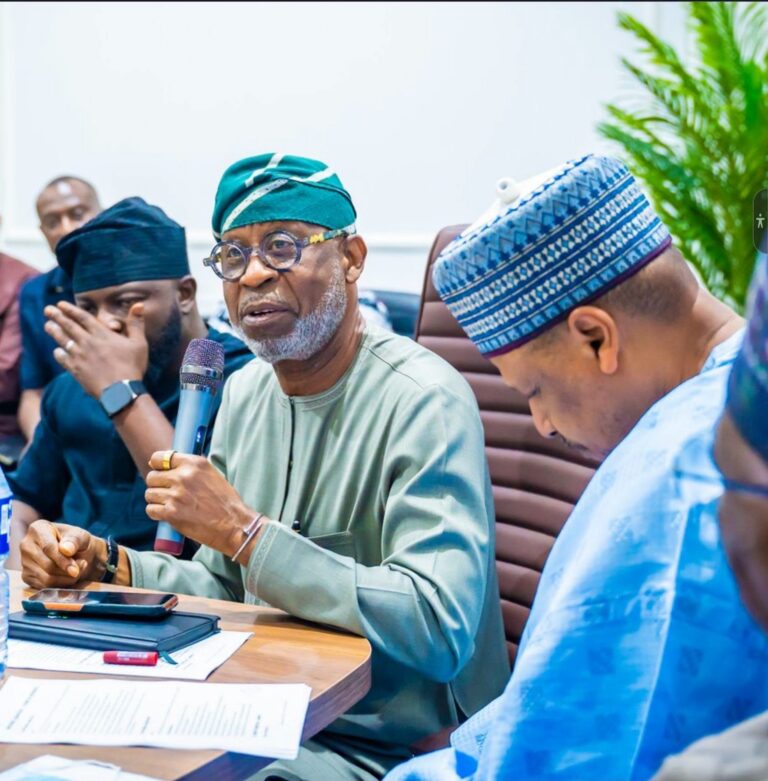
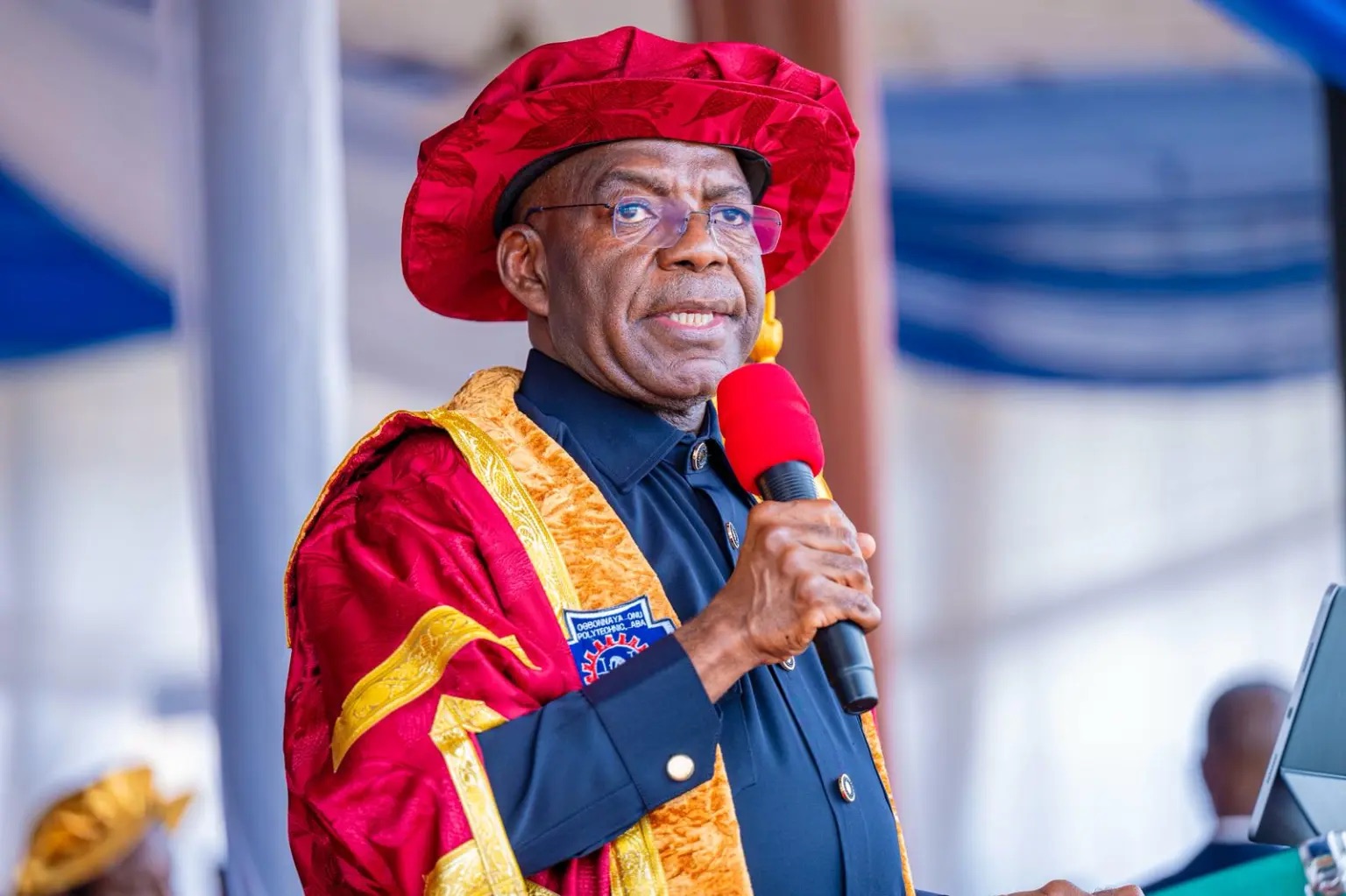
Abia State Governor, Dr Alex Otti, has disclosed that his government’s deliberate policy of using taxation as an important instrument of development has astronomically increased the internally generated revenue of the state to about N100 billion in the current fiscal year, as against the N20 billion before he assumed office in 2023.
He said the target of his administration was to build the state’s internally generated revenue (IGR) profile to the level, where all recurrent expenditures would be taken care of from its internally generated revenue, while external revenue would be deployed solely for physical infrastructure development.
Dr Otti stated this when he delivered the 37th convocation lecture of the Federal University of Technology, Owerri, Imo State, titled, “Beyond Oil: Exploring Alternative Revenue Potentials for Economic Growth and sustainable Development in Nigeria.”
He pointed out that deploying taxation as an instruments of development, investments in the solid minerals and the agricultural sector holds the key for alternative revenue for sustainable development and economic growth.
However, the Abia governor noted that Nigeria’s excessive reliance on oil revenue had practically weakened any commitment to fixing the tax system he said could significantly change the trajectory of the nation’s economy for sustainable development.
He said this scenario had led to instances of abuses by political actors and their agents masquerading as tax consultants, who used crude tactics and intimidation to compel individuals and businesses to pay arbitrary fees in name of revenue drive.
Other News
“We hardly pay attention to these anomalies because those who should care have found a safe heaven in Abuja, where we run to at the end of every month to share money raised mostly from the sale of crude oil.
He postulated that the demand for taxes should be matched by a certain understanding that the resources pooled, therefrom, should be applied to causes that support the legitimate economic activities of the taxpayers and when that is done, individuals and business owners will be willing to pay their taxes voluntarily.
“This philosophy informed my long-held position that taxes are the government’s share of the prosperity they helped in creating. Today, even as the governor of our Abia, my thought on the matter has not shifted; taxes must be conceived and administered as instruments of development, not extortion. The first thing we need to change regarding taxation in the country is the way we understand the subject and ultimately, our response to it.
“Among the earliest decisions we took was to suspend revenue collection from informal sector businesses for about six months. We also refused to be very strict with enforcement on the few tax items we were collecting from those in the formal sector. While everyone was enjoying their tax holiday, we were busy at work, fixing roads, clearing decades-old filth from the streets, investing in security and offsetting salaries and pension arrears. We also used the time to streamline the tax system, cut out multiple tax items by harmonising collection protocols with the local governments and the transport unions to reduce instances of double payment.
“Going a step further, we set up a robust IT system to enhance efficiency and activate the remote payment solution, so that individuals and businesses can pay from anywhere and at any time of the day or night. By the time we opened things up, compliance level rose significantly from what we had in previous years and expectedly, collections also jumped to new levels. Till date, there is no room for thugs in our tax collection ecosystem. In what appears to be a confirmation of the superiority of our approach, Abia was recently ranked among the states with the best record of fiscal performance in the country for the first time ever. Using technology, a team of competent professionals and a transparent accounting and reporting system, we have pulled Abia out of the zone of perpetual underperformance on tax matters to a good place even though there is still room for significant improvement. It is also important to add that we were able to boost tax receipt in Abia without any drastic changes in the rates collected. It did not come easy but I am glad to say that we have achieved, so far, pushing our internally generated revenue profile from the region of N20 billion per annum pre-2023 to nearly N100 billion this fiscal year, attest to the validity of my theory that taxes represent government’s share of the prosperity that it helped to create.
“I have told the story elsewhere, but it bears repeating here that on several occasions, we have experienced big entrepreneurs, particularly in Aba, voluntarily offer and pay money to our IGR account to appreciate the work that is being done. In Aba, many of those who sold their property and left at the peak of the insecurity and infrastructural decay earlier are coming back in their numbers even as new investors are pouring in. At the moment, we are struggling to find enough spaces to accommodate the deluge that would happen in the next few years, but as I often say, that is a good problem to have. Our target is to build the State’s IGR profile to the level where all recurrent expenditure concerns would be taken care of from what we raise internally, while external receipts would be used solely for physical infrastructure development as we envisioned in our manifesto. A dysfunctional tax system sabotages our development aspirations, denies us the right to make demands on the leadership and presents those in authority with a pretext to treat development as a secondary concern. An effective tax system, in contrast, would make us citizens and our leaders, public servants.”
The governor said beyond taxes, that more efforts should also be committed to developing other sectors of the economy like the solid minerals and agricultural sectors . However, he noted that several other channels of economic growth and employment have been stifled by neglect, owing to the huge receipts from the sale of crude oil.