Follow Us on Google
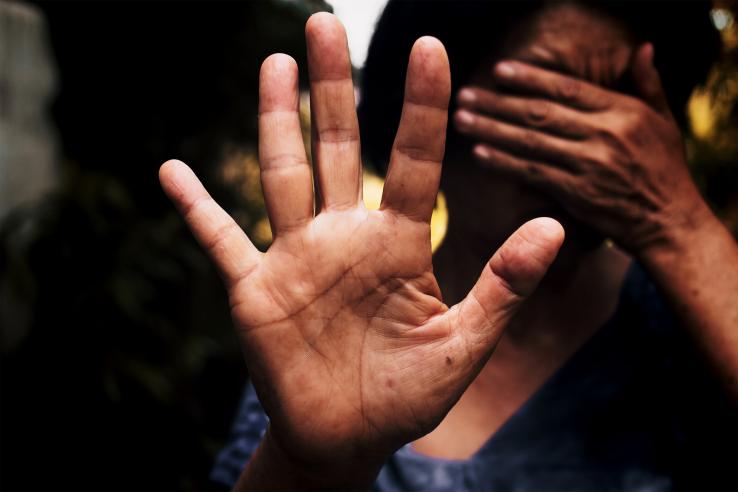
It has been revealed that Nigeria recorded about 24,720 Gender Based Violence (GBV) cases between September and October 3, 2023 across the 36 states and the Federal Capital Territory (FCT), Abuja. The Minister of Women Affairs, Mrs. Uju Kennedy-Ohanenye, made the shocking revelation in Abuja while briefing journalists on incessant cases of reported GBV, Female Genital Mutilation (FGM) and other harmful traditional practices against women in the country.
According to the minister, “we recorded about 24,720 cases of various violence cases that were reported across the 36 states and the FCT. We also had 975 fatal cases, 1,505 cases that had been closed either at the court, community level, family, religious/traditional leaders or by the survivors themselves due to fear or intimidation.” She further disclosed that 8,540 open cases are still pending either at the police station or within the court, while only 306 were convicted and sentenced within the last four years across the country.”
The damning revelation calls for more actions by the federal, state and local governments against gender based violence, female genital mutilation and other harmful cultural practices against women. Also, non-governmental organisations and activists working in the area of gender based violence should work hard to ensure the elimination of gender based violence and other harmful practices against women, especially the ubiquitous female genital mutilation which has been banned in many countries.
There is still need for more public lectures, seminars and even workshops on gender based violence across the 36 states of the federation and the 774 local government areas. Gender based violence is real and dangerous for the aspirations and development of women and young girls. The reported harassment of female students in various universities across the country is part of the violence against women that should be stopped forthwith with stiffer sanctions against the perpetrators.
Even those who defile young girls of eight and ten years old should be treated as criminals and should be prosecuted and given adequate punishment. The law against rape must be reviewed in favour of the victim. The way it is now seems to tacitly encourage rape and other forms of sexual harassment in our schools, especially the universities. Even in major urban markets in Lagos and other states, the females are sexually harassed openly through touching and fondling of their body parts.
Since women and young girls are vulnerable when it comes to sexual violence and harassment, the laws against gender based violence should be tweaked in their favour. Those men that indulge in such criminality should be made to prove their innocence instead of making the victims to prove that they were actually raped or sexually harassed. We can borrow some laws from some developed countries, especially the United Kingdom (UK) and the United States (US) to check the increasing cases of gender based violence and sexual harassment of women in the country. The subtle promotion of gender based violence and sexual harassment in some Nollywood movies must be checked.
The government must treat gender based violence as a heinous crime against humanity that should attract severe sanctions. Therefore, the National Assembly should come up with adequate laws to frontally address this menace. We need new laws to protect the weak and the vulnerable. We need laws to protect women and girls against all forms of sexual violence and harassment.
The Demographic and Health Survey (DHS) in 2018 reported that 31 per cent of Nigerian women between ages 15 and 49 had experienced physical violence while 9 per cent had experienced sexual violence. Spousal violence was put at 36 per cent. These figures only represent reported cases. Many others, especially in the rural areas, were hardly reported.
Despite its harmful effects, female genital mutilation is still practised across the country due to ignorance and cultural beliefs. In 2018, at least 20 per cent of Nigerian women between ages 15 and 49 were circumcised. The UNICEF report that reveals that 43 per cent of Nigerian women are married before the age 18 is disturbing.
The minister should liaise with the National Human Rights Commission (NHRC) and the Police to improve their response to rising cases of gender based violence. The police must desist from referring such matters as a domestic or ‘family affair.’ We urge the minister to initiate a coordinated national response against gender based violence.