Follow Us on Google
“When taxes are too high, people go hungry. When the government is too intrusive, people lose their spirit.” —Lao Tzu, Chinese philosopher
By Enyeribe Ejiogu
Take a walk through the average market in Lagos State and watch how those women who sell sachet water or soft drinks in plastic bottles, from basins borne on their heads, react when the Omonile or touts turned into ‘overnight’ revenue collectors for local governments, demand levies from them for all manner of things – ground rent, hawking fee, sanitation, security fee, morning levy, afternoon levy, Owo Chairman and several others.
Grudgingly, the hapless women pay, not wanting to be rough-handled by the uncouth, crude and brutish touts and Omonile. Some other street-smart hawkers put up a bold resistance, and with the aid of sympathetic bystanders, wriggle out or pay less than the amount demanded. The women simply hate the heavy burden of the daily levies demanded from them.
The Omonile and touts/revenue collectors keep part of what they collect and make returns to their supervisors, who in turn pay what meets the set minimum into the coffers of the LGA and retain any excess.
In those markets too, owners of shops pay a plethora of fees and levies too. They are also not really happy with the situation, but pass on the ultimate burden of the fees/levies to buyers of the goods they sell.
Chinese philosopher and founder of Taoism, Lao Tzu, who was known for his wisdom on governance, balance, and harmony with nature, probably foresaw the hard times Nigerians are passing through now, when he made the quote attributed to him at the top of this piece.
In the face of the astronomical rise in the cost of living, caused by the blizzard of economic and fiscal policies unleashed on the people by the Bola Tinubu Administration, and which are almost crushing the populace, Nigerians now have to contend with more taxes just as every MDA, including the police, try to draw more blood from the several emaciated bodies of the more than 80 per cent of the citizenry in the low income category at the very wide base of the country’s financial pyramid.
The strong dislike of the people about high taxation is understandable. Even in the New Testament of the Bible, tax collectors were not viewed favourably because they were seen as greedy and corrupt, often demanding more taxes than necessary and keeping the excess for themselves. As agents of the Roman Empire, tax collectors were seen as collaborating with the oppressors of the people, hence they were unpopular among the Jews. They were shunned by society.
Tax collectors were known to exploit their position for personal gain, which led to resentment among the people. Even Jesus, the Saviour, felt the heat of disaffection of the Jews for associating with Zacchaeus (Luke 19:1-10) and Matthew (Matthew 9:9-13), two tax collectors who later became his disciples.
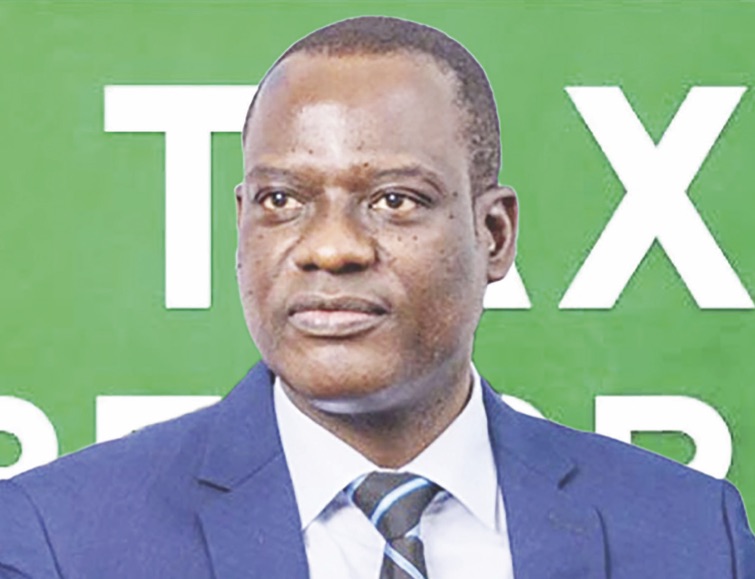
Today, Chairman of the Presidential Committee on Fiscal Policy and Tax Reforms in Nigeria, Taiwo Oyedele, finds himself as the present day combination of Zacchaeus and Matthew, and is on the wall like a dartboard while aggrieved Nigerians, who have to bear the burden of
President Tinubu’s tax reforms, are throwing sharp-pointed darts of their discontent and displeasure at him.
“The power to tax involves the power to destroy,” noted John Marshall in one of his writings, and people who feel like they are being squeezed to death with taxes are boiling.
Long before he sought the office of President, Tinubu had established a track record of raising revenue from taxation when he was the governor of Lagos State. Now as President, he tapped Oyedele to spearhead the implementation of the administration’s tax reforms, which seek to expand the tax base, enhance revenue generation, and promote equitable development.
Under the new tax law, individuals earning below N800,000 annually are exempted from paying personal income tax, while small businesses with turnovers under N100 million are exempted from corporate tax.
Again, value-added tax on essential goods and services like food, healthcare, education, and rent are zero-rated for VAT, with the goal of reducing inflationary pressure and to support low-income earners.
Other News
In media comments, Oyedele and other representatives of the government have explained that “the administration’s goal is to simplify the tax system, grant relief to workers, and ease the burden on businesses, rather than increasing taxes.”
Further, the reforms aim to boost government funding for critical services like infrastructure, education, and healthcare, while encouraging voluntary tax compliance nationwide.”
Notwithstanding these and some other benefits, the government’s new tax regime is showing up in various ways to be a case of reluctantly giving to the people with the right hand and forcefully taking back with the left hand, which has been energized by new legislations and strong, unavoidable regulations as well as all manner of other taxes embedded in the law that will come into force on January 1, 2026.
Take one very important aspect of the new tax law as example: from next year, every Nigerian and businesses must obtain Taxpayer Identification Number (Tax ID or TIN) just like BVN (Bank Verification Number) and NIN (National Identity Number), to be able to operate bank accounts.
This is a fundamental reform that will result in a significant change in the country’s financial and tax system.
When this takes off, every business, from the trader in the informal sector of the economy to multinationals, must register for a Tax ID. Even MDAs are required to obtain Tax IDs before entering contracts. Foreign suppliers must register with the new Nigeria Revenue Service (NRS) before doing business in Nigeria.
Under Section 8(2) of the Act, banks, insurers, and stockbrokers will be barred from providing services to anyone without a valid Tax ID.
The reforms will boost tax compliance, which Nigerians have avoided for decades. It is believed that only about 10 million of Nigeria’s over 200 million citizens are registered taxpayers even though about 60 million have bank accounts.
The wide gulf between the number of documented bank customers and number of registered taxpayers explains why the government’s revenue generation from taxes remains miniscule compared to the potential accruable tax revenue.
Whereas BVN and NIN improved identity management, the Tax ID mandate is a firm and bold step to widen the tax net and cut reliance on oil.
Without the Tax ID, bank customers would not be able to either deposit or withdraw from their accounts or even transfer money. Informal traders must now register for Tax ID. The stress of getting captured, to enable compliance is one more reason ordinary people will draw more darts on “Dartboard Oyedele,” the chief architect of the tax reforms.
In a media report, a civil servant in Abuja while welcoming the development as “good for accountability” however expressed concern over “delays and corruption in the process.” But a Lagos-based tax consultant endorsed it, saying, “This is long overdue. Without linking tax IDs to financial services, compliance will never improve.”
This position aligns with what Albert Bushnell Hart said when he characterised taxes this way: “Taxation is the price which civilized communities pay for the opportunity of remaining civilized.”
Oyedele is a renowned Nigerian accountant, economist and public policy expert. With over two decades of experience, Oyedele has established himself as a leading authority on fiscal and economic policy.
He had a sterling career of 22 years at PricewaterhouseCoopers (PwC), rising to become the Fiscal Policy Partner and Africa Tax Leader.
Oyedele is an associate professor at Babcock University, guest lecturer at Lagos Business School, and visiting scholar at the University of Lagos.