Follow Us on Google
From Obinna Odogwu, Awka
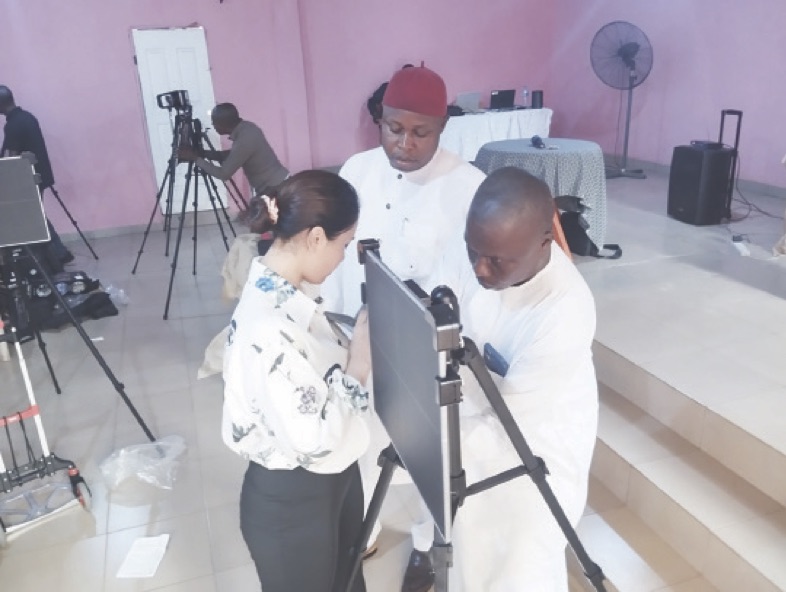
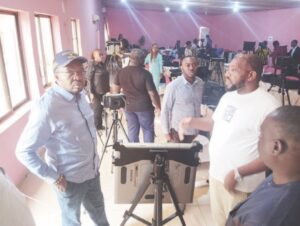
Select health workers from the South East states gathered in Awka, Anambra State capital, recently for a three-day training program on how to use ultra portable x-ray machines for the diagnoses of patients with tuberculosis.
Tuberculosis is an airborne disease caused by a germ known as Mycobacterium Tuberculosis. Though preventable and curable, TB is the number one infectious killer disease in the world and among the top 10 causes of death globally.
The device, called FDR Xair, is an innovation from Fujifilm Corporation designed for situations requiring on-site imaging, such as hard-to-reach communities, patients’ homes, natural disaster sites, areas with limited public power supply, and such other out-of-hospital settings.
The machine was introduced in Nigeria because of the high prevalence of tuberculosis which has claimed scores of lives in the country, according to reports.
Nigeria ranks first in Africa and sixth in the world, according to the Knowledge Network for Disease Control and Vigilance (KNCV). This accounts for about 4.6 per cent of the global TB burden.
An estimated 15 Nigerians die each hour due to TB. This is equivalent to about 347 deaths every day, 10,417 monthly and 125,000 in a year.
The Director Private Sector TB Control at KNCV Nigeria, Dr Michael Sheshi, told the reporter that the organisation had been supporting the Federal Government in the control of several diseases, particularly tuberculosis, HIV, COVID-19, and other diseases of public health importance.
“What we are doing here today is that we are supporting the Federal Ministry of Health through the National Tuberculosis, Leprosy and Buruli Ulcer Control Programme (NTBLCP),” he explained.
Sheshi said that the new technology which has Artificial Intelligence (AI) would help in the early detection of TB cases even before they become apparent.
“It has an x-ray where we can take chest x-ray and an Artificial Intelligence reads through the x-ray and immediately tells you this person likely has tuberculosis or this person is not likely to have tuberculosis.
“It is one of the tools that came in recently and we started using it earlier and we saw that indeed we are getting a lot of TB cases very early, even before they become clinical where the patient is coughing very well, spreading the disease”, he said.
Sheshi said that the training programme would also be replicated across the country’s six geopolitical zones.
Asked how his organisation came up with the initiative, Sheshi said that his boss had seen it in Ghana and thought that the new technology would also be good for his countrymen.
“My Executive Director, somewhere in 2020, was in Ghana and they were launching this machine and he saw it; and saw the potential; that this thing will be very, very beneficial in Nigeria.
“So, he discussed with the manufacturers way back then, and pleaded with them if they could just loan him one machine, he would be able to demonstrate that this machine really, really works.
“And that happened. They loaned one machine to my organisation and we came in and put it to use. And within six months we were able to show results.
“In fact, we were able to showcase it. And working with the National Tuberculosis Control Programme, we met with the major funders.
“So, the major funders are the US Government through USAID and Global Fund. We met with USAID and they procured 10 at that time in 2022 and we put it to use and it also showed very great results.
“And Global Fund now decided to take it up to scale, bought about 400 of these machines – they are very expensive by the way – and each of the states across the country is getting these machines”, he narrated.
Sheshi said that a total of 27 health workers were selected from the South East for the training programme and that the idea was to bring TB diagnostics closer to the people.
He said that after the training, each of the states in the region would receive more than 10 machines.
“For Anambra State, they are getting a total of 13 machines. Seven of them will be used in the communities because you can see they are portable. People will go round with them.
“Six will be placed in key facilities. Those six will be in our general hospitals, other big hospitals.
“There are some hard to reach communities that we know have TB cases there. Those are the places they will be going to”, he explained.
Commissioner for Health in the state, Dr. Afam Obidike, described the training exercise as a welcome development. He explained that the hard-to-reach areas in the state would benefit from the initiative.
“The x-ray machine has a solar system that will power it when there is no light. And it even has a battery that can take almost 200 films of patients before going down.”
Other News
The commissioner commended Global Fund and other partners for the training programme, saying that it would go a long way in the fight against tuberculosis.
“TB is more prevalent in those hard to reach areas like Ayamelum, Anambra East and West. The number now is 2,910 in Anambra. But more important is that we are increasing awareness, surveillance and identification of cases.
“And that’s the essence of this, to increase the identification of cases so that we will not say that there are some people with TB that have not been identified,” he said.
The health commissioner advised the trainees to take the training sessions seriously as the knowledge gained from the exercise would be beneficial to Nigerians.
The Clinical Application Specialist from Fujifilm Middle East and Africa, Satmit Kaur, gave a detailed account of how the machine works. She said the ultra portable x-ray system only weighs 3.5 kilograms and its generator capacity is 600 watts.
“So, it is relatively very low and you can do head to toe examination regardless. And the image quality on the system is similar to the image quality on the floor or ceiling mounted x-ray machine in the x-ray department that you have.
She said that the system was basically deployed in the African region to do chest x-rays mainly for patients with tuberculosis.
“But now we have expanded by using these machines, not only to do chest x-rays but also for abdomen and other parts of the human body. This is to diagnose the patients with any abnormalities.
“So what you see like a camera-looking machine is the x-ray tube and generator together. And this x-ray tube and generator is directed to a board called the detector.
“The main purpose of the detector is to actually absorb the radiation that is coming out from the x-ray tube and then it sends electrical signals to the laptop and passes the x-ray images produced.
“So that is the purpose of the x-ray tube with the detector and also the laptop; these three components to it,” she explained.
Speaking further, Kaur said that the ultra portable x-ray system requires a very low radiation dose in comparison with any other portable machine out in the market.
Giving details on how the machine diagnoses TB patients, Kaur revealed that the machine is connected to an Artificial Intelligence.
“Once the radiographer performs the x-ray examination, for example the chest x-ray, they process the x-ray and then send it to the Artificial Intelligence laptop which immediately gives you a diagnosis of the patient’s chest x-ray.
“You don’t need to wait for the radiologist to create the report of the radiograph. It immediately produces the diagnoses for you and the physician can start the treatment immediately without waiting for the radiologists. But again, this does not stop the purpose of the radiologist. The radiologist is still there to verify the whole report itself.
“Yes, artificial intelligence is 99.99 per cent accurate with all the research already done before they produced the software but again, the radiologist is still needed just to assist with the verification of the report of the radiograph”, she explained.
A Senior Staff at Abia State Ministry of Health, Dr Kingsley Dozie Lawrence, said the device would be put to good use in his state.
“Most people are afraid of coming out to check if they have TB and it is one of the deadliest diseases in Africa.
“So, this is the best thing the Federal Ministry of Health could do for Nigeria because most people could not come to the hospital to identify the problem they have.
“With this, we can go anywhere and diagnose people with tuberculosis and leprosy and treatment follows. That’s the training we are undergoing here,” he stated.
Lawrence said that public awareness campaigns would be taken seriously in Abia so that the people would get to know about the new device and how they’d benefit from it.
“We’ll make sure that all the nooks and crannies in Abia that have General Hospitals and Specialist Hospitals will feel the impact of this training.
“We will also have to train other health workers on how to do this so that people that have TB can have access to this diagnosis”, he assured.
Uchechukwu Ann Obiageli, a radiographer at Enugwu-Ukwu General Hospital, said that the x-ray machines came just in time.
“From my observation, tuberculosis is very prevalent in my area because in that Enugwu-Ukwu General Hospital, we have a Heart2Heart Centre where HIV/AIDS patients visit.
“I think we have a high number of tuberculosis patients because the complicated case of HIV is tuberculosis. It is one of the complications of HIV. The number is quite high in that facility,”, she stated.