Follow Us on Google
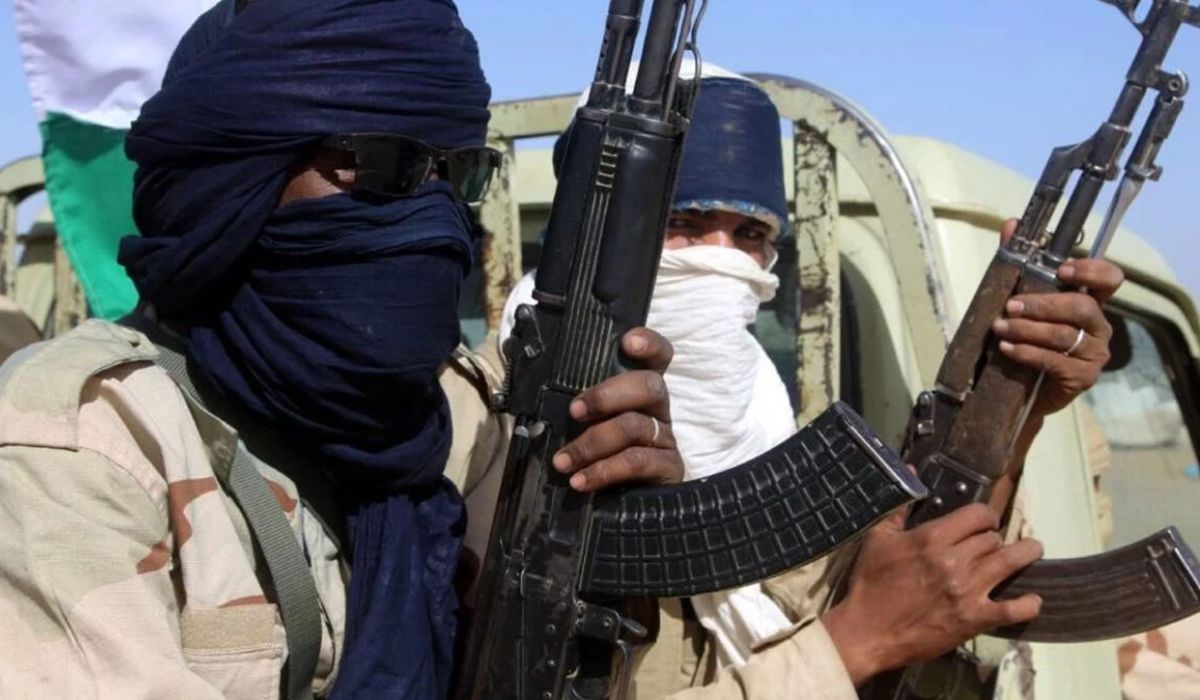
The United States airstrike against Islamic State militants in Sokoto State has revamped Nigeria’s strategic response to terrorist activities in the North-West region and other parts of the country. The attack has also demonstrated that the war against terrorism can no longer be treated with kid gloves. Moreover, the federal government has resolved to ruthlessly crush the terrorists.
The US strike was carried out with the coordination of the Nigerian authorities. Nigeria’s foreign ministry said the strikes were launched as part of security cooperation with the US, involving intelligence sharing and strategic coordination against militant groups. The attack came a month after the US President Donald Trump had declared Nigeria a “country of particular concern,” due to the killing of Christians by terrorist groups in the country. Trump threatened military intervention if the attacks against Christians continued. The threat became a reality with the Christmas Day strikes by the US military on terrorist locations in Sokoto State.
Following the America-led operations, the Nigerian Air Force (NAF) has intensified aerial offensive against terrorist groups in the North-East and North-West regions, killing many fighters and crippling their logistics and movement networks through coordinated, intelligence-led airstrikes conducted in January 2026.
According to NAF, the operations, carried out under the joint task forces of Operation HADIN KAI in the North-East and Operation FASAN YAMMA Sector 2 in the North-West, targeted identified terrorist hideouts, movement routes and assembly points across key threat corridors. NAF said the sustained air interdiction campaign was based on actionable intelligence relating to terrorist intent, movements and supply chains, with the aim of denying armed groups freedom of movement, operational depth and safe havens within Nigeria’s territory.
The results have been outstanding. In the North-East theatre, NAF air assets delivered successive precision strikes on deeply concealed enclaves at Abirma and Chiralia within the notorious Timbuktu Triangle. Persistent surveillance had confirmed that the locations housed active facilities linked to the production of improvised explosive devices (IEDs) and attack planning.
The strikes, according to the Air Force, resulted in the destruction of targeted structures, with multiple secondary explosions observed, indicating the elimination of explosive stockpiles and critical logistics.
Subsequent interdiction missions were executed at Guva in the Mandara Mountains, dismantling suspected terrorist storage and coordination nodes, and significantly degrading the groups’ capacity to regroup or launch attacks during and after the festive period. The campaign was equally extended to the North-West, where NAF aircraft conducted a decisive interdiction mission around Karaduwa Giginya Na in Matazu Local Government Area of Katsina State. Terrorist elements were tracked moving in large motorcycle convoys and were engaged at a forested convergence point. The multi-theatre strikes underscored the rapid-response capability, sustained airpower presence and determination of the Air Force to systematically dismantle terrorist networks threatening national security.
The recent efforts to subdue the terrorists are commendable and must be sustained until victory is achieved. The collaboration with the US military should be sustained and extended to other sectors of the war such as the North-East and the North-Central. Doing so will check the terrorists now moving towards the North-Central zone after the Sokoto attack. The government should not relent in bombing the terrorists.
There is no doubt that terrorism with its associated manifestations in kidnapping, banditry, insurgency, constitutes the greatest danger to Nigeria and its economy, affecting its foreign direct investment (FDI) profile negatively. Since the emergence of Boko Haram’s murderous campaign in 2009, the country has lost thousands of people and millions displaced in the North-East region. Recently, Boko Haram terrorists killed 40 farmers in Borno State. Many Nigerians have also been killed in Benue, Plateau and Katsina states in recent times.
In December 2025, bandits launched attacks across the North, abducting monarchs, worshippers, a bride, students and travellers in coordinated wave of violence that resulted to least 490 captives. The raids which cut across Sokoto, Kogi, Kwara, Niger, Borno and the Federal Capital Territory, disrupted rural communities and forced residents to flee their homes. In Abuja, seven mourners were kidnapped on November 28 at Gidan Bijimi in the Bwari Area Council. The same day in Niger State, 24 farm workers, including pregnant women, were abducted from Palaita village in Shiroro council.
Earlier on November 18, 38 worshippers were abducted during a Thanksgiving service in Eruku, Ekiti LGA of Kwara State, with three persons killed. On November 23, ISWAP militants kidnapped 12 teenage girls aged 15–20 from a farm in the Mussa district of Askira/Uba LGA of Borno State. Though some of the victims were later released, the attacks indicate the ferocity of kidnapping and banditry in the country.
The situation cannot be allowed to continue. Now that the government has commenced decisive actions against the terrorists, there should not be any derailment. It is only the government that should have monopoly of the instrument of violence, especially in ensuring law and order. More strategic measures to contain the terrorists and dismantle their cells in the country are needed. Let there be enhanced intelligence sharing among the security agencies. The nation’s borders should be adequately policed to prevent infiltration by criminals from neighbouring countries.