Follow Us on Google
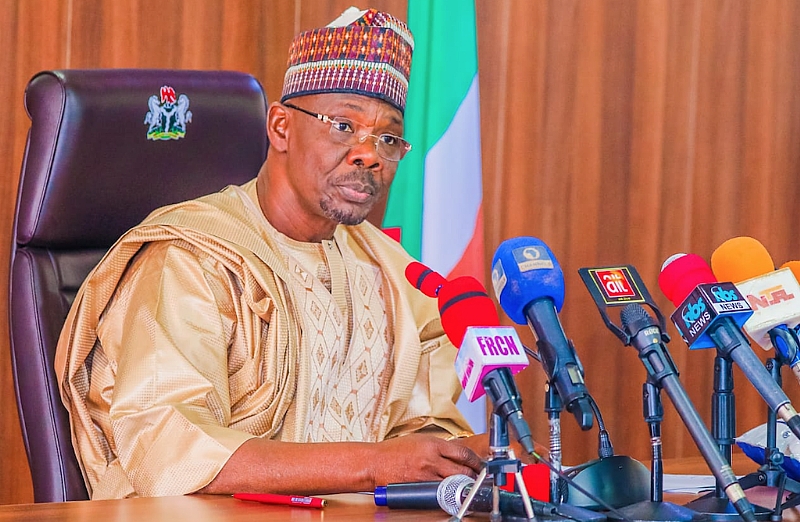
From Abel Leonard, Lafia
The General Manager of the Nasarawa State Rural Water Supply and Sanitation Agency (RUWASSA), Haruna O. Ewa, has reaffirmed the agency’s commitment to expanding access to potable water and improving sanitation facilities across rural communities in the state.
Ewa, a geologist, in an interview in his office on Wednesday said the agency has intensified efforts to rehabilitating broken boreholes, constructing new water points and promoting hygiene education in line with government’s public health priorities.
He noted that access to clean water remains central to rural development and disease prevention. “Our mandate is clear, to ensure that rural dwellers have sustainable access to safe drinking water and improved sanitation,” Ewa said
“As a geologist, I understand the importance of proper hydro-geological surveys before drilling. We don’t just sink boreholes; we conduct scientific assessments to guarantee sustainability.”
He explained that RUWASSA has shifted focus toward the rehabilitation of non-functional water facilities in several communities, describing it as a cost-effective strategy to quickly restore access to potable water. According to him, many rural water schemes failed in the past due to poor maintenance culture and inadequate technical evaluation.
“In many communities, we discovered boreholes that stopped working not because water was unavailable, but due to minor mechanical faults. Our teams are going round to revive such facilities,” he stated.
The General Manager also disclosed that the agency is scaling up sanitation campaigns aimed at discouraging open defecation and promoting the construction of household latrines. He stressed that water supply and sanitation must go hand in hand to achieve meaningful health outcomes.
Other News
“Providing water without sanitation is incomplete. We are working with community leaders and volunteers to educate residents on hygiene practices, including hand washing and proper waste disposal,” Ewa said.
He acknowledged funding and logistical challenges but expressed optimism that sustained government support would accelerate progress. He added that partnerships with development agencies and local stakeholders are critical to bridging infrastructure gaps in hard-to-reach areas.
“We are not unaware of the challenges, especially in remote terrains, but we are determined. With improved budgetary releases and collaboration with partners, rural water coverage will improve significantly,” he said.
Community leaders in some benefiting areas have commended the agency’s renewed intervention, noting that restored water points have reduced the burden on women and children who previously trekked long distances in search of water.
A resident of a benefiting community in Lafia Local Government Area said the rehabilitation of their borehole has brought relief. “For months, we depended on streams. Now we have clean water again. It has made life easier for us,” the resident said.
Observers say RUWASSA’s renewed drive aligns with broader national efforts to achieve Sustainable Development Goal Six (SDG 6), which targets universal access to clean water and sanitation.
Ewa reiterated the commitment of Nasarawa state governor, Engr. Abdullahi Sule for his commitment on sanitation and water supply in the state while also reiterating the agency focused on transparency, community ownership and technical excellence.
“Water is life. Our goal is to ensure that no rural community in Nasarawa State is left behind in accessing this basic necessity,” he said.