Follow Us on Google
• Charge corporate leaders to emulate Rwanda’s renaissance
By Henry Uche (who was recently in Rwanda)
Insurance and risk management experts across Africa have raised the alarm, that without a solid and bold homegrown reinsurance backbone, Africa’s economic resurgence and transformation will not only remain bleak, but stunted.
Experts in many recent fora are now rallying for an aggressive local reinsurance agenda—one designed not just to retain premiums within the continent, but to unlock capital, strengthen resilience, and power sustainable growth and development across African economies.
They argue that strengthening local reinsurance capacity is no longer optional but very urgent, as billions in premiums continue to flow out of Africa to foreign markets. By deepening domestic risk retention, they say, Africa’s economies can unlock long-term capital for infrastructure development, boost financial system stability, and shield businesses from external shocks.
Risk managers believe that a robust local reinsurance ecosystem, would not only enhance underwriting capacity but also drive innovation, create skilled jobs, and position the continent to better manage emerging risks in an increasingly volatile, uncertain, complex and ambiguous global market.
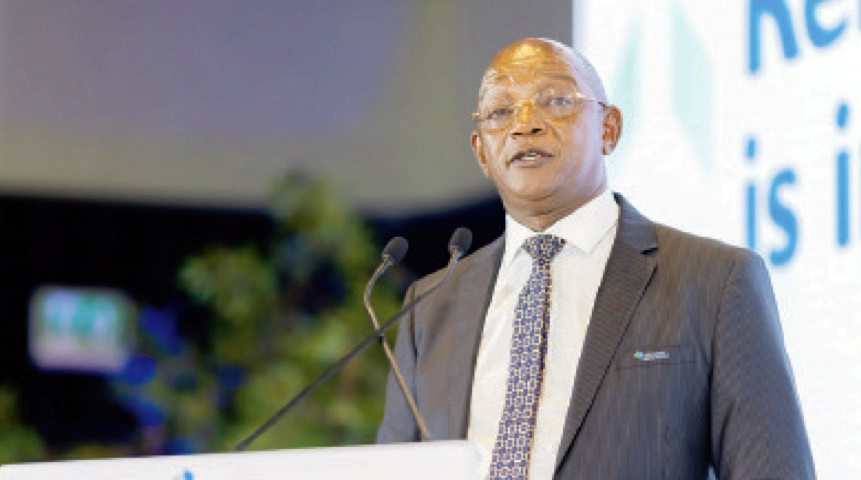
Addressing insurance chief executives recently in Kigali, at the 11th CEO Summit and Continental Reinsurance Awards for Africa, the Group Managing Director/Chief Executive of Continental Reinsurance Holdings, Lawrence Nazare, urged African countries to emulate the spirit behind Rwanda’s transformation drive as one of the fastest growing economies in the continent with glaring facts and figures. “Today Rwanda is not a backdrop to our conversation, it is the conversation. Rwanda is a country that chose to deliberately and courageously rebuild itself from the bottom. Today, it stands as one of the fastest growing economies on the continent. It’s now spoken of in the same breath like Singapore when it comes to economic reform, governance and openness to innovation.
“What strikes me most isn’t the statistics, it’s really the intentionality. The transformation in Rwanda has been dramatic, and not accidental, it was deliberately architected through strong leadership, social cohesion, unflinching commitment to long term vision, not short time comfort. I think that is the kind of thinking we must adopt as an industry of this continent. The International Monetary Fund (IMF) projects that Africa’s economic growth could outpace Asia, and I believe that would happen despite the adventures of Trump in the Middle East.”
Alluding to the theme, “From Risk to Renaissance: De-Risking and Enabling Africa’s Transformation,” he reminded corporate leaders, regulators and innovators at the forum that the insurance sector exists to enable ambition, government, entrepreneurs, farmers and communities to boost the confidence to invest, build, grow and expand, knowing that risk is being managed and not feared.
“The question is not whether we are relevant, but whether we, as insurers and reinsurers, are ready. At Continental Reinsurance, we are asking ourselves this question everyday. We are strengthening our leadership, sharpening our governance and deepening pan-African footprints.
“Africa is not waiting, the transmission is on the way, our task together is to make sure that insurance and reinsurance are not exempted from that story. We must sit at the table where the architects of the transformation are, not on the menu.”
He implored insurance journalists to help the sector regain trust and public confidence through their in-depth and factual reportage. “Let us support our government to achieve continental goals. We must see ourselves as co-partners of national stability and transformation. We must bring 99 percent of businesses into the insurance safety net. We must be at the table, not on the menu. This is because we are relevant, we have the data, expertise and influence. We must participate in government and be at the deliberations that affect.”
He noted that Africa is not for politicians alone, but for Insurance and reinsurance practitioners to de -risk the economy. He condemned the flight of talents (japa syndrome) from the continent, saying: “We can’t do well if our superstars are leaving our home. So we must participate in the process, we must not leave the continent to the streets. It’s up to us to bridge the gap, but then we must be reliable partners in the social contract. Our role is not to sit, but to build the next generation. We must live to make Africa succeed. We all fail if Africa does not succeed.”
Speaking, a former Group Managing Director/CEO of Kenya Airways, Mr. Allan Kilavuka urged the captains of the insurance industry to take their responsibilities very seriously and ensure that every decision-making process is centred on value addition.
Other News
Kilavuka, a leadership expert, highlighted the need for corporate leaders to show the much needed resilience and persistence to transform the African continent. He noted that every African country needs a minimum of 50 healthy national carriers if they must remain resilient and sustainable. “For African economic transformation and development to be really felt by the people, we need to consolidate African carriers.
“Africa is deficient in infrastructure and other structures, but we need to get connected with one another. We must be conscious of how our positions affect the people. CEOs think they have solutions to every question, but I can tell you, you don’t have every answer to every question. So as leaders, since we can’t solve all our people’s problems, we should lessen them. To the leaders, we should externalize our views and maximize your position for the betterment of your people,” he added.
During a panel session, insurance regulators across Africa pushed for mentorship of young people to retain sufficient manpower capable of leading the industry sustainably in the future.
According to them, young people should be fully equipped with the knowledge of insurance, even much more than they know about banking. “We need people who will talk about insurance in the future when we shall no longer be talking, the knowledge impartation on young people should have started yesterday.”
They called on African Heads of State to consciously look into their farmers and support them with all requisite insurance protection if they must have food security for their people.
They advocated for more power to be given to industry regulators to enable them take certain decisions that affect the sector, without reverting to some higher authorities, as such may cause undesirable outcomes. Panelists also called on African leaders to strengthen their local reinsurance sector to enable them to bear any risk and threats emanating from different quarters of the world.
“The business environment is becoming more complex, ambiguous, volatile and uncertain. So we need our institutions to be stronger, resilient and future-proof for any eventuality.”
Other leaders of thought who turned at the podium maintained that it was high time Africa opened its hands wide to collaborate with one another and rescue their economies. This they believe is due to the high level of risk the region is exposed to. “Africa must build resilience for global competitiveness. We have spoken enough, let us change our approach. Let us make the changes we desire. Vision and intentions are not lacking, but execution is key. We must remember that the cost of doing nothing is high,” an industry magnate stressed.
On Africa’s Agenda 2063 – a long term development framework and roadmap adopted by the African Union to transform the continent into a global powerhouse by 2063, industry captains believe insurers and reinsurers are central to the actualization of the Agenda for inclusive growth, sustainable development, and unity. Other resource persons at the high profile discourse similarly pointed towards the dangers and misfortunes that would befall the continent if insurance czars do not sit on the table with the architects and decision-makers of the region.
According to them, failure to take decisive steps toward the Agenda 2063 risks trapping African economies in prolonged stagnation, with continued dependence on raw material exports and limited industrial growth. This, they maintained, would worsen unemployment, especially among the continent’s fast-growing youth population, which would definitely fuel poverty, social unrest, and migration pressures. At the same time, weak commitment to infrastructure development and regional integration could leave markets fragmented and business costs high, undermining the full benefits of initiatives like the African Continental Free Trade Area. Governance challenges may also persist, while fragile institutions, corruption, and inconsistent policies would discourage both local and foreign investment.
Beyond economic concerns, standing aloof by insurance and risk managers would expose Africa to deeper structural vulnerabilities. The continent could remain highly susceptible to global shocks such as climate change, geopolitical tensions, and financial instability, which would affect the resilience envisioned in Agenda 2063. Inequality may widen further between the rich and the poor, urban and rural populations, as well as across regions, thereby heightening the risk of long-term instability. Ultimately, Africa stands to lose global relevance in an increasingly competitive world, missing out on innovation, value chains, and strategic influence. More critically, failure to implement this vision could delay or even derail the continent’s long-anticipated renaissance, denying future generations the promise of shared prosperity and sustainable growth and development.
To them, Rwanda as a country did the unimaginable turnaround after the 1994 genocide, and till date it stands as one of the shining lights in the continent, hence other countries should emulate them both economically and politically.
“Africa 2063 would not be a reality unless we make it happen. We must ask ourselves, if not me, who else, and if not now, who then? So we are all involved,” said one of the panelists.