Follow Us on Google
By Adewale Sanyaolu
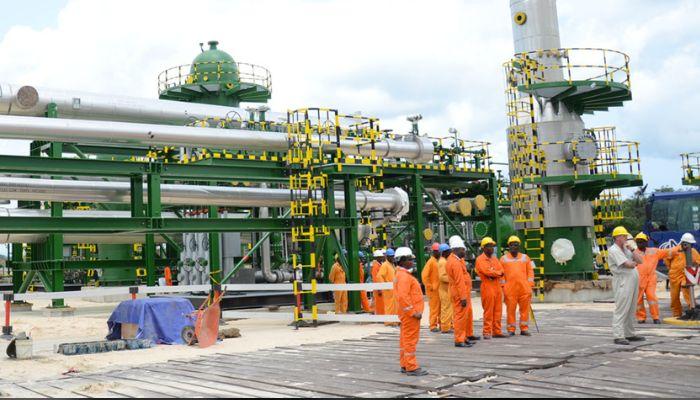
The ongoing turf war between the Dangote Petroleum Refinery, Nigerian Union of Petroleum and Natural Gas Workers (NUPENG) and the Depot and Petroleum Products Association of Nigeria (DAPPMAN) is currently generating serious concerns among stakeholders in the petroleum industry. The raging disagreement has opened fresh interrogations at to what the role of regulators should be in an industry guided by laws and how long it should condone the cold before taking decisive actions to ensure stability.
Stakeholders are genuinely worried that if the disagreements are not urgently addressed, they could lead to a collapse of an industry employing thousands of Nigerians and contributing significantly to the country’s Gross Domestic Product (GDP).
Players are already cranking up pressure on the regulators to urgently step in to calm frail nerves before the battle for market control grinds the industry to a halt.
They argued that doing such in a timely manner could avert other unforeseen setbacks.
Managing Director of 11 Plc, formerly Mobil Oil, Mr.Tunji Oyebanji, in an interview with Daily Sun at the weekend, said invoking relevant sections of the law could further prevent an escalation of the crisis.
NUPENG and DAPPMAN have been at loggerheads in the last two weeks over allegations of caustic monopoly and non-adherence to labour laws by the Dangote Petroleum Refinery.
NUPENG maintained that the decision of the Dangote Refinery to create a parallel association-Direct Truck Drivers Association is a breach of extant labour laws which only recognises NUPENG as the industry union.
Specifically, Oyebanji said section 213 of the Petroleum Industry Act (PIA) prohibits the holder of a license from discriminating between customers or classes of customers or their related undertakings or network users in respect of access, tariffs, prices or standards of service.
Oyebanji, also a former Chairman of the Major Energies Marketers Association of Nigeria (MEMAN), said a situation where the Dangote Refinery goes into partnership with some retailers to offer them cheaper fuel prices is a violation of the section 213 of the PIA.
He said going into such arrangement gives undue advantage to those set of marketers over others, thereby not promoting the principle of fair play.
He said promoting a level playing field for all market players makes business survival easier and transparent.
He pointed out that one of the cardinal a of the Federal Competition and Consumer Protection Council (FCCPC) is to prevent anti- competitive business practices
However, he said not until the regulators, especially the Nigerian Midstream Downstream Petroleum Regulatory Authourity (NMDPRA) which is the police of the downstream sector steps in to wield the big stick, the situation may not abate.
“For me, all these firing of missiles through press statements won’t help the industry.
It’s like having a referee who has failed to step in when there is a breach of rules but rather decides to look the other way when a party or either parties have called out of line or aren’t playing according to the rules.
The referee at that point must step in to enforce the rules,”.
Also speaking, the President of Petroleum Products Retail Owners Association of Nigeria (PETROAN), Mr. Billy Gillis Harris, said the regulators at this point must step up their game in order to protect the industry.
Though, Harris admitted that the government, through its regulators have stepped in through series of meetings, saying they need to do more and be firm at this point.
He said a situation where a market player seems to be operating in a manner that seems to appear as if he is above the law isn’t acceptable.
He admitted that the birthing of Dangote Refinery into the Petroleum Industry space is no doubt a game changer.
However, he lamented that a situation where players aren’t able to do business with the company in a sustainable manner is a big challenge.
Section 212 of the PIA deals with separation of certain licensed activities.
The PETROAN President pointed out that section 212 of the PIA prevents an investor from playing across the entire value chain of the downstream sector.
“You cannot be a refiner and at the same time be a transporter and retailer. The law simply prohibits that.
“Our take is for Dangote and all other market players to claim down and come to a round table to resolve all issues at stake so that the business can be done in a way that it would benefit all Nigerians.”
Also speaking, the National President of the Nigerian Association of Road Transport Owners (NARTO), Mr. Yusuf Lawal Othman equally expressed concerns over the move by Dangote Refinery to be in breach of section 212 of the PIA.
Othman said while Dangote Refinery is licensed to play in the Midstream sector of refining, his decision to extend the license to distribution of petroleum products through the acquisition of about 4,000 trucks is a violation of the PIA and shouldn’t be encouraged.
The NARTO President further warned that a huge number of jobs and investments is about to be eroded as a result of this investment decision by the Dangote Refinery.
Besides, he added that all the depots across the various regions in the country is about to go comatose.
“There are depots South-South, South-East, North Central and South West with truck owners operating at these depots.
What this decisions means is that depots in the coastal region cannot be serviced as a result of the deployment of these Dangote trucks.
The investors have taken loans from banks to build these depots and acquire trucks. What about the numbers of families and jobs that would be displaced.
Again, when you look at the indirect jobs been created through these trucks owned by NARTO members it is massive. The vulcanisers, mechanics, electricians and others would be displaced as a result of these decision.”
He said the loading of petroleum products and distribution of same by a single entity is a dangerous trend that must not be encouraged because it is a threat to the country’s energy security.
He added that Government and its regulators have a role to play in protecting SMEs across the country because they are the engine of growth.
He equally pointed out that the Federal Government also have the responsibility to protect its own investment, depots and workers in NNPC Retail Limited.
Similarly, he said foreign investors with trucks operating in downstream sector must equally be protected.
In his comments, the Executive Secretary of DAPPMAN, Mr.Olufemi Adewole, said the Dangote Refinery has, in recent times, successfully exported refined petroleum products to the United States and other countries with well-established refining capacity and competitive supply chains.
These markets, according to him, despite having robust domestic production, remain open to external suppliers in the interest of supply diversity and market efficiency.
“If such countries had adopted restrictive trade practices, these export opportunities would not have existed.
This underscores the global value of open, competitive supply chains, a principle Nigeria must uphold, not abandon,”.
To address the looming danger, the NMDPRA and FCCPC last week inaugurated a 10-member Joint-Technical Working Committee to strengthen consumer protection in the energy sector.
Executive Director, Distribution Systems, Storage and Retailing Infrastructure (DSSRI), Mr Ogbugo Ukoha, who represented the Authority Chief Executive, Farouk Ahmed, at the event in Abuja, said the committee was established to address recurring complaints relating to competitive practices and service delivery in the oil and gas sector.
The new committee has been mandated to share market data, monitor and investigate anti-competition practices, and ensure adequate consumer protection.
The Joint Committee is led by the FCCPC’s Deputy Director of Surveillance and Investigation, Mrs. Omagu Nwachukwu, and Mr Charles Nwachukwu, Head of the Alternative Dispute Resolution Centre of the NMDPRA.
Besides, the committee is expected to identify potential threats to the sector that could negatively impact the market and escalate such issues to the top management of both organisations.