Follow Us on Google
- Minister: For many youths, it’s simply a public holiday
- Filmmaker: We mortgaged ‘MKO’ to complete 13-year project
By Beifoh Osewele
The Federal Government and filmmaker Ose Oyamendan have made a strong case for preserving the history of June 12 beyond its annual commemoration as a public holiday.
Speaking for the government at the October 1 national premiere of MKO, the documentary on the late Chief Moshood Kashimawo Olawale Abiola, the annulled June 12, 1993 presidential election and the struggle that followed, Minister of Art, Culture, Tourism and the Creative Economy, Hannatu Musawa, warned that a generation of Nigerians was growing up without fully appreciating the sacrifices behind the day.
“For too many young Nigerians, June 12 is simply a public holiday. This film turns it back into our memory,” she said.
Oyamendan, who spent almost 13 years bringing the story to the screen, echoed the concern, saying June 12 remained “a significant part of our history” and that Nigerians needed knowledge of their past to better understand their present.
“You build strength from knowledge,” he said.
For Musawa, that knowledge begins with remembering what happened on June 12, 1993, when Nigerians voted across religious and ethnic lines.
“On June 12, 1993, Nigerians stood as one people. Across religion and ethnicity, we came together and gave Moshood Abiola that mandate.
“That mandate was unfortunately denied. But the voice behind it was never, ever silenced,” she said.
Oyamendan said it was precisely the danger of losing such national memory that strengthened his resolve to tell the story through the voices of those who participated in, witnessed or had intimate knowledge of the events.
“When you don’t tell your story, somebody will tell it for you and it’s not always roses,” he said.
Musawa recalled that the battle against the annulment extracted enormous sacrifices from Nigerians.
“It was carried by men and women who paid with their freedom, their comfort and, perhaps, their lives. MKO himself gave his fortune, his liberty and, in the end, he gave his life,” she said.
The premiere consequently became not only a film screening but also a moment of remembrance as the gathering paid tribute to the heroes and heroines of the June 12 struggle, both known and unknown.
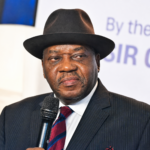
Special Adviser to the President on Information and Strategy, Mr Bayo Onanuga, paid tribute to Nigerians who lost their lives or suffered persecution, detention, exile and other forms of repression during the struggle for the restoration of democracy.
After leading the gathering in observing a minute’s silence in memory of those who lost their lives in the democratic struggle, Mr Onanuga said the sacrifices of pro-democracy activists must never be forgotten.
He noted that the freedoms Nigerians enjoy today were secured through the courage of many individuals who stood firm against authoritarian rule.
“We remember Chief Anthony Enahoro, Pa Adekunle Ajasin, Senator Abraham Adesanya, Chief Gani Fawehinmi, Dr Beko Ransome-Kuti, Pa Alfred Rewane, Chief Frank Kokori, Rear Admiral Ndubuisi Kanu, Commodore Dan Suleiman, Chima Ubani, Chief Bola Ige, Senator Cornelius Adebayo, Chief Ayo Adebanjo, Alhaji Balarabe Musa, Oba Sikiru Kayode Adetona, and all the leaders and members of the National Democratic Coalition, the Campaign for Democracy, the labour movement and other pro-democracy organisations..
“We honour journalist James Bagauda Kaltho, other journalists, and media organisations that defied clampdowns, arrests, kidnapping and seizures of publications to keep the June 12 struggle alive. We honour the printers who defied the security clampdown to print banned publications.
“We remember and salute the lawyers who defended detainees, the students who staged countless protests on the streets and on their campuses, the workers, especially members of NUPENG, who withdrew their labour, the academics who gave the struggle a voice, and the Nigerians in the diaspora who mobilised international support for the sanctity of our democracy.
“We remember those who were imprisoned without trial, those imprisoned for being accessories to a coup d’etat, those driven into exile, those who lost their livelihoods, and those whose homes and businesses were attacked because they refused to surrender their democratic convictions,” Onanuga said.
He said the documentary would serve not only as a tribute to Chief Abiola but also as a reminder of the collective sacrifices made by Nigerians who demanded respect for the people’s democratic choice.
“We remember the countless unnamed Nigerians who filled the streets, endured hardship and stood firm in defence of the mandate freely given on June 12, 1993.
“Many paid the supreme price. Many carried wounds that history may never fully record. Their sacrifice was not in vain, as we have had 27 years of unbroken democracy since 1999, and Chief MKO Abiola, the symbol of the struggle, has been officially acknowledged as the winner of the election, shedding the toga of ‘assumed, presumed’ winner.”
Onanuga commended the producers of MKO for documenting an important chapter in Nigeria’s political history and making it accessible to a new generation.
“The democracy we enjoy today was built upon the courage and sacrifices of the people we have identified. We owe them more than remembrance. We owe them a duty to ensure that no authority ever again overturns the freely expressed will of Nigerians.”
Oyamendan said preserving that history also came at considerable personal and financial cost to the filmmakers.
According to him, the project took nearly 13 years and cost more than $1 million, forcing the producers at a point to give up financial interests in the film to secure the money required to complete it.
“We have a film we do not own because we had to mortgage it to gap financiers just to complete it,” he said.
He described the long filmmaking journey as “another youth service, only much, much longer.”
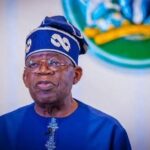
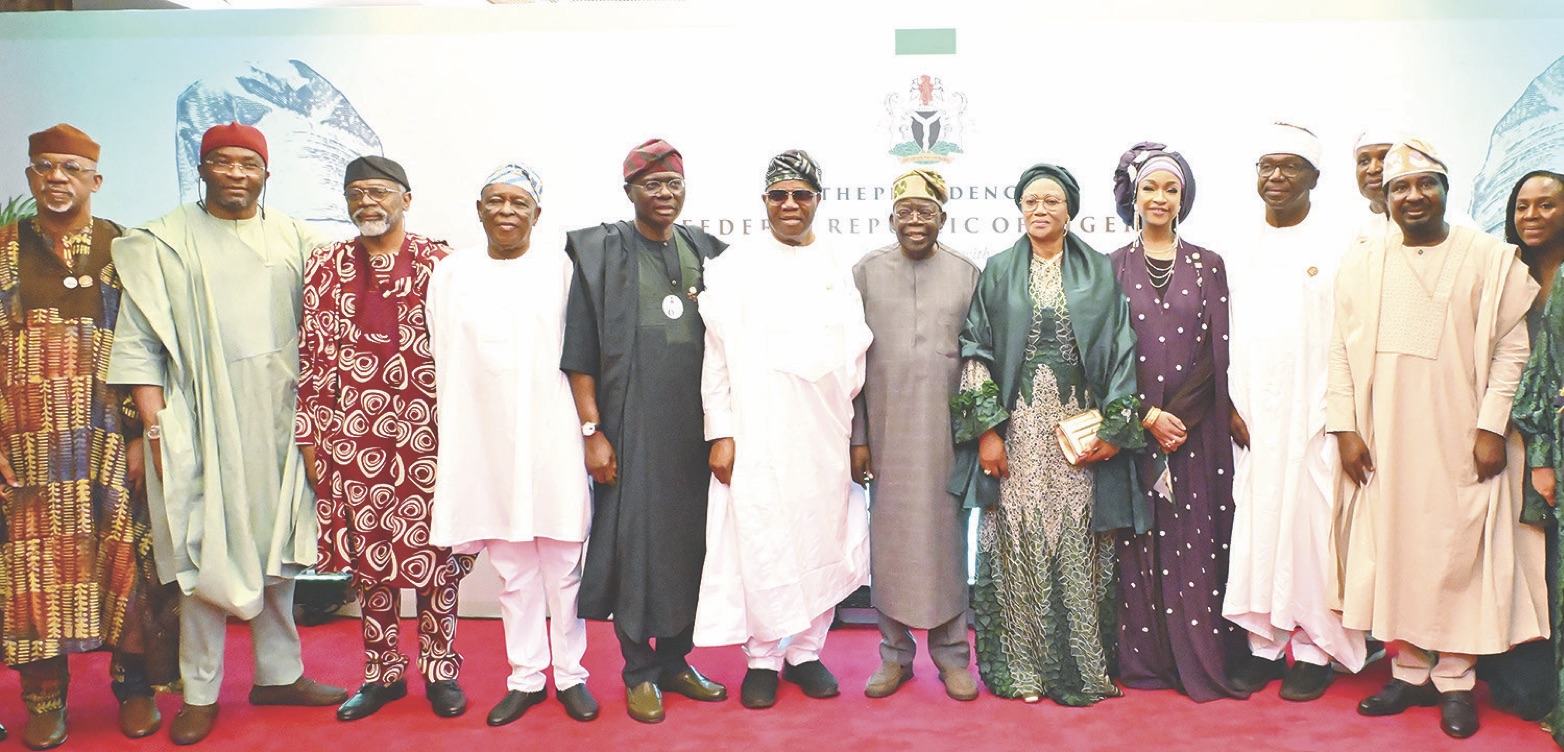
President Bola Ahmed Tinubu, accompanied by his wife, the First Lady, Oluremi Tinubu, attended the national premiere of MKO, a documentary film by US-based filmmaker Ose Oyamendan.
The screening at the Wole Soyinka Centre for Culture and Creative Arts was part of activities commemorating Nigeria’s 66th Independence Anniversary.
The gathering brought together senior government officials and other dignitaries, including Senate President Godswill Akpabio; Speaker of the House of Representatives Tajudeen Abbas; Chairman of the Nigeria Governors’ Forum and Governor of Kwara State AbdulRahman AbdulRazaq; Governor of Lagos State Babajide Sanwo-Olu; Governor of Ogun State Dapo Abiodun; Governor of Plateau State Caleb Mutfwang; and Chief of Staff to the President, Rt Hon. Femi Gbajabiamila.
Also in attendance were the Minister of Industry, Trade and Investment, Dr Jumoke Oduwole; Minister of Water Resources and Sanitation, Engr Joseph Utsev; members of the National Assembly; former Governor of Ogun State Chief Olusegun Osoba; and other distinguished personalities.
Musawa, meanwhile, situated President Bola Tinubu within the history documented by the film, recalling his involvement in the struggle against the annulment.
“Mr President, it is fitting that you are our chief guest. You were not a spectator of June 12. You stood in that struggle, and you paid its price with exile,” she said.
Oyamendan similarly drew a link between the political vocabulary of 1993 and that of the present administration.
“There was Hope ’93 and now there is Renewed Hope,” he said.
“This documentary is in honour of the heroes of June 12, the men and women who gave their lives for the mandate of June 12, 1993 and for the democracy Nigeria enjoys today,” the Minister said.
Musawa said it was imperative to document the untold stories about the events surrounding the June 12, 1993 presidential election, adjudged one of Nigeria’s freest and fairest elections, so that many will know that the democracy we enjoy today came at a precious price.
She reiterated the need for concerted effort by citizens to jealously guard the nation’s democracy and ensure that the will of the people is never again truncated.
But beyond contemporary political symbolism, the filmmaker said his larger concern was ensuring that the lessons preserved in MKO reached Nigerians who did not experience that period.
He wants the documentary, he said, to reach “schools, towns, villages and anywhere where there are people.”
Oyamendan described the premiere as significant for Nigerian history, saying the documentary was conceived partly to “lay a foundation for tomorrow to remember yesterday.”
That purpose dovetailed with Musawa’s argument that younger Nigerians must understand that the democratic freedoms they inherited did not come without a price.
Her concern was that if June 12 survived only as a date on the national calendar, stripped of the people, sacrifices and resistance behind it, an important chapter of Nigeria’s democratic history could gradually lose its meaning.
For Oyamendan, film offered one means of preventing that loss.
His documentary draws on extensive archival material and interviews with key actors, witnesses and personalities connected with the June 12 era, bringing different voices into one account of the election, its annulment and the tumultuous years that followed.
The filmmaker’s quest took him across countries and continents in search of the people and materials needed to reconstruct the period, culminating in the film that premiered on October 1.
Musawa said the finished work had therefore restored June 12 from the abstraction of an annual holiday to the realm of lived national memory.
“This film turns it back into our memory,” she said.
And for Oyamendan, that memory must not remain confined to the premiere hall or cinema circuit. His ambition is that Nigerians everywhere, particularly generations born after the struggle, should encounter the story and draw knowledge from it.
Oyamendan lauded President Tinubu for his tenacity, courage, and conviction on the principles of democracy, as well as the fatherly support he has given him over the years.
Reflecting on his relationship with the President, Oyamendan recalled interviewing him as a senator in 1992. He also thanked the individuals and organisations that supported the documentary’s production.
MKO opens in cinemas nationwide on October 2.