Follow Us on Google

By Sunday Ani
Fatima Ganduje Abiola Ajimobi had realised and followed her passion of giving hope to persons living with disabilities (PLWDs) early enough in her life.
She had demonstrated that real empowerment begins with the recognition of ability in disability, having inspired millions of PLWDs in her home state of Kano.
For over a decade, she had been engrossed in her childhood dream of giving hope to the hopeless, sight to the blind, ear to the deaf and directions to millions of PLWDs in Kano State.
She has a conviction that there is nothing more troubling than an unrealised potential, particularly because there is no access, no opportunity or the support it truly deserves.
So, for over 10 years now, Fatima, the daughter of the former Governor of Kano State, Dr Abdullahi Umar Ganduje and founder, Let’s Talk Humanity (LTH), has continued to impactfully invest in her pet project, to provide technological gadgets to enhance better education for the blind and deaf in Tudun Maliki Special School in the state.
She has silently embarked on the revolution to provide succour to over one million physically challenged persons, usually neglected and abandoned to roam the streets of Kano and beyond, begging for arms to survive.
As a person, deeply committed to the future of her people and dignity of every human life, she has used her pet project, which started as a vision and grown into something measurable and tangible, to touch the lives of 1000 blind and deaf persons annually for over a decade now.
While enumerating the mileage she had covered, with 500 percent increase in enrollment at Tudun Maliki Special School, she confessed that she was no longer speaking in hope but in evidence with the LTH.
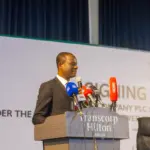
At the official launching of the project in Abuja recently, she likened her experience to a young person who once felt limited, now stepping confidently into higher education, as an access replacing exclusion and opportunity rewriting what was once considered impossible.
Producing graduates in various fields of human endeavors who would have naturally become beggars in the streets of Kano, she said her primary focus has been to use the project to improve the quality of life for the disabled and the undeserved persons through access to innovative technology, quality education and healthcare.
She said she had embarked on a novel initiative designed to implement programmes that remove barriers and create access for persons with disabilities through innovation, education and community engagement.
According to her, they are people with special needs who were denied access to education and empowerment that would have transformed their lives, even with abundant technology and learning equipment now in the market.
Through sacrifices of huge resources and dedication, Tudun Maliki Special School has turned out more than 1000 beneficiaries each year since 2015.
Recounting her experiences at the documentary premiere staged to celebrate LTH’s 10th year in the service of humanity, she recalled that for a long time, the vision had lived quietly within her. “It grew in conversations, in classrooms, and in small but meaningful interactions.
“It was shaped by the people we met, the stories we heard and the gaps we could no longer ignore.
“So, it is natural to ask: why now? Why choose this moment to bring this work fully into the light? The answer is simple. We are ready. We now have a blueprint. Not just an idea or passion, but a model that has been tested, refined and proven,” she explained.
Other News
Speaking to newsmen shortly after the documentary premiere, she disclosed that having had a successful impact in Kano, the organisation has plan to go beyond the northern region to build a National Resource Center.
She said: “The organisation has had a ripple effect in the last 10 years, training some of the students, the top students and the teachers. Year after year, this public school, is turning out over 1000 students every year, because it has primary, Junior and Senior secondary school all in the same campus.
“We are impacting the lives of over 1000 students every year, over the last 10 years, you can do the calculation. We have been able to also impact them in terms of entrepreneurship, because to be learned is to be able, and to be able is to be productive, and to be productive, means to be financially stable.”
Highlighting her future plan, she also said: “Our projection for the next future is to have a national resource centre for those with sensory impairment, to be able to tap into the international knowledge and the international resources available in all parts of the world much more developed than us when it comes to special needs.
“Seeing the faces of alumni, members of staff and supporters of Tudun Maliki here, takes me back to the very beginning 10 years ago, when they trusted me with something so important: the future of their education and the possibility of change through technology.”
But beyond providing education to the physically challenged, the organisation has equally intervened in gender gap. Reflecting on that, she said: “In gender disparity, we have been able to push up the number of deaf students in enrollment and empowered them.
“So, we have equally been able to have more girls enrolled in this special schools and in higher tertiary institutions. Most importantly, I will say that the greatest level of impact is providing our centre and model of education as another solution, alternative to what we have presently, which is the Almajiri crisis that is plaguing the northern part of the country. We believe that our ICT centre is a great model that has been proven and tested, and we hope to scale it better.”
She invited partners, advocates and people willing to move from intention to action, expressing optimism that the organisation would positively affect more lives in coming years.
Also, speaking at the event, her father and former National Chairman of the All Progressives Congress (APC), Dr. Abdullahi Umar Ganduje, lauded the initiative and called on northern governors, development partners, federal and state governments across the country, to embrace the initiative.
Ganduje had specifically drawn attention to the array of neglected beggars in the north, appealing to the relevant authorities to give adequate attention to them. According to him, “I want to specially thank Fatima, my daughter. Since you were born, grew to become a toddler, I have seen the capacity and capability in you. I am so happy that they have been unveiled through what you are doing today.
“In the northern part of the country, persons with disabilities are relegated to the background. Seeing is believing, no doubt. That is why we have an array of beggars across northern parts of this country day and night. Some sleep under the bridges and a few by the roadside. This is a sorry sight. Yes, they are relegated because they are physically challenged and this is affecting their psyche and motivation. They shouldn’t be humiliated like that.
“But, looking at what is happening here, we can see that there is a silent revolution ongoing. If what we are seeing could be adopted by our relevant governors and authorities, there is no doubt that there will be a big positive change in our society.
“By unveiling this kind of programmes, we are teaching them to be like any normal human being in our society. Finally, I urge those in government and development partners to help make a great change, especially among persons with disabilities. Those physically challenged can’t stop begging. They can develop to the extent that they can even be employers of labour. They can develop to the extent of being geniuses in various fields of endeavours.”
In his comment, the Minister of Humanitarian Affairs and Disaster Management, Dr. Bernard Doro, commended the initiative, stressing that society must bear in mind that before a programme or device is designed, PLWDs should be considered.
The minister further noted that the inclusion of people with special needs is not an option but an obligation, emphasising, “When we develop assisted devices or technology, they have to be done with PLWDs in mind.
“You don’t wait until you do it before you begin to adapt it for people to use. I believe it is an important point to make. We must move towards a future where accessibility is by design, moving away from retrofitting tools towards building universal platforms. Digital must be the priority. Technology should empower individuals to navigate the world on their own terms.”
Observers believe that if the initiative, as presented by LTH, is adopted and courageously implemented across Nigeria’s six geo-political zones by the governments and other non-governmental organisations, the numbers of beggars will not only reduce drastically, but will also change the status of many PLWDs from dependency to employers of labour, impacting society positively.