Follow Us on Google
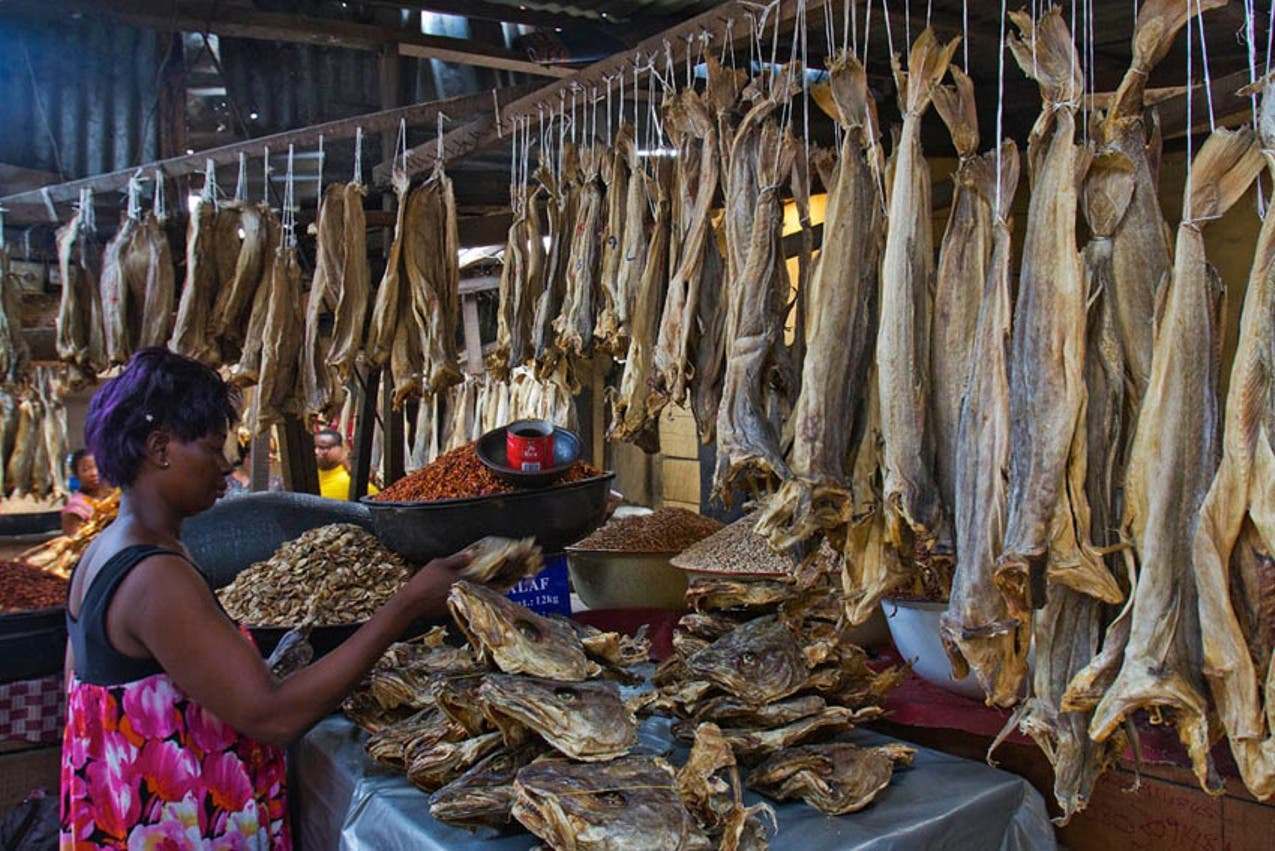
Norwegian seafood exporters and industry stakeholders have blamed the soaring price of stockfish in Nigeria on a sharp decline in cod catches, rising raw-material costs and higher import duties, warning that the pressure is making the popular protein source increasingly difficult for low-income households to afford.
The exporters, who spoke during visits to stockfish markets and importers in Lagos, urged the Federal Government to review the import duty on stockfish, particularly stockfish heads, which they described as an affordable source of protein for millions of Nigerians.
Director for Africa at the Norwegian Seafood Council, Johnny Haaberg, said the quantity of fish available for stockfish production had dropped to its lowest level in more than three decades.
According to him, the shortage of raw fish has pushed up prices across the global market, leaving exporters with limited room to reduce prices.
“It is true that the prices of stockfish are high at the moment, and that is because the catch of the fish itself is the lowest it has been since 1991.
“There is much less product available in the market and then the prices go up. It is the same in all markets. When there is lower supply and demand remains the same, prices go up,” Haaberg said.
He stressed that Nigeria was not the only market facing higher stockfish prices, noting that the supply constraint had affected countries importing the product from Norway.
“At the moment, the price is high for everybody. This is not just Nigeria; it is all the markets that buy the product,” he said.
However, stakeholders said government policy was adding to the burden on Nigerian consumers.
Haaberg disclosed that the Norwegian Seafood Council had been engaging with Nigerian authorities on the possibility of reducing taxes on stockfish heads to improve access for lower-income consumers.
“We’ve been trying to lower the taxes on stockfish heads specifically to get them more accessible for people who don’t have so much money.
“Unfortunately, we haven’t been able to do that so far. Again, it is really up to the Nigerian government to decide the taxation system,” he said.
Fisheries Consultant to the Norwegian Seafood Council in Nigeria, Abiodun Oritsejemine Cheke, made a similar appeal, describing stockfish as an important protein source for low-income households.
She said the import duty on stockfish was increased from 10 per cent to 20 per cent in July 2025, adding that the increase came at a time when international supply constraints were already driving prices higher.
Cheke urged the Federal Government to reconsider the duty, arguing that reducing the tax could help cushion the impact of rising food prices on consumers.
“The government should pity the masses and let us have this zero per cent duty. Stockfish is the product for the poor,” she said.
She pointed to the smaller and cheaper portions of stockfish available in markets as evidence of its importance to low-income families.
Other News
“If you see the market, you see the way they sort it out. We have some for N500 and N1,000, and that is what is really keeping the masses alive,” she said.
Cheke compared the affordability of stockfish with other sources of protein, noting that even relatively small quantities could be used to prepare meals for several members of a household.
“One egg now is about N300 and a maximum of two people will share one boiled egg, whereas when we have something of N300 in terms of stockfish, broken into pieces, a whole family of six can enjoy the Egusi soup made with it,” she added.
The stakeholders, however, expressed optimism that prices could ease if the supply of cod improves.
Cheke said restrictions introduced to conserve cod stocks in 2025 and 2026 appeared to be supporting the recovery of fish populations, raising hopes of increased supply in the coming year.
“We are hearing that the 2025 and 2026 restrictions on the volume of cod to be fished have resulted in some increase in the population of cod in the water.
“Hopefully, there will be more volumes next year and we hope that with more volume, prices will fall,” she said.
Sales Manager at Villa Seafood AS, Norway, Lisa Westphal, explained that high production costs were also limiting the ability of exporters to bring down prices.
“Norwegian producers have to buy the raw materials they are using for the stockfish at very high prices. So there is a limitation to how low the prices can go, especially when we have a huge reduction in the quotas,” she said.
Westphal suggested that alternative fish species could eventually be explored for stockfish production if they could provide a more affordable option for Nigerian consumers.
She acknowledged, however, that changing consumer preferences would take time, particularly in a market where stockfish has become deeply established in traditional meals.
Manager of Saga Fisk AS, Erling Falch, also attributed the price increase to lower fishing quotas in Norway and Iceland.
“The quotas have reduced in Norway and Iceland, but now it is better. We expect the quota to increase next year, and it means there will be more fish to sell. I think the price will drop a little bit,” Falch said.
Despite the price pressures, he described Nigeria as a strong and important market for Norwegian seafood, saying demand remained resilient because of Nigerians’ preference for fish-based protein.
“You see customers asking for high-quality products but also for cheap products. We need to adjust our production and try to produce for demand,” he said.
“It is a strong market. Customers like fish, they like the protein and they like pure, natural products, so it will be a good business in the coming years,” Falch added.