Follow Us on Google
From Okwe Obi, Abuja
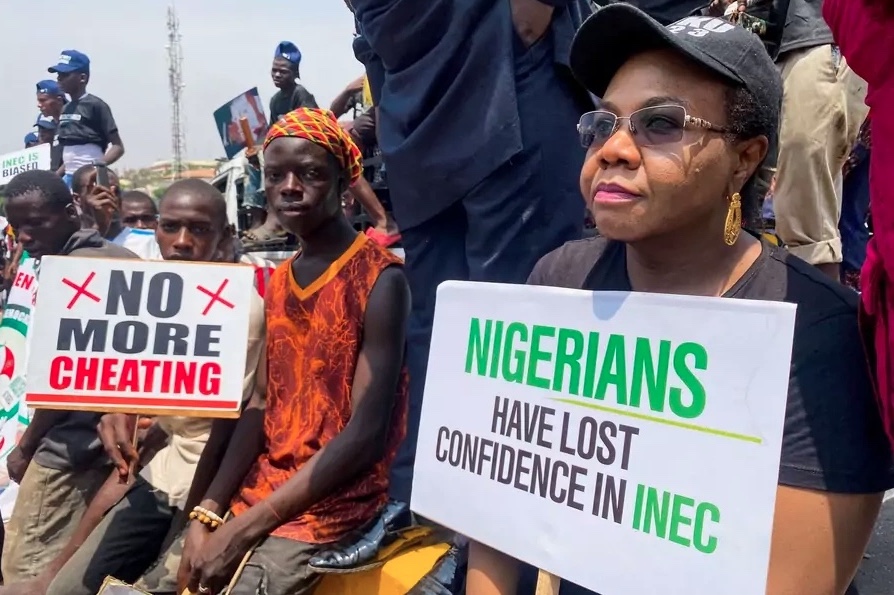
The Centre for Democracy and Development (CDD) has said the dwindling credibility of the Independent National Electoral Commission (INEC) following the delays and technical issues that undermined the presidential poll would pose a challenge.
It also warned that logistical obstacles as a result of violence, cash and fuel scarcity would be issues to contend with during the elections.
These were contained in a 15-page pre-election brief, released yesterday and signed by its Director, Idayat Hassan.
Hassan said: “In terms of the perception of the electoral umpire, CDD warned that decreased trust in the Independent National Electoral Commission (INEC) following the delays and technical issues that undermined the polls on 25 February would present challenges.
“The analysis stressed that the credibility of the process will be critical, but will be challenged by the threat of violence.
“CDD also warned that logistical obstacles linked to violence, cash and fuel scarcity would be issues to contend with in the course of the governorship elections.”
According to her, the six factors such as identity, insecurity, institutional preparedness, intra and inter-party disputes, voter participation and the question of personalities versus parties, would shape the outcome of the elections.
She predicted that the election would be a tight race in Cross River, Delta, Enugu and Zamfara, while Adamawa would see the election of Nigeria’s first female governor.
“Rivers, Lagos, Kano, Kaduna and Sokoto are key states to watch for, she said.
Also, she noted that “Vote trading is likely to be more pronounced than in the 25 February election, given the localised nature of the races, the prevailing economic hardship and the compliance of the Central Bank to the Supreme Court judgment, which held that old naira notes remain legal tender until the end of 2023.
“Most parties and online commentary have made the mistake of expecting similar results to the presidential results of 25 February.
“Those ‘projections’ have erroneously forgotten to consider the Senate and House of Representatives results, which did not always go along the same line as the presidential outcome.
“As a result, an inflated expectation might enable political actors to call for the delegitimisation of the process, policies and eventual winners – with the uncertainty of what this might represent for the democratic process.”