Follow Us on Google

By Damiete Braide
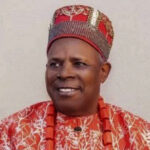
A chieftain and founding member of the All Progressives Congress (APC), Obafemi George, has described the proposed establishment of state police as a critical step towards addressing Nigeria’s persistent security challenges, saying the reform would empower governors to better protect lives and property in their respective states.
Speaking during an interactive session with journalists in Lagos, George commended President Bola Tinubu for supporting the State Police Bill recently passed by the National Assembly, describing the legislation as a landmark reform that would strengthen governance and improve security across the federation.
According to him, governors have long been regarded as the chief security officers of their states without possessing the constitutional authority to control the police, thereby limiting their ability to respond effectively and promptly to security threats.
He noted that although Section 215(4) of the Constitution empowers governors to issue lawful directives to Commissioners of Police on matters relating to public safety and order, such directives remain subject to federal approval, making the arrangement largely ineffective.
George argued that the proposed state police structure would correct the anomaly by decentralising policing and giving state governments greater operational responsibility for maintaining law and order.
“If someone is responsible for the security of a state but does not control the security apparatus, it becomes difficult to hold that person accountable for maintaining peace and security,” he said.
Addressing concerns that governors could misuse state police for political purposes, George acknowledged that no governance system is entirely without flaws but maintained that robust legal safeguards and accountability mechanisms could prevent abuse.
He cited the United States as an example of a country where state policing has functioned successfully for decades despite occasional challenges, insisting that Nigeria should not abandon reforms capable of improving internal security because of fears of possible misuse.
Beyond security, the APC stalwart expressed confidence that President Tinubu’s economic and infrastructure reforms would earn the administration renewed public support ahead of the 2027 general election.
He said the President was laying the foundation for sustainable economic growth through institutional reforms, strategic infrastructure development and long-term economic restructuring.
Other News
George pointed to ongoing federal projects, including the Lagos-Calabar Coastal Highway, the Sokoto-Badagry Super Highway and other major road projects, as strategic investments that would improve transportation, facilitate trade and deepen economic integration across the country.
He also highlighted the establishment of regional development commissions across the six geopolitical zones, describing them as deliberate efforts to promote balanced development and stimulate economic activities nationwide.
According to him, countries such as the United States and China achieved sustained economic growth through massive investments in transportation infrastructure, adding that Nigeria is now pursuing a similar development trajectory.
George appealed to Nigerians to remain patient with the Tinubu administration, stressing that meaningful economic transformation requires consistency, commitment and time.
He argued that countries often cited as development models, including China, Singapore, Dubai and Rwanda, took decades of sustained reforms before attaining their current levels of prosperity.
“In 10 years, Nigerians will look back and appreciate these reforms because they are designed to secure the country’s long-term prosperity,” he said.
The APC chieftain also dismissed allegations that the ruling party was responsible for the internal crises rocking opposition parties, insisting that the challenges confronting the Peoples Democratic Party (PDP) and the African Democratic Congress (ADC) predated the Tinubu administration.
He attributed the PDP’s internal disagreements largely to disputes over power rotation ahead of the 2023 general election.
George further highlighted the Federal Government’s social intervention programmes, including free caesarean sections for indigent women, subsidised dialysis treatment at designated federal medical centres, and the Nigerian Education Loan Fund (NELFUND), as measures aimed at cushioning the effects of the current economic hardship.
He urged Nigerians to verify information before accepting claims circulating on social media, stressing that public discourse should be guided by facts rather than misinformation as the government’s reforms continue to unfold.