Follow Us on Google

The establishment of state police has received additional boost with President Bola Tinubu’s inauguration of the Presidential Working Group on the National Policing Bill, which will prepare the legal framework for its implementation across the country. The inauguration followed the Senate’s passage of the Constitution Alteration (State Police) Bill, 2026, proposing a dual policing structure comprising the Federal Police Service and 36 State Police Services. We laud the bold initiative and urge the panel to fast-track it.
While the Chief of Staff to the President, Femi Gbajabiamila, will serve as chairman of the group, other members include the Attorney-General of the Federation, Lateef Fagbemi (SAN), National Security Adviser, Nuhu Ribadu, and Inspector-General of Police, Tunji Disu, President of the Nigerian Bar Association (NBA), Afam Osigwe (SAN), the Chairman, Nigeria Governors’ Forum (NGF) and Kwara State Governor AbdulRazaq and the Chairman of the NGF Committee on State Police and Ogun State Governor Dapo Abiodun.
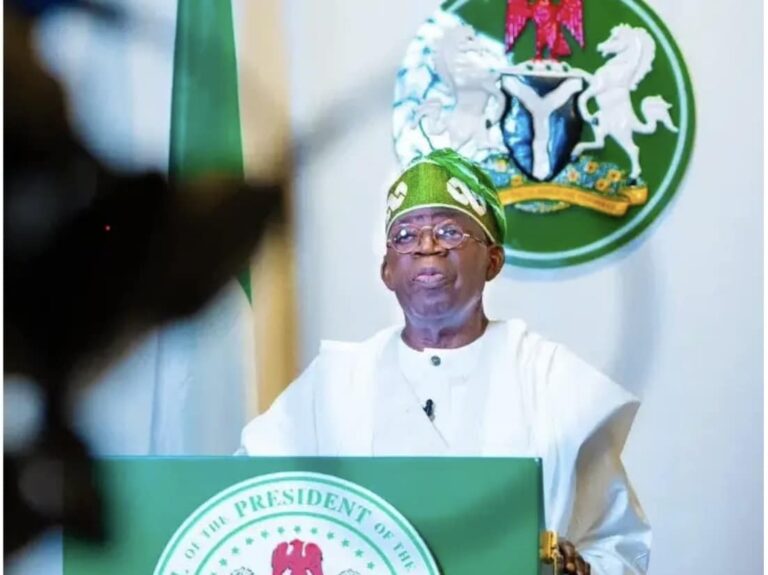
At the inauguration of the committee, President Tinubu noted that while the constitution amendment creates the framework for state police, the National Policing Bill would provide the legal structure for its implementation. The proposed legislation, according to the President, would address policing standards, state readiness, federal-state coordination, accountability, human rights safeguards and personnel transition. He added that the committee will produce an implementation-ready draft bill immediately after the constitutional amendment process. In addition, the committee would recommend other legal instruments required for the smooth implementation of the dual policing system.
The inauguration of the panel is a follow-up to the proposal by IGP Disu, which recommended a comprehensive roadmap for the actualisation state police. The framework contains a bold funding structure, five-year phased implementation period, beginning with constitution amendments within the first year, as well as mechanisms against abuse of state police by political office holders and interest groups. Among the key recommendations is that 60 per cent of the existing police personnel would move to state police, while 40 per cent would remain with the federal police.
Central to the proposal is the creation of a constitutionally guaranteed State Police Fund, which will draw three per cent of the Federation Account allocation, alongside a mandatory minimum contribution of 15 per cent from each state’s security budget. The funding model is designed to ensure transparency, sustainability, and operational independence of state police commands.
The proposal also outlines a two-tier policing structure that will effectively restructure Nigeria’s policing system into a Federal Police Service (FPS) and 37 State Police Services, including the Federal Capital Territory (FCT). While the FPS would focus on issues of national security as terrorism, interstate crime, and protection of federal assets, state police formations would deal with localised crimes, including armed robbery, homicide, domestic violence, and community-level intelligence gathering.
Other News
The framework identified community policing as the operational nerve centre of the entire policing system. In this regard, each state police command would be required to establish a Department of Community Policing, with structured forums in every local government area.
To guard against the governors misusing the police structures for political ends, the document introduced some constitutional and institutional safeguards, amongst which is the establishment of independent State Police Service Commissions that are insulated from gubernatorial interference but empowered to handle recruitment, promotion, and discipline.
The steps taken so far to establish state police are commendable. With rising insecurity across the country, the establishment of state police can no longer be delayed. Delaying it will surely exacerbate our security challenges and make the rural areas unlivable and targets for frequent attacks by terrorists, bandits and kidnappers. However, there is need for a functional local government administration which will make community policing seamless.
The governors must ensure that the local governments are financially independent to enhance development at the grassroots. Since every crime is local, there is no doubt that state police will be a panacea to our intractable security challenges. It will effectively check criminals hiding in the various forests across the country and curb the frequent attacks on soft targets.
The present centralised policing system is inadequate to effectively police the country. With staff strength of about 370,000 personnel, the current Nigeria Police Force cannot adequately police over 200million people.
We urge the panel to be steadfast in fashioning out the bill that will enable the establishment and implementation of state police across the country. Let there be enough political will by concerned stakeholders to ensure that the project is realised without further delay. Let there be adequate safeguards to curb abuse of state police by politicians and other
individuals.