Follow Us on Google

By Chinenye Anuforo
Stanbic IBTC Holdings Plc, has announced its three months unaudited results for the period ended March 31, 2017 with the bank’s pre-tax profit at N18.6 billion, an increase of 78 per cent over the N10.2 billion recorded in the corresponding period of 2016.
The result which was presented to the Nigerian Stock Exchange in Lagos, showed that profit after tax increased by 106 per cent to N16.1 billion, as against N7.8 billion in March 2016. Gross earnings stood at N47.0 billion, representing an increase of 35 per cent over the N34.8 billion recorded in the comparable period of last year. Total assets went up 11 per cent to N1.2 trillion from N1.1 trillion in December 2016.
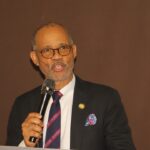
Speaking on the result, Chief Executive of Stanbic IBTC Holdings, Mr. Yinka Sanni, said, “I am delighted to announce another strong performance for the first quarter of 2017 following the recent release of our FY 2016 results. Stanbic IBTC Group achieved significant growth in profit after tax by over 100 per cent despite the challenging trading environment which was characterized by challenges with FX liquidity, difficult credit environment and an increasing cost of operations.”
He added, “We remain positive that economic activities will improve as the Nigerian economy is beginning to show signs of positive outlook due to an increase in the supply of foreign exchange to both retail and corporate users and decreasing headline inflation. As we focus on driving our objective to be the leading end-to-end financial solutions provider in Nigeria, we will continue to leverage on our upgraded digital channels and our membership of the Standard Bank Group.”
The group’s liquidity ratio closed at 94.35 percent, while the Bank’s liquidity ratio was at 83.99 percent at the end of Q1 2017. These ratios are significantly higher than the 30 percent regulatory minimum. Also, the group’s capital adequacy ratio remained well above the minimum statutory requirement of 10 percent, with total capital adequacy ratio of 21.69 percent. The Group’s capital is deemed adequate to drive business growth and support business risks and contingencies over the year, Sanni said.