Follow Us on Google
By Bianca Iboma-Emefu

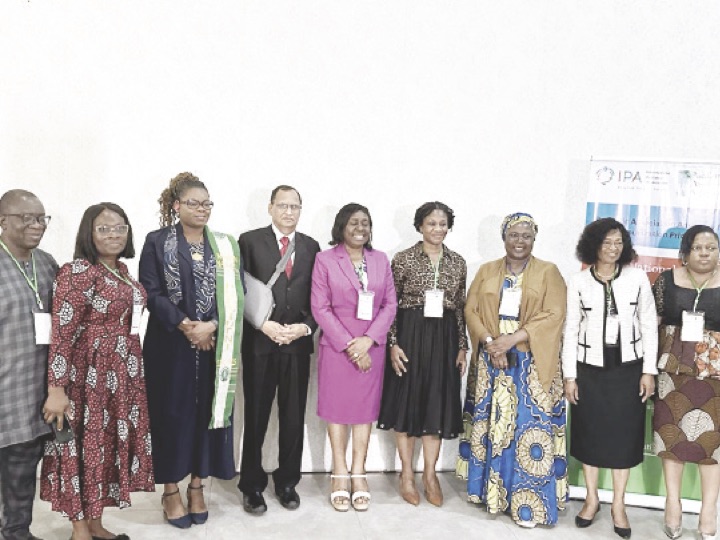
•Participants at the IPA, PAN immunization workshop held in Lagos
As part of its effort to overcome barriers preventing mothers from vaccinating their children and equally protect them from life-threatening diseases that include measles, polio, pneumonia, meningitis and diphtheria, the International Pediatrics Association (IPA), in partnership with Paediatric Association of Nigeria (PAN), has trained about 108 health workers across the country to reduce the number of zero-dose children.
At a three-day sensitization workshop recently, the group implored Nigerians to prioritize immunization, despite the economic hardship and financial burden faced by the citizens, which may discourage them from visiting primary healthcare centres to get their kids immunized.
Explaining further, they stressed the need for every child in Nigeria to be vaccinated as a preventive measure and for disease control, as this helps reduce the financial burden they may incur to treat vaccine-preventable diseases.
President of PAN, Dr. Ekanem Ekure, reinstated the association’s commitment to the ongoing campaign and sensitization initiative in reaching zero-dose children, especially Nigerians in urban slums and communities that health workers cannot reach due to insecurity.
Ekure said: “As part of our advocacy for the wellbeing of the Nigerian child, we urge UNICEF, other humanitarian organizations, including security agencies, to collaborate with us in overcoming these barriers.”
Explaining that vaccines have been safe for several decades, she said: “We were able to defeat polio due to free vaccines provided by the government at primary healthcare centres and a lot of awareness was created for the elimination and eradication of polio in the country.
However, Nigeria faces a particularly alarming situation as regards vaccines, based on misinformation from all quarters, including social media.
“Total vaccine coverage is less than 25%, a quarter of the whole number. Parents need to take their children for immunization. Even the HPV vaccines that prevent cervical cancer, despite being free, teenagers are not taking them.
“To address this pressing issue, PAN has deployed techniques, strategically, to promote the well-being of the Nigerian child. But we are employing collaborative measures to reach every child with immunization services. Through these joint efforts, we partner to embrace this approach as the most effective path toward achieving this critical goal,” she said.
Also, the president of Medical Women Association, Dr. Rosemary Ogu, said they were lending their voice to the ongoing campaign for Nigerians to prioritize immunization for their children.
Ogu said the vaccines were available and free, yet a lot of people were not aware: “We need to enlighten more people that can educate others, especially the uneducated and semi-literate persons in our environment.
“Vaccines stop preventative diseases. Cervical cancer can affect girls and women between this age range 15 and 45 or maybe 60 but with the vaccine it can be prevented. Girls, women and children should be vaccinated.”
The president of IPA, Naveen Thacker, said immunization was a mainstay in safeguarding children’s health worldwide but achieving universal vaccination coverage has been a significant global challenge.
“We are here to give our support to children who have not received any vaccines. The vulnerable children, known as ‘zero-dose children’, they account for a substantial portion of preventable deaths in children.”
Meanwhile, some of the participants and health workers who spoke anonymously said, in northern Nigeria, a lot of factors have contributed to the rising number of the zero-dose children.
They said most communities were vulnerable and can’t be accessed by health workers due to insurgency. Service providers are scared to penetrate these areas affected by insecurity because they don’t want to die.
“Once they get kidnapped, they demand for ransom and if the health worker’s family cannot provide their demand, the bandits slaughter them.
“It is a difficult situation when health workers cannot safely access communities due to banditry and insecurity, especially when it comes to administering vaccines to children who have not yet received any doses. In such cases, it is important for government agencies and humanitarian organizations to work together to find alternative solutions to reach these children.
“One possible solution could be to organize mobile vaccination campaigns, where healthcare workers travel to these communities in a protected convoy or with armed security personnel. This may allow them to safely vaccinate children who have not yet received any doses.
“Another option could be to utilize community health workers or local volunteers, who are already present in these areas and who may have better knowledge of the local situation. These individuals could be trained to administer vaccines and could play a crucial role in reaching zero dose children.”
“Furthermore, technology can also be utilized to reach these children, such as using drones to deliver vaccines to remote areas or setting up temporary vaccination stations in safer locations where caregivers can bring their children.
“It is essential to prioritize the safety and security of both the healthcare workers and the children in these areas while also ensuring that all children have access to life-saving vaccines. Collaboration between different stakeholders, innovation and adaptability are key in finding solutions to vaccinate zero-dose children in insecure areas.”