Follow Us on Google
By Bimbola Oyesola
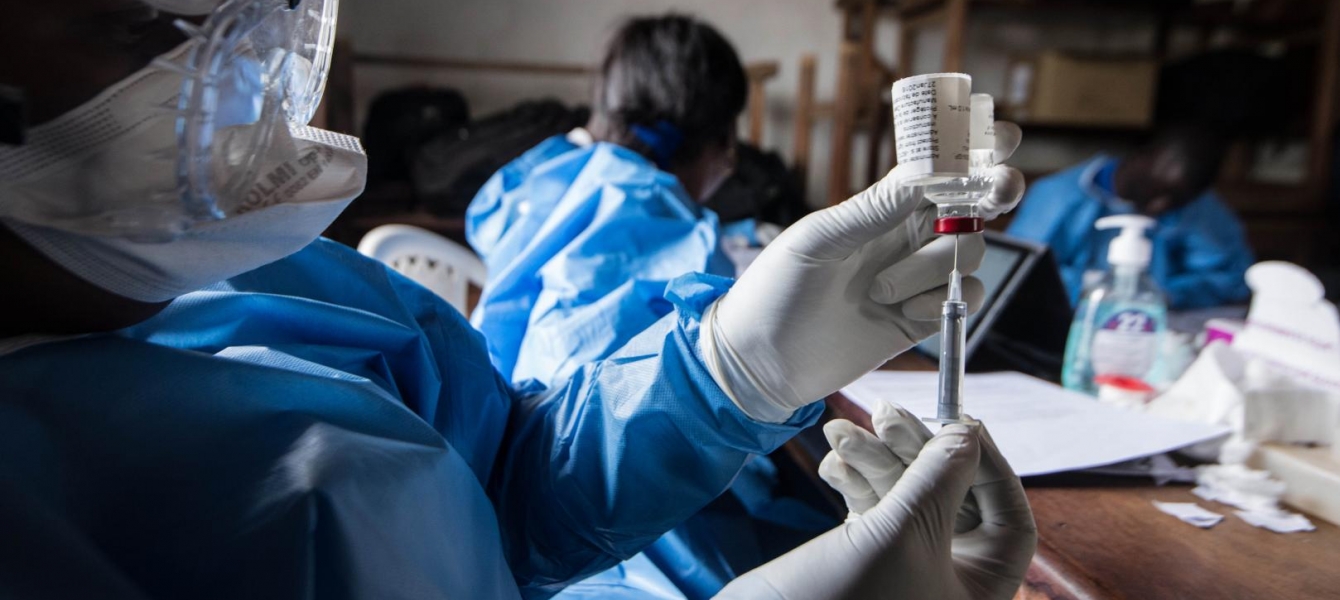
As the world is faced with another mutation of COVID-19, tagged Omicron, stakeholders have charged African leaders to work towards producing vaccines to fight diseases on the continent, rather than relying on largesse from outside the continent.
This is even as they reiterated the importance of workers education to confront the challenges the pandemic has fostered on the world of work.
Speaking at the 2021 Harmattan School, organized by the Nigeria Labour Congress (NLC) at Michael Imoudu National Institute for Labour Studies (MINILS), Ilorin, Kwara State, recently, stakeholders emphasised that the emergence of the omicron variant, apparently, COVID-19 is a new normal.
Director-general of MINILS, Issa Aremu, in his address, called on leaders at all levels to embrace Africanism, which was fully on display by the NLC at the 2021 Harmattan School.
He said, “We demand that the rest of us should fully back the position of President Cyril Ramaphosa of South Africa, who is at the forefront campaigning against Afro-phobia promoted by the Western media in their response to the discovery of the new omicron variant of COVID-19 in South Africa.
“By shutting their borders against African countries, the West is acting true to type as this was exactly their response to AIDS and other health crises they were successful in linking to an African origin.
“We must, however, learn from this to devote more attention to being self-reliant. Vaccine sovereignty by African countries should be a focus, so that we do not remain at the mercies of the Western donors in the face of COVID-19 and in future pandemics.
“The lessons of the recently held 10th session of the Nigeria-South Africa Bi-national commission should guide the NLC as it open its doors to unionists from our African neighbours. Indeed, there should be greater efforts toward encouraging people-to-people relationships by the unions.”
According to him, the challenge is for stakeholders to work more concertedly towards striking a balance between life and livelihood.
“In keeping with this, MINILS, for instance, provided a platform for staff to take the vaccine within the premises as part of our recovery efforts from the pandemic.
“We have also supported the holding of this school by providing access to a reputable healthcare consultancy to carry out COVID-19 tests, provide basic tips on measures to mitigate the spread of the virus as well as to be on stand-by to attend to any unforeseen health situations during this programme.
“This kind of pragmatism is hereby recommended to the government at all levels to emulate. While we encourage intensifying campaigns for vaccination, workers yet to take the jabs should not be barred from working as this can only serve to worsen the already unpalatable unemployment levels being experienced in the country.
“Our country, no doubt, is confronted by challenges. However, as is the unionism slogan, it is better to ‘organize and not to agonize’. The NLC is depicting this through the holding of this programme and its other initiatives that promote national unity in diversity,” he said.
The Federal Government and the International Labour Organisation have equally emphasised that education holds the key for organised labour to surmount the challenges that come with the pandemic.
Minister of State for Labour and Employment, Mr. Festus Keyamo, speaking at the event said government is planning to upgrade MINILS to a university level to expand its tentacle to other African countries.
He noted that the institute will serve as a veritable avenue to solve all industrial matters between the government and the organized labour.
“We can also have so many other labour related activities in this place. One thing we want to ensure this place does is to train upcoming labour leaders. Labour movement and labour studies is so serious that is not something that all kinds of people will just stumble into like we have now,” he said.
The minister commended the leadership of the NLC for sustaining the educational programme despite the challenges faced by the labour movement over the years.
He said, “Education and especially life-long learning has become the corner stone for any organisation that hopes to transform itself and the environment in which it operates.”
The director, ILO Country Office for Nigeria, Ghana, Liberia, Sierra Leone and Liaison Office for ECOWAS, Vanessa Phala, noted that unions and their members continue to suffer the effects of unfair globalization, attacks on their existence by supporters of neo-liberalism, rapidly changing technology in the workplace, and expanding informal economies in which people try to make a living as best they can, as well as other challenges such as the worst forms of child labour.
She said, “Learning how to address these and other issues effectively is the key to the continuing health and growth of the labour movement. And the key to learning in the labour movement is effective union education and training. “Improving the funding of union education, linking it to labour research and workplace issues, making it relevant to a broader spectrum of working people, updating its methodologies, and training its practitioners will help the movement learn how to create the new knowledge it needs to face the challenges ahead.”