Follow Us on Google
Security stakeholders have stressed that effective security operations depend on professional competence, ethical conduct, intelligence sharing and seamless collaboration among security agencies.
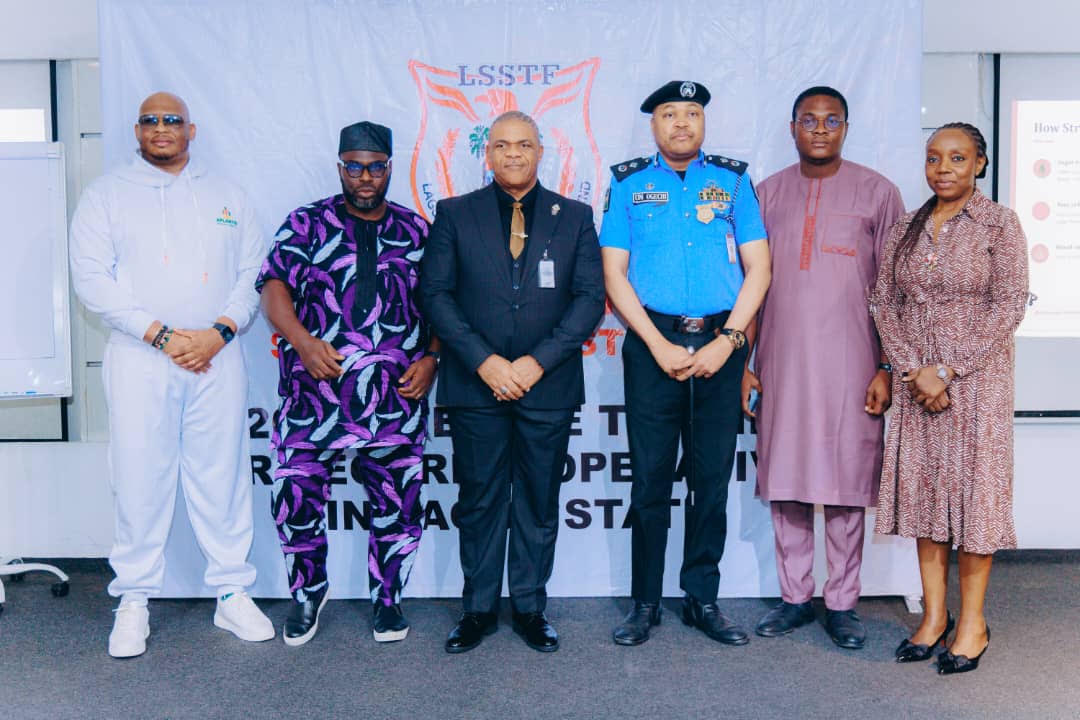
They made the assertion yesterday at the August edition of the Lagos State Security Trust Fund (LSSTF) Statewide Inter-Agency Training for Security Operatives in Lagos.
The programme, themed “Enhancing Professional Capacity, Ethical Standards and Inter-Agency Collaboration for Effective Security Operations,” brought together senior officers and representatives of various security and allied agencies.
Among those who attended were the Executive Secretary/Chief Executive Officer of LSSTF, Dr Ayodele Ogunsan, represented by the Fund’s Director of Administration, Degbola Lewis; Assistant Inspector-General of Police in charge of the Force Criminal Investigation Department (FCID) Annex, Alagbon, Lagos, Simeon Akpanudom; and Assistant Inspector-General of Police, Maritime Police Command, Okunade Nurat, represented by DCP Udu Moses Ogechi.
Also present were Executive Director/Deputy Director of Clinical Services, Atlantis Pediatric and Multispecialist Hospital, Dr Diya Ololade Oluwadamilola, and Clinical Nutritionist, Titilayo Akindele.
For the first time in the history of the Statewide Inter-Agency Training, the LSSTF introduced a medical check-up component, giving participants the opportunity to undergo basic health screening, including blood pressure, blood sugar, weight and height checks, as well as other vital-sign assessments.
The initiative, according to the organisers, was introduced to make the training more comprehensive while ensuring that security personnel could assess their health without having to bear the cost of the medical tests.
Welcoming participants to the sixth edition of the training, Ogunsan, who was represented by Lewis, said the initiative, which commenced in March, would continue until December and thereafter become a permanent feature of the Fund’s security interventions.
He said his decision to prioritise human capacity development was based on his conviction that people remained the most important asset of any organisation.
“I’m a people-oriented person and I believe so much in people because they are the greatest asset that God has given,” he said.
Ogunsan explained that upon assuming office, he examined the core responsibilities of the Fund and identified logistics, equipment and human capacity as critical areas requiring intervention.
He said the training was designed to ensure that security personnel across Lagos continuously acquired new knowledge, strengthened their professional capacity and built relationships across institutional boundaries.
He welcomed the senior officers, facilitators and other stakeholders at the programme, noting that the presence of experienced security professionals would provide participants with opportunities for mentorship, networking and knowledge exchange.
Delivering the opening remarks, AIG Akpanudom described the training as timely, noting that criminals were increasingly exploiting technology, institutional gaps and jurisdictional boundaries.
He said security institutions must therefore become “professionally competent, ethically grounded, technologically responsive and capable of working seamlessly across institutional boundaries.”
According to him, professional capacity was not merely about having personnel on the ground but about equipping officers with knowledge, skills, discipline, sound judgment and competence.
He advocated continuous training in intelligence analysis, criminal investigation, cybercrime, financial crime investigation, forensic techniques, crisis management, communication, evidence management and technology-driven security operations.
“The moment a security officer stops learning is the moment that officer begins to fall behind the criminals he or she is expected to confront,” Akpanudom warned.
On public confidence, he declared: “Public trust is not demanded; it is earned.”
Other News
He urged officers to recognise that every interaction with members of the public could either strengthen or weaken confidence in the security system.
Akpanudom also called for an end to institutional silos, advocating joint intelligence analysis, coordinated operations, regular inter-agency meetings, secure information sharing and joint problem-solving.
Representing the AIG, Maritime Police Command, Okunade Nurat, DCP Udu Moses Ogechi, brought the maritime dimension into the discussion, explaining that the command maintained operational presence across waterways in several parts of the country.
She said the Maritime Police Command interfaces with agencies including the Nigerian Inland Waterways Authority (NIWA), Nigerian Maritime Administration and Safety Agency (NIMASA), Nigerian Navy, Nigeria Customs Service and Army amphibious units.
According to her, effective security of the nation’s maritime corridors was crucial to the Nigerian economy because numerous communities depend on waterways for transportation, fishing and commerce.
She said intensified patrols and inter-agency collaboration had contributed to a significant reduction in piracy, kidnapping and other water-related crimes.
“The collaboration with all the agencies has really helped us a lot, and we are recording positive in that axis,” she said.
Nurat urged participants to take the lessons from the training back to their respective commands and strengthen intelligence sharing, particularly with local communities, traditional leaders, vessel owners and other maritime stakeholders.
The training later progressed into expert-led sessions focusing on the health and wellbeing of security personnel.
Speaking on metabolic syndrome and the health risks associated with the demanding nature of security work, Dr Oluwadamilola explained that hypertension, Type 2 diabetes and elevated cholesterol levels were closely connected and could lead to severe complications, including stroke, heart attacks, blood-vessel damage and kidney disease.
He urged security personnel to undergo regular health checks and pay attention to nutrition, exercise, stress management and adequate sleep.
Oluwadamilola introduced the FRESH health protocol, with “F” representing food and vitamins, “R” for reducing or removing stressors, “E” for exercise, “S” for sleep, and “H” for health checks and vaccination.
Similarly, Clinical Nutritionist Akindele focused on the relationship between chronic stress, nutrition, hypertension and diabetes, noting that security personnel were particularly exposed to prolonged stress because of the demanding nature of their duties.
She explained that sustained stress could trigger hormonal responses that contribute to weight gain, elevated blood sugar and increased blood pressure.
Akindele urged officers to monitor their vital signs and make healthier food choices, stressing the importance of knowing their blood pressure and blood sugar levels.
The convergence of operational security expertise, maritime policing and preventive healthcare reinforced the central message of the training: that securing Lagos requires more than equipment and personnel.
It requires competent officers, ethical leadership, intelligence-led operations, inter-agency trust and personnel who are healthy enough to perform their demanding duties.