Follow Us on Google
From Abel Leonard, Lafia
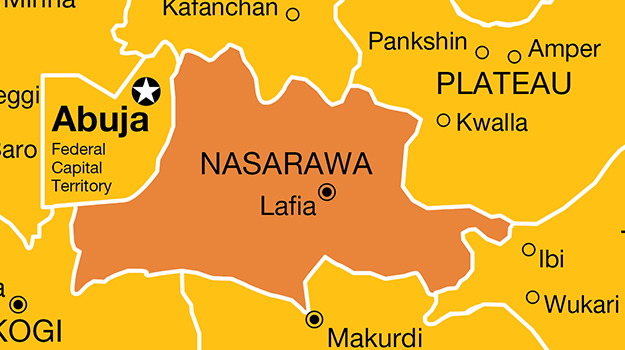
The debate over the 2027 governorship race in Nasarawa State is gaining momentum, with stakeholders and political observers insisting that it is time for the Toto/Nasarawa Federal Constituency to produce the next governor. Their argument is based on the principles of equity, inclusion, and historical precedence, which have shaped the state’s political landscape since the return to democracy in 1999.
For over two decades, the governorship has rotated among the other three federal constituencies, leaving Toto/Nasarawa as the only one yet to occupy the top seat. Many believe this long-standing exclusion violates the unwritten zoning arrangement that has played a crucial role in stabilising the state’s political system.
According to Alhaji Mohammed Usman, a political leader from Nasarawa LGA, the demand for a power shift is long overdue. “We have supported every governor from other constituencies, yet we have never been given the chance. This is about fairness. If we want Nasarawa to continue enjoying political harmony, we must allow every part of the state to have a sense of belonging,” he said.
The sentiment is widely shared among political analysts, who argue that denying the Toto/Nasarawa constituency a shot at leadership could create discontent and political alienation. Dr Aminu Adamu, a political analyst, noted that the failure to uphold zoning could erode trust in the system. “Democracy thrives on fairness. If one region feels sidelined for too long, it breeds resentment and weakens the unity of the state,” he stated.
Beyond the question of equity, the developmental needs of Toto and Nasarawa LGAs have further fuelled calls for a governor from the area. The two local government areas face severe infrastructural deficits, with poor roads, inadequate healthcare facilities, and a lack of essential government presence.
“Toto is rich in solid minerals like limestone and clay, yet the area remains one of the most underdeveloped in the state. If we have a governor from here, there will be focused attention on harnessing these resources to drive economic growth,” said Hon. Suleiman Adogi, a community leader from the area.
Security is another pressing issue in the constituency. For years, Toto and Nasarawa LGAs have been hotspots for banditry, farmer-herder clashes, and communal conflicts. Stakeholders believe that a governor from the region would have a deeper understanding of the security challenges and develop community-driven strategies to address them.
“No one understands our security situation better than us. We need a leader who has lived through these problems and knows how to solve them,” said Mallam Ibrahim Musa, a youth activist from Nasarawa town.
The constituency is also home to a diverse ethnic population, including Gwandara, Bassa, Egbira, and Hausa communities. Stakeholders argue that a governor from this region would promote ethnic balance and strengthen intergroup relations in Nasarawa State.
According to Dr Grace Ochai, a lecturer, the importance of inclusivity in governance fosters peace. “When people see themselves represented at the highest level, they develop a stronger sense of ownership in government policies. Electing a governor from Toto/Nasarawa will send a clear message that Nasarawa is for everyone,” she stated.
Within the constituency, Toto LGA is seen as the most marginalised, with no history of producing key government officials until recently, when the present Governor Abdullahi Sule appointed two sons of the constituency as Accountant General and Secretary to the State Government (SSG). While Nasarawa LGA has benefited from its proximity to Abuja, Toto remains largely neglected, lacking critical infrastructure and government presence.
“For decades, Toto has been overlooked in the political equation of this state. But Governor Abdullahi Sule is trying to balance things recently with the appointment of the Accountant General of the state and the Secretary to the State Government from the zone for equity. Toto/Nasarawa deserves special consideration,” said Chief Bala Wakili, an elder statesman from Toto.
Critics of zoning argue that the emphasis should be on merit rather than regional rotation. However, proponents counter that zoning does not sacrifice competence but ensures fairness in power distribution while still allowing the emergence of qualified leaders.
“No one is saying we should elect someone who is not competent. Our constituency has produced highly educated, experienced individuals who can lead effectively. Zoning simply ensures that all parts of the state have equal opportunities to contribute to governance,” said Comrade Yusuf Danjuma, a civil society advocate.
The principle of rotational governance has kept Nasarawa politically stable. Analysts warn that any deviation could lead to political crises, as seen in other states where zoning arrangements were ignored.
“When you abandon zoning, you create unnecessary political tension. Nasarawa has enjoyed peace because of this balance, and we must uphold it,” said Barrister Yakubu Madaki, a constitutional lawyer.
For many young people in the constituency, the push for a governor from Toto/Nasarawa is not just about politics but about representation. Many feel disconnected from the political process due to their constituency’s long history of exclusion.
“Our generation needs to see people from our communities in leadership. It will inspire more youth participation in governance and reduce voter apathy,” said Fatima Ibrahim, a student leader in Nasarawa.
Political parties are now under pressure to consider zoning in their selection process. Both the ruling APC and the opposition PDP are expected to field candidates from different regions, and stakeholders warn that ignoring Toto/Nasarawa could cost them votes in 2027.
“We will not be silent this time. Any party that fails to recognise our right to the governorship will face serious resistance,” said Hon. Musa Galadima, a former local government chairman.
As 2027 draws closer, it remains to be seen whether political leaders will heed these calls or maintain the status quo. What is clear, however, is that the agitation for equity, inclusion, and representation will not go away anytime soon.