Follow Us on Google
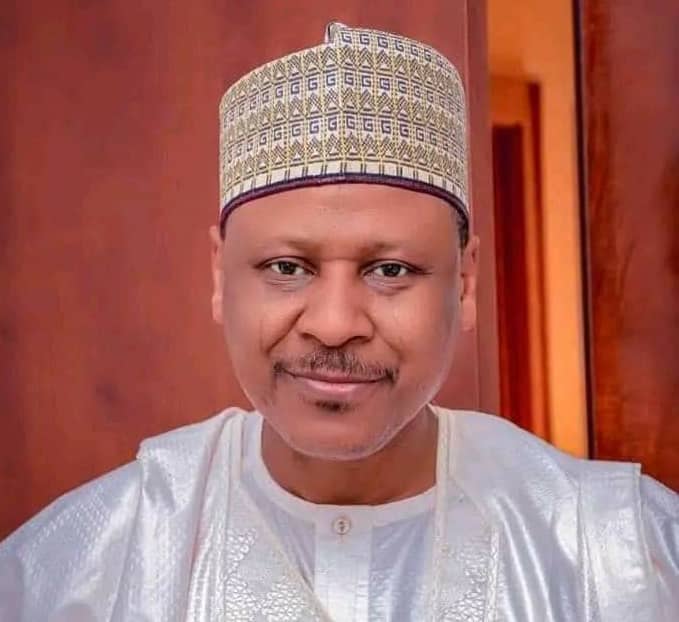
A concerned industry stakeholder, Ladi Yakubu, has warned that Nigeria’s planned Digital Switch Over (DSO), scheduled for launch on June 17, 2026, via satellite faces major technical, legal, and logistical challenges that could undermine its success.
The Kaduna-based stakeholder made his thoughts known in an open letter addressed to the Minister of Information and National Orientation, Mohammed Idris.
Copied in the letter were Minister of Communication and Digital Economy, Dr. Bosun Tijani, Director-General, National Broadcasting Commission (NBC), Dr. Charles Ebuebu, and Managing Director/CEO, NIGCOMSAT, Jane Nkechi Egerton-Idehen.
In the letter dated May 2026, Yakubu pointed out critical gaps in the government’s pivot to a FreeTV Direct-to-Home (DTH) satellite platform using NigComSat-1R.
Yakubu noted that the DSO will rely entirely on NigComSat-1R, a satellite commissioned in December 2011 with a 15-year design lifespan.
According to him, the satellite is expected to exhaust its fuel by December 2026, after which it may no longer maintain its 42.5°E orbital position.
He questioned what measures, if any, have been planned for inclined-orbit operations and potential daily signal dropouts for consumer dishes.
He noted that the successor satellites, NigComSat-2A and 2B, are scheduled for launch in 2028 and 2029 respectively, creating a potential 24- to 36-month gap in sovereign capacity.
Yakubu expressed doubts about the reliability of launch partner Thales Alenia, citing recent failures with other major operators.
He warned that any failure could force the government to lease commercial satellite capacity from operators like Eutelsat on different orbital slots, requiring millions of households to manually reposition their satellite dishes.
Yakubu stated that such a nationwide repointing exercise for an estimated five million households could cost around N100 billion and result in prolonged service blackouts.
The stakeholder also highlighted an acute shortage of Set-Top Boxes (STBs), estimating a national requirement of approximately 32 million units for full digital saturation.
Other News
He referenced ongoing litigation between the NBC and licensed local manufacturers under the Set Top Box Manufacturers Association of Nigeria (STBMAN), specifically citing Suit No. FCT/HC/GAR/CV/442/2024, which includes an injunction affecting mass importation of fully assembled receivers.
He queried how the NBC plans to meet the hardware deadline while adhering to the Federal Government’s “Nigeria First” policy favoring local manufacturing, and raised concerns about the fate of households unable to afford the roughly N80,000 cost of satellite equipment (dish, decoder, LNB, cables, and installation).
Yakubu also asked for clarification on technical standards for televisions with built-in DVB-S2 receivers to ensure features like Electronic Programme Guides and emergency alerts function uniformly.
He also raised questions about the ownership of the FreeTV platform, noting that Inview UK, parent company of Inview Nigeria, reportedly ceased operations in 2022.
He sought clear identification of the platform’s owners among NBC, BON, the Ministry, or NigComSat.
On audience measurement, Yakubu criticised the GARB system’s claimed 94% accuracy, arguing that its reliance on return-path data is incompatible with unidirectional DVB-S2 satellite broadcasts.
Yakubu warned that millions of rural viewers without broadband or smart TVs would be excluded from data collection, potentially skewing demographics toward urban, affluent audiences and distorting advertising valuations in the N605.2 billion television market.
Yakubu explained that the shift to satellite represents a departure from the original Digital Terrestrial Transmission (DTT) plan, leaving existing analogue terrestrial broadcasts of over 50 state and private stations operational for now.
He questioned provisions for poor viewers and the abandonment of the lower-cost DTT approach (under N50,000 per setup).
While acknowledging the strategic value of satellite for nationwide coverage, Yakubu averred that the current execution roadmap risks creating service disruptions, legal conflicts, and commercial failures unless key issues around satellite continuity, hardware supply, funding for contingencies, and measurement systems are urgently addressed.
The stakeholder urged transparency from regulatory authorities to ensure the DSO succeeds beyond its ceremonial launch.