Follow Us on Google
•‘We’re deliberate in our actions’
By Fred Ezeh, Abuja
National Examinations Council (NECO), has said it faced enormous challenges when it was established 25 years ago as Nigeria’s indigenous examination body.
The council noted that Nigerians, initially, found it difficult to trust its processes, operations and credibility, having, for decades, relied on other established examination bodies particularly the West African Examinations Council (WAEC) that majorly conduct ‘O’ Level examinations.
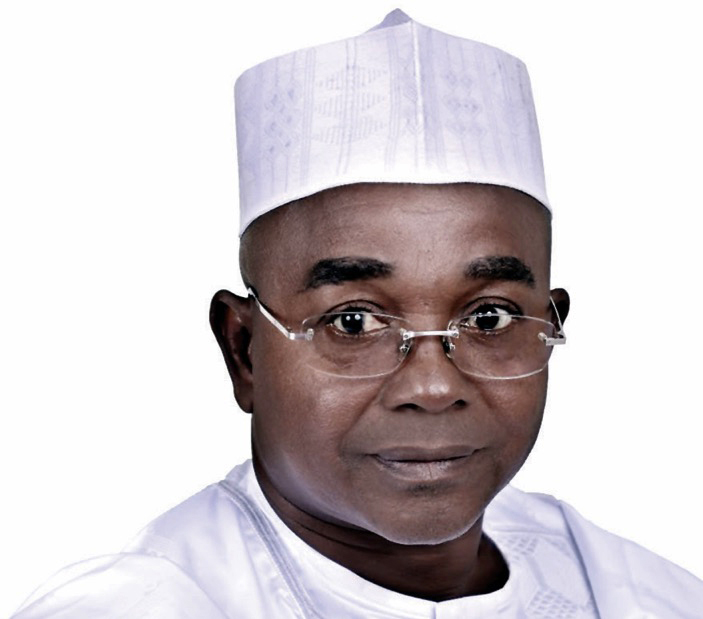
At an event to mark its 25th anniversary in Abuja, Registrar of NECO, Prof. Ibrahim Wushishi, said the significance of the council’s emergence cannot be overstated looking at its impact in the past: “NECO was established to democratise access to examinations, provide a credible alternative assessment body and build indigenous capacity in educational evaluation.
“Its establishment redefined the architecture of secondary school certification in Nigeria. In 1999, NECO entered the Nigerian educational landscape burdened by examination failures, malpractices and overdependence on a single regional assessment body.
“Twenty-five years later, NECO stands as one of Africa’s most extensive, technologically-driven and nationally-rooted assessment institutions, having conducted examinations for tens of millions of Nigerians, expanded its operations to nine countries, and undergone sweeping digital transformation.
“Through its flagship examinations, notably, the Basic Education Certificate Examination (BECE), Senior School Certificate Examination (SSCE), National Common Entrance Examination (NCEE), and National Gifted Examination, the council has impacted millions of lives by opening doors to higher education, employment and self-actualisation.
“Yet, the true measure of NECO’s relevance lies not only in the scale of its operations, but also in the consistency of its values. In a context where examination malpractice has often threatened the credibility of assessment systems, NECO’s commitment to integrity has remained unwavering.
“The council’s continuous investment in security protocols, monitoring mechanisms and public enlightenment demonstrated it understands that the value of any certificate depends on the trust it commands.”
What exam data say
Data obtained from NECO showed that in its 25 years of existence, over 28 million candidates registered for its examinations, while more than 27 million eventually sat for the examinations nationwide. This indicates a steady growth in participation over the years.
In 2000, about 890,729 candidates sat for NECO examinations, while by 2025 the figure had risen to 1,358,329 candidates. This represents an overall growth of 52.5 per cent, reflecting the council’s expanding role in providing access to secondary school certification across Nigeria.
The council recorded a 55.84 per cent overall pass rate with a minimum of five credits in 2000. The figure rose to 84.26 per cent in 2025. In 2000, only 25 per cent of candidates that sat for the examination obtained credits in both English Language and Mathematics. The figure dropped to 8.25 per cent in 2011 before rising significantly to 60.26 per cent in 2025.
NECO said: “Male candidates initially outperformed their female counterparts but the figures began to change along the way. In 2000, male candidates recorded 57.14 per cent participation, while female participation stood at 54.30 per cent.
“However, from the early 2000s, the trend gradually changed. By the mid-2000s, female candidates consistently outperformed males in both overall pass rates and core subject performance.
“In 2021, male participation in NECO examinations was at 92.29 per cent, while female participation was 96.04 per cent. By 2025, male participation dropped to 81.04 per cent, while female participation stood at 87.48 per cent.”
NECO added that female candidates have also maintained a consistent advantage in English Language and Mathematics performance in recent years.
Structural shift
The council said one of the most significant findings from its data was the reversal of gender performance patterns over time: “Male candidates had a clear advantage between 2000 and 2005, while the mid-2000s marked a transition period characterised by convergence in performance levels. However, between 2015 and 2025, female candidates sustained a clear advantage.
Other News
“The development suggests significant improvements in female educational attainment, retention, progression and examination preparedness. Despite historically lower participation levels, female candidates have not only matched but also surpassed male performance in recent years.
“The trend indicated that the examination system does not exhibit systemic gender bias and that learning outcome gains have been inclusive, with women increasingly taking the lead. Gender is no longer the major factor driving inequality in examination outcomes.”
The council stressed that while substantial progress has been made in gender equity, attention should now shift towards addressing geographic and structural inequalities in educational outcomes. It observed that although state-level disparities remain significant, the distribution of performance has broadened considerably over time.
It said: “In 2000, high performance was concentrated in a few states. But by 2010, there was a widespread collapse in performance levels nationwide. However, by 2025, there was broad-based improvement and a more even distribution of performance across states.”
Key state-level performance
State-level analysis of performance in Mathematics and English revealed both persistent disparities and major structural changes over the 25-year period.
In 2000, strong performance was concentrated in a few states led by Bayelsa, 62.26 per cent; Ogun, 51.37 per and Rivers 49.09 per cent. Many states recorded less than 10 per cent. This reflected a highly uneven distribution of learning outcomes nationwide.
By 2010, performance had deteriorated sharply across nearly all states, reflecting broader system-wide decline. Even Bayelsa, the highest-performing state at the time, recorded only 27.74 per cent, while several states remained below 10 per cent.
However, by 2025, performance levels improved significantly in all states. Leading states included Abia (83.31 per cent), Imo (83.09 per cent) and Ebonyi (80.60 per cent). States such as Sokoto also recorded noticeable improvements despite remaining among the lower-performing states.
NECO noted that the data revealed diverging performance trajectories among states. For instance, Abia State improved dramatically from 4.82 per cent in year 2000 to 83.31 percent in 2025, emerging as the best-performing state in Mathematics and English.
Similarly, Anambra improved from 8.33 per cent to 76.80 per cent, reflecting strong but comparatively moderate gains. Ebonyi and Imo recorded remarkable progress, while Ogun and Rivers maintained relatively strong performance over the years. States such as Sokoto and Zamfara, despite improvements, continued to record comparatively lower outcomes.
According to NECO, the divergent trajectories underscore the uneven nature of educational development across states and highlight the need for targeted, context-specific interventions. The council attributed the disparities to differences in infrastructure, teacher quality and socio-economic conditions.
NECO’s gains
The Registral said one of NECO’s greatest achievements was ending the effective monopoly previously enjoyed by the West African Examinations Council (WAEC): “Before 1999, WAEC administered senior secondary examinations for the entire country. It was a body headquartered outside Nigeria and designed to serve multiple Anglophone West African countries simultaneously.
“Critics had long argued that the arrangement compromised Nigeria’s educational sovereignty and left the system poorly aligned with domestic curriculum priorities. NECO changed that.”
He explained that by conducting SSCE examinations for both internal and external candidates, alongside BECE and NCEE, NECO introduced genuine competition into the assessment sector: “The council grew its internal SSCE candidature from about 890,000 in 2000 to over 1.2 million in 2022, with cumulative participation exceeding 24 million candidates.
“BECE expanded from 35,259 candidates in year 2000 to 161,550 candidates in 2022, representing a cumulative total of over 2.1 million candidates. NECO made examinations more affordable, introduced governance reforms, strengthened institutional integrity and implemented measures aimed at curbing examination malpractice.”
Currently, NECO conducts examinations in nine countries, including Benin Republic, Niger Republic, Equatorial Guinea, Côte d’Ivoire, Gabon, Togo, Burkina Faso, Saudi Arabia and the United Kingdom.