Follow Us on Google
• Experts map new strategy for Yorubaland, Gani Adams leads fresh push for state police
By Lukman Olabiyi
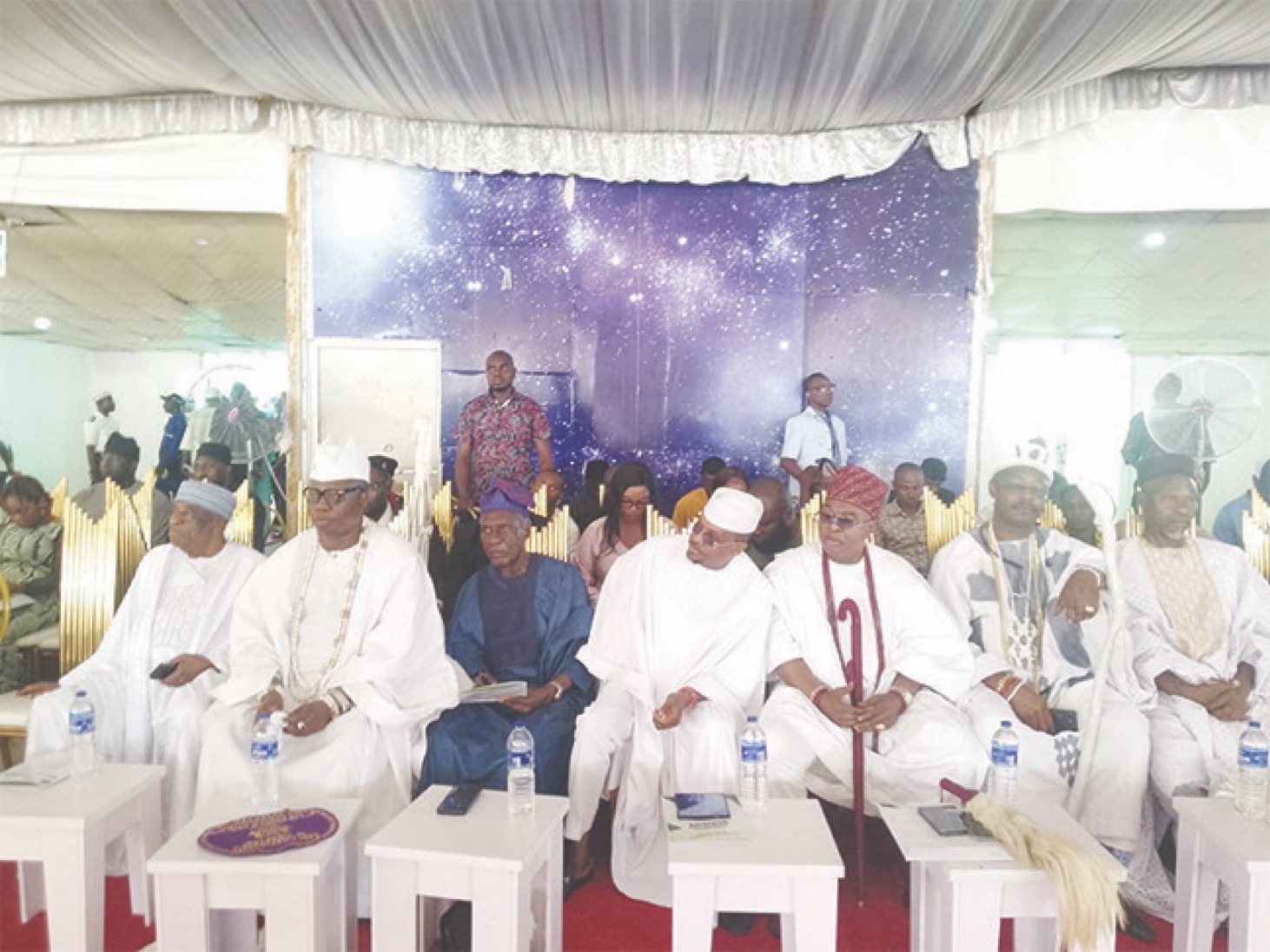
The atmosphere inside the hall in Oregun, Lagos, on Monday for the South West Security Summit carried the weight of a region on edge. Traditional leaders, security experts, community representatives and policy advocates filled the hall, each arrival underscoring the urgency of the moment.
With insecurity tightening its grip on the South-West, Aare Ona Kakanfo of Yorubaland, Iba Gani Adams, again made a forceful case for the creation of state police, this time warning that Nigeria can no longer afford delay:
“Whether we like it or not, the National Assembly, Houses of Assembly, governors and the President must support the creation of state police now.”
For Adams, who is serving as the 15th Aare Ona Kakanfo since 2018, the push is deeply personal. His oath to defend the Yoruba nation, he said, compels him to speak out as kidnappings, killings and banditry invade spaces once considered safe.
Despite several engagements with South-West leaders over the years, he lamented that progress has been slow even as the crisis worsens in states such as Ekiti, Ondo, Oyo, Kwara and Kogi:
“It is only a stupid man who continues to do the same thing over and over again expecting a different result. The centralised Nigeria Police Force has become overwhelmed, overstressed and overused, unable to keep pace with modern threats or track criminals operating across difficult terrains”
The summit, themed “Towards a United Front Against Insecurity in Yorubaland,” drew participants from Oyo, Ogun, Osun, Ondo, Ekiti and Lagos states, as well as Yoruba-speaking communities in Kwara and Kogi states. With more than 33 socio-political and cultural organisations represented, the event became a melting pot of ideas, warnings and calls to action.
Professor of Strategy and Development, Anthony Kila, described security as “the bedrock of community life,” warning that ongoing neglect threatens to plunge the nation into deeper turmoil: “Policing in Yoruba land must be decentralised. Centralised policing cannot work.”
For U.S.-based security specialist and former police officer, Abiodun Ramon Oseni, the solution begins with recruiting officers who understand the language, culture and terrain of the places they serve. He urged governments to confront corruption, address youth unemployment and strengthen local intelligence.
Retired Assistant Commissioner of Police, Joki Lasisi, took the audience on a historical journey, recalling how intelligence, epitomised by the legendary Moremi Ajasoro, once shielded Yoruba societies from invading forces. Intelligence gathering, he said, must return to the centre of security strategy.
At the end of the deliberations, stakeholders adopted a comprehensive 17-point action plan designed to combat the rise of banditry, kidnapping and insurgency in the South West. The resolutions formed part of the communiqué issued.
Participants called for urgent reforms in education, policing, border security, agriculture and community engagement to strengthen the region’s defence against emerging threats.
The summit sought compulsory, free and qualitative education at pre-tertiary level, described as essential to curbing extremism and underdevelopment.
Other News
It also renewed calls for the immediate establishment of state police in South West, with recruitment strictly from indigenous communities and individuals with verified security backgrounds.
It recommended that the proposed state police system should blend traditional community-based structures with modern surveillance technologies, including drones and UAVs.
To expand expertise, stakeholders proposed a global talent volunteer programme that would allow Yoruba professionals in the diaspora to support specialised policing units under strict vetting procedures.
The communiqué urged South West governments to improve the welfare of local security operatives and set up a Security Welfare Fund under the Development Agenda for Western Nigeria (DAWN) Commission.
The summit called for a total ban on open grazing in Yorubaland and advised that cattle movement across states should be restricted to trucks and rail transport. It also recommended legislation to promote cattle ranching backed by support from the Bank of Agriculture.
To curb cross-border infiltration, the summit urged Federal Government to commence construction of protective fences and walls along Nigeria’s borders with Niger, Chad, Cameroon and Benin Republic.
While expressing support for foreign assistance in tackling terrorism, participants insisted that such cooperation must respect Nigeria’s sovereignty and international protocols.
The communiqué encouraged Yoruba youths to cooperate fully with security agencies involved in ongoing counter-offensives and advised South West governors to strengthen security collaboration with Yoruba-speaking communities in Kwara and Kogi states.
In an expression of solidarity, the summit condemned persistent attacks on indigenous communities in the Middle Belt states of Plateau, Benue, Nasarawa and Taraba.
The National Assembly was urged to prioritise restructuring and devolution of powers to support regional development and effective security governance. The summit called for the constitutional empowerment of traditional rulers to enhance intelligence gathering.
Stakeholders unanimously endorsed the proposed amendment to the Terrorism (Prevention and Prohibition) Act, which seeks the death penalty for kidnappers, their financiers and informants.
The communiqué affirmed the summit as the unified coordinating platform for regional security interventions. Participants agreed to meet twice monthly to review security situations and share intelligence across communities in Yorubaland.
The event dignitaries including Archbishop Ayo Ladigbolu (Emeritus), Senator Anthony Adefuye, Chief Imam of Yorubaland Sheikh AbdulRaheem Aduramigba, Dr. Patrick Doyle of the Itsekiri Omoluabi Forum, Shina Peller, Mrs. Bola Doherty and Dr. Oluwayomi Atte.