Follow Us on Google
From Stanley Uzoaru, Owerri
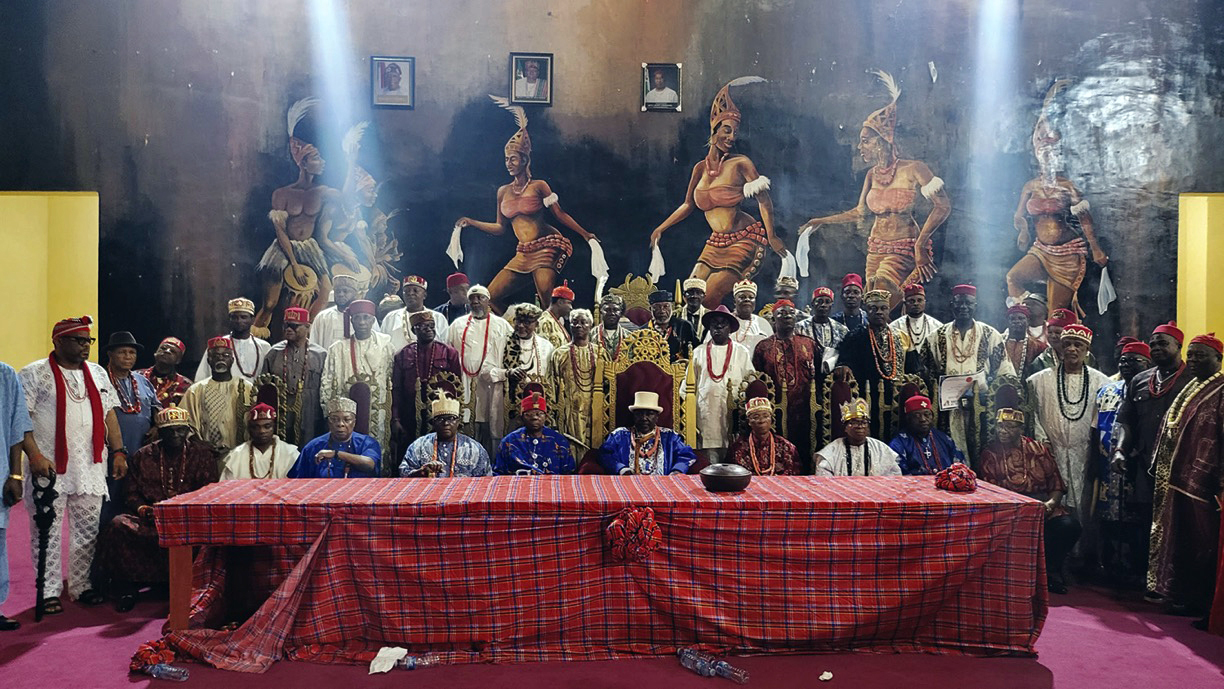
In Owerri, Imo State, under the quiet weight of red caps and office, more than 40 men stood in line for recognition. But the ceremony was not just about honour. It was about drawing a boundary.
Chairman of the South East Council of Traditional Rulers, Eze Emmanuel Okeke, used the inductionof the second batch of Ndi Ndu Uzoije Igbo to issue what he called a final warning: “Stop parading yourselves as Eze outside your communities”.
The message was blunt, public and personal. Okeke, who is also the chairman of Community Policing in Imo State, handed each inductee his certificate of recognition.
The room was full of newly affirmed custodians of Igbo tradition. The warning was aimed at those who were not in the room.
Okeke did not mince words. “This is absolute madness, an abomination to the royal stool in Igboland. We can’t tolerate this any longer,” he told the gathering.
“Can this happen in Yorubaland or the North? That is why we have collectively, as a traditional institution, condemned this and said enough is enough. We want to reclaim our dignity. And that is why we are warning those who are still parading themselves as one. We shall follow the legal procedures to haunt them down.”
The core of his frustration is what council members described as the “bastardisation” of Ezeship. In recent years, many self-styled Eze have emerged in cities across Nigeria and abroad, often among Igbo associations in the diaspora. Many obtained recognition through association elections, not through the traditional and statutory process that governs chieftaincy at home. Okeke pointed to a contrast he said was impossible to ignore.
“In the West, you have Obas. In the North you have Emirs. You don’t see people just declaring themselves Oba of London or Emir of Houston. The stool is tied to land, to people, to process.”
For the council, legitimacy is not symbolic. It is procedural, and it is codified.
Okeke laid it out step by step for the inductees: “Your community must first elect you as Eze-elect. Without a community, there is no stool.
Other News
The community presents you to your Local Government Area, the LGA processes your documents. Those documents go to the state Ministry of Local Government and Chieftaincy Affairs and, finally, the governor, after screening, issues a certificate of recognition and the staff of office.
“It is not something you register with the Corporate Affairs Commission,” Okeke said. “And those who think it can be bought with money should have a rethink.”
He made the point in capital letters for emphasis during the event: Under Nigerian law, a traditional ruler must have an autonomous community to govern. The stool is territorial. The council argues that diaspora associations, however well-meaning, do not constitute autonomous communities under the law.
The induction in Owerri was the second batch this year. The council has been quietly building a register of recognised traditional leaders across the Southeast as part of broader efforts around community policing and cultural preservation.
But the diaspora question has become louder. Social media announcements, fundraising flyers, and association constitutions now regularly list “Eze Ndi Igbo” for cities far from Igboland. Some of those title holders have threatened legal action against the council for “defamation.”
The council’s response is to go further into documentation, not less. Certificates were issued on the spot in Owerri. Names will be forwarded to state chieftaincy records. The idea is to create a clear line between culturally recognised leaders and self-appointed ones.
For Okeke and the council, this is not about politics. It is about meaning. A stool, they argue, is not a brand. It carries rituals, land disputes, burial rites, conflict mediation, and a direct line to ancestors. When that is flattened into a title for an association dinner, the institution loses weight at home.
“We want to reclaim our dignity,” Okeke said. The warning was his final public shot before the council moves to legal enforcement against those who continue to use the title without state recognition.
The 40 inductees left Owerri with certificates and a clear directive to go back to their communities. The others, the council said, have been warned.
What happens next will likely test how far tradition, state law, and diaspora identity can stretch before something breaks.