Follow Us on Google
The Chartered Institute of Directors (CIoD) Nigeria has called on the Federal and State Governments to strengthen corporate governance across public and private institutions, describing it as a critical foundation for sustainable economic growth, institutional resilience and long-term national competitiveness.
The call was made during the Institute’s Bi-Annual State of Corporate Governance Press Conference, where it presented the first edition of its Governance Health Check and State of Corporate Governance in Nigeria Report, themed “Tracking Governance, Strengthening Institutions, Enhancing Competitiveness.”
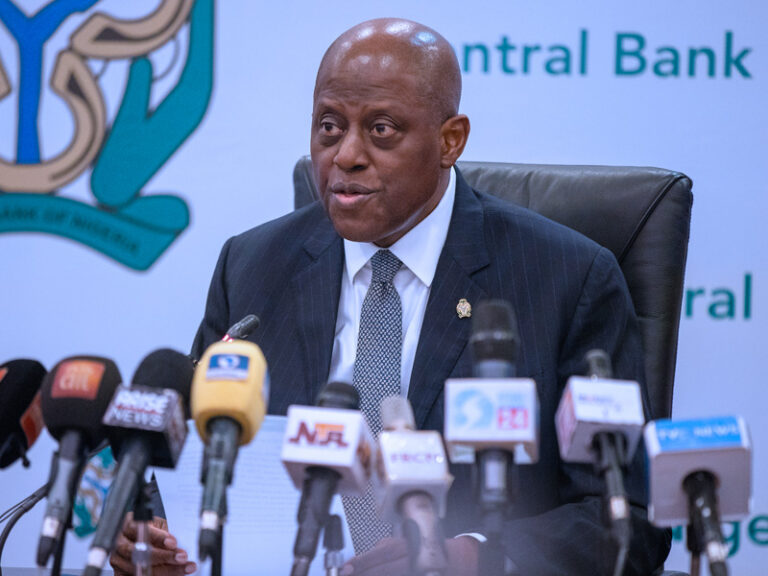
Speaking at the event, the President and Chairman of Council of CIoD Nigeria, Mr. Tijjani Oyebanji, said governance should no longer be regarded as a mere compliance obligation but as a strategic driver of responsible leadership, investor confidence, public trust and sustainable development.
According to him, countries and organisations with strong governance structures are better positioned to attract investment, withstand economic shocks and achieve long-term success.
“Across the world, governance has become the determining factor for sustainable growth, investor confidence, institutional resilience and national competitiveness,” he said.
He noted that while Nigeria possesses governance frameworks comparable to global standards, the country’s greatest challenge remains weak implementation, inconsistent enforcement and inadequate accountability.
“Our greatest challenge has never been the absence of policies; it has been the consistency of implementation, the strength of enforcement and the collective commitment to accountability,” he stated.
Presenting highlights from the Nigeria Governance Diagnosis – H1 2026 Scorecard, he identified several areas of concern affecting the country’s governance landscape.
The report revealed that while 66 per cent of directors use Artificial Intelligence (AI) in their organisations, only 22 per cent have governance structures for AI, and just 10 per cent deploy AI to manage complex risks.
On corruption, the report noted that Nigeria ranked 142nd out of 182 countries on the Corruption Perceptions Index (CPI) with a score of 26 out of 100, placing the country below the Sub-Saharan African average.
The report also disclosed that the Nigerian Exchange (NGX) sanctioned 32 listed companies, imposing a combined N562.6 million in fines over financial reporting and filing infractions.
It further highlighted the vulnerability of family-owned businesses, noting that about 70 per cent of African family businesses fail before reaching the second generation.
According to the Institute, Nigeria’s corporate governance environment is currently at a critical turning point.
While governance standards continue to improve globally and across Africa—with countries such as South Africa strengthening oversight through the King V Corporate Governance Code—the report observed that governance implementation and regulatory enforcement in Nigeria remain fragmented.
Other News
He stressed that the report was intended to stimulate constructive dialogue and encourage reforms rather than assign blame.
“Our intention is not to apportion blame but to stimulate informed dialogue, encourage institutional reforms and inspire collective action,” he said.
He urged policymakers and regulators to strengthen anti-corruption institutions, fully implement the Nigerian Public Sector Governance Code and establish a harmonised regulatory framework to improve oversight.
He also advised corporate organisations to strengthen board effectiveness by institutionalising technology oversight, refreshing board composition, integrating Environmental, Social and Governance (ESG) principles into business strategy and developing robust executive succession plans.
Reaffirming the Institute’s commitment to promoting global best practices, Oyebanji said CIoD Nigeria would continue to build the capacity of directors and support governance reforms that strengthen institutions and create long-term value.
“Corporate governance is not a bureaucratic burden; it is a competitive weapon. Markets and nations that build transparent, accountable institutions will attract global capital, while those with weak governance systems risk losing investment opportunities,” he said.
Also speaking, the Director-General and Chief Executive Officer of CIoD Nigeria, Taiwo Nolas-Alausa, described governance as the cornerstone of sustainable economic development and national prosperity.
He said the Governance Health Check report revealed encouraging progress in some areas but also exposed significant gaps in public sector governance, board effectiveness, cybersecurity, artificial intelligence oversight, sustainability reporting and institutional accountability.
“Around the world, strong governance is increasingly becoming the gateway to investment, innovation, competitiveness and public trust. Nations and organisations that embrace transparency, accountability and responsible leadership will thrive. Those who delay risk being left behind,” Nolas-Alausa said.
He called on governments to accelerate governance reforms, particularly the implementation of the Nigerian Public Sector Governance Code, while ensuring merit-based appointments and stronger institutional oversight.
The CIoD chief also urged corporate boards to strengthen governance structures, embrace AI and cybersecurity governance, integrate ESG into strategic planning and view governance as a business advantage rather than a compliance requirement.
He further encouraged investors, professional bodies, civil society organisations and the media to continue promoting accountability and transparency while holding institutions to the highest ethical standards.
Addressing members of the Institute, Nolas-Alausa urged directors to remain ambassadors of ethical leadership, assuring that CIoD Nigeria would continue to provide training, research and governance support to help organisations navigate an increasingly complex business environment.
He concluded by urging business leaders to begin immediate governance reforms, noting that deliberate collective action would ultimately strengthen institutions and transform Nigeria’s economic future.