Follow Us on Google
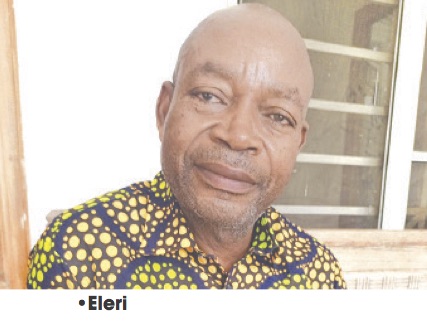

The Executive Director, Technology for Transformative Development Foundation (TTD), Ewah Otu Eleri, is passionate about basic education in Ebonyi State.
In 2022, the NGO conducted baseline assessment of schools in the state. He spoke to Daily Sun on the outcomes of the USAID-sponsored survey, explaining that it exposed beyond acute shortage of teachers to dearth of facilities, growing school dropouts and malnutrition.
Your organization conducted a survey of basic education in Ebonyi State, let’s know what the study was all about and possibly the outcome.
The United States Development Agency (USAID) supported Ebonyi State and Technology for Transformative Development Organization, the NGO that I work for to conduct a baseline assessment of primary schools in the state. So, out of the 1,010 primary schools in Ebonyi State, we covered about 360 primary schools where we interviewed children, their teachers, their parents and community leaders who form what we use to call PTA or the school-based management committee. We went further to interview those who are Local Government Education Authorities, so it was very comprehensive.
The results were shocking. Children from primary one to six cannot perform basic mathematical exercises. Being able to count at their age- appropriate levels; being able to do simple multiplications and so on. The level of literacy which means reading and writing and recognizing words and phonics was also very poor. All of them below average. And the research we did was based on material from the Faculty of Education, University of Nigeria Nsukka, where the resource persons who conducted it for us came from. So, they used the best up-to-date scientific methods in conducting this research. Our children were not doing well. And that is number one. Number two is that we found out that one of the reasons Ebonyi pupils are not doing well is the inadequacy of teachers. Over the past 10 years, teachers who retired, who left service or who even died have not been replaced. No one teacher has been recruited for over 10 years. So, we have a major gap in the staffing of our schools.
Further, with the available teachers, urban areas like Abakaliki, Afikpo and some urban places, sometimes their schools have more teachers than they need. While in rural areas there are hardly any teachers. We have situations where a school that has Primary one to six has less than six teachers and they pull children together to teach them. Further, not only is the allocation of teachers very poor, it is also because the existing teachers, very few of them, have had any retraining after they left school. So, knowing modern communication and teaching methods is completely absent from Ebonyi schools. And we looked at the children; we asked the children how many of them have school books; textbooks like English, mathematics, basic Sciences, they are completely deficient in most of our schools. So, we have children who go to school without school books and in fact, some children go to school without exercise books. Not only do they not have books to refer to, or to do homework, some of our children don’t even have exercise books to copy their notes.
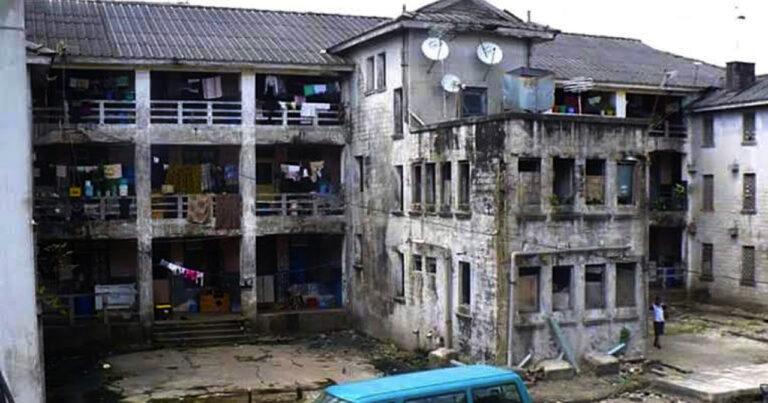
In the area of infrastructure, while the government has done a lot in building new UBEB modelled classrooms, you can find some schools having more classrooms than they need. While so many schools have none and our children are attending classes in classrooms that look as if they are poultry; chicken farms.
Some have no roofs; most have no windows and doors. It does not motivate the pupils. The reason being that all these resources both teachers and classrooms have no rational basis for their allocation. There is no system in place. There is no framework in place for the distribution of these key resources, either teachers or classrooms because they are all politically motivated. Every allocation of these important resources in a school environment are politically motivated.
Over 80 percent of our schools have nonfunctional toilets. So, sometimes when children go to school and they are pressed, they return home to use the toilets, and the youngest ones many times don’t come back to school after using the toilets. So, there are no toilets and there are consequences to school performance. Not to talk about school health issues. Water and sanitation in schools. Over 90 percent of our schools don’t have functional water schemes. This has serious implications on the school health for diarrhea and other diseases the children contract. So, Ebonyi schools are completely run down over the past 10 years, not only under Dave Umahi’s administration but even before his administration. David Umahi’s administration only consolidated on this deterioration and made it a policy to defund education.
So, we are in a situation where we have a crisis and everybody is seeing it. That we, a state of Igbo stock in the southeast, is considered an educationally backward state, having the same level of statistics as North Eastern states, or North Western states in Nigeria. And we see it in the number of people out of school children. We have the highest in Southern Nigeria. Not only a situation where our children do not perform well, school attendance has been rolled back.
Between 1999 and 2003, we saw an explosion in the enrolment figures in basic education in Ebonyi State. Education was truly free. School fees were abolished. The multiplicity of fees that we have now were not in place that time. Government encouraged children to come to school. We doubled our school enrolment.
Today, two out of three children who finished junior secondary do not continue to senior secondary school, they drop out. Ebonyi State is one of the few states where you hold graduation ceremonies for primary schools which gives parents the impression that after primary school, their children have graduated. And when they manage to go to junior secondary schools, which should be compulsory in the first place, because the national policy on universal basic education 2004 makes is mandatory, compulsory for all children in Nigeria to have nine years basic education. It is not practiced in Ebonyi State.
Did your study look into the issue of nutrition? Was it not a factor?
School nutrition was not in the questionnaires that were shared to pupils and teachers. But in the course on visiting the schools, we had focused group discussions where in each school we brought teachers and head teachers together to talk about other issues that were not in the questionnaire.
When we were talking, school after school, the issue of malnutrition came up. One particular headmistress on a daily basis brings garri and sugar to school because she noticed that a lot of the pupils that she had do not eat before they come to school and therefore cannot concentrate. So, this headmistress from her own resources brings garri to school Mondays to Fridays to feed the children. So, the School Feeding Programme that the federal government instituted never really functioned in Ebonyi State and it never seemed to have caught the interest of UBEB in Ebonyi State to monitor or to provide funding for the school feeding programme or to even scale it up to every school.
What did you see with pupils in crisis ravaged communities?
We visited a good number of crises affected communities especially in Onicha and Ishielu LGAs. These two local governments where schools do not operate; schools are practically non-existent because they have been abandoned. Those are exceptional situations where no alternatives were provided for children in those communities where there are crises. So, those are important challenges where alternatives need to be provided for those communities where there are crises.
What do you think is the way forward?
We need to recruit teachers. Number one, recruit teachers, number two, recruit teachers, number three, recruit teachers. Once we have done that, put in place a mechanism that distributes these teachers rationally among our schools and remove political allocation, political discretion on allocation of teachers.
We have a gap of nearly 3000 teaching positions in Ebonyi State. Let us do like Anambra and other states and begin in 2023 to recruit teachers. If we recruit 1000 teachers every year up to 2025, then we may have begun to close the gap that exists and we find a rational way of distributing them among urban and rural schools.