Follow Us on Google
From Ndubuisi Orji, Abuja
Speaker of the House of Representatives, Tajudeen Abbas, has said small and medium scale enterprises (SMEs) are crucial to the actualisation of the country’s goal to become a trillion dollar economy in the next five years.
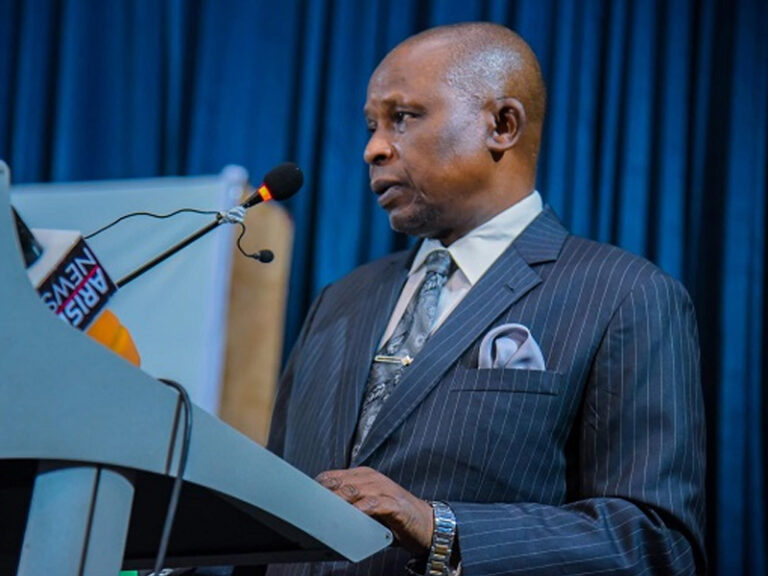
Abbas, who stated this at the Enterprise Nexus Summit held at the House of Representatives Complex, in Abuja, yesterday, said Nigeria must match interventions for entrepreneurs with coordination.
The speaker, represented by his deputy, Benjamin Kalu, stated that building a productive economy does not rest on the government alone. He stated that the government must put in place legislation that protects innovation and encourages transparency.
“The Renewed Hope Agenda aims to propel Nigeria into a trillion dollar economy in the next five years through the facility of small and medium scale enterprises. Global economic reports already show that small and medium-sized enterprises (SMEs) account for over 90 percent of businesses worldwide, contributing nearly 70 percent of employment in many developing economies.”
He explained that policy support, besides access to credit, encompasses regulatory frameworks that nurture and stifle growth, stating that “if our regulatory environment is burdened with complex licensing, high compliance costs and opaque tax systems, we would only be stopping the growth of SMEs.
“Nigeria’s entrepreneurs have never lacked ideas. They have never lacked courage. What they have lacked, too often, is a system designed to match their energy. A system where access, information, capital and public policy move in the same direction.
“The truth is simple: potential does not translate into prosperity unless the environment is intentionally structured to support it. This Summit is our attempt to close that gap deliberately, structurally and with strong institutional backing from the Office of the Speaker.
“The Renewed Hope Agenda of President Bola Tinubu, places enterprise at the centre of national transformation. This is where the legislature must lead by ensuring that the rules of the economy are coherent, modern and aligned with the realities of a population that is young, innovative and impatient for progress.”
Meanwhile, the Federal Government has been urged to adopt briquette energy, sourced from pineapple, as part of measures to address the crisis in the power sector.
An agricultural expert, Olusegun Alabi, who made the call, at a press briefing, yesterday, in Abuja, said briquettes produced from pineapple waste has the capacity to generate electricity, produce gas and power industrial operations at a very minimal cost.
He added that the adoption of the technology would serve as a strategic tool for enhancing agricultural productivity, especially pineapple production and stimulating economic growth.
Alabi, who is also the founder of Davidolar Farms, noted that adoption of briquette energy would reduce expenditure on diesel and generator maintenance, as well as prevent the shutdown of agro-processing ventures and ultimately translate into significant financial savings for Nigeria.
“Briquette energy can effectively replace conventional electricity. Our findings show that the machines we are installing will run fully on briquette power. This is not theory, it is a proven system.
“Once the factory becomes operational, Nigerians will see firsthand that our power challenges can be addressed through local innovation. Many companies are shutting down due to high energy costs, yet briquette technology offers an affordable and sustainable alternative,” he stated.