Follow Us on Google

Omoniyi Salaudeen
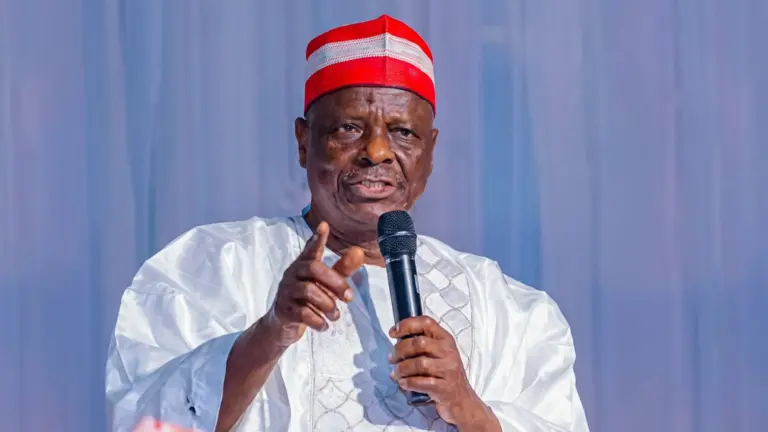
Chief Frank Kokori is a former National President of NUPENG. In this interview, he gave an insight into what Nigerians should expect from the oil industry after COVID-19 pandemic.
The Group Managing Director of the NNPC, Mallam Mele Kyari, has told Nigerians to say final bye to fuel subsidy. What’s your take on this matter, considering the politics that has characterised the regime of subsidy under successive governments?
With the present price of crude oil across the world, there will be no need for subsidy any longer. The price is too low, so, there is no question of subsidy. The price of fuel will normally come down to its minimum level. So, let us wait until the price goes up again to 60-something or 70-something dollars per barrel. Then, we will see what the country will do. For now, we are selling it below 30 dollars per barrel. Why should there be subsidy? It has cancelled itself. If they are saying that they are paying subsidy to any company now, it is a fraud, it’s a scam. What he has said is obvious. There is no argument about that.
How would you now relate this pronouncement to the actual implementation of deregulation policy?
The government has been deregulating a lot of things. And it was assumed that the oil industry had been deregulated by all those big scams they ran when people like Farouk Lawan were in the House of Representatives. The government thought they were subsidising, but it was a big scam. Subsidy became a big racket such that people were making big billions of Naira. Oil industry was deregulated, but when they said the landing cost was above what we were paying for it, then obviously government subsidized. Governments all over the world subsidise a lot of things for their citizens. They subsidise fuel, subsidise agriculture, education, and a whole lots of things. But the one with Nigeria was riddled with fraud and that was why people were annoyed. For now, there is no excuse to say they are subsidising anything. But I know they will come back to it. That is why nobody is excited about it because if we have to go by the world market price of crude, we should be buying it less than N100 per litre. So, obviously, the government is not subsiding anything. If you talk of deregulation, a lot of things have been deregulated in this country like telecom industry. But telecom is different from fuel and power energy. The power sector has crumbled. It was better when the government was taking care of the power sector. But since the distribution went to the DISCOs, fraud has crept into it because they are owned by conmen. And that is why we don’t have light any longer. Anything that happens in your area, whether transformer problem or feeder pillar fell down, the community will have to contribute money to repair it. Before now, NEPA will come and fix it up. I worked with Electricity Corporation of Nigeria in the 60s when I was young and I knew what it was. There was nothing like light failure in this country until later when it became National Electricity Power Authority (NEPA). The one we have now is one-chance. They say they are distributors, they don’t do anything. It is only in Abuja that they are trying to give people eight hours of power supply a day. In other places, three days you may not have light.
If there is proper deregulation, it is expected that the forces of demand and supply will force the price down automatically. Do you expect that to happen in Nigeria?
No, in the case of Nigeria, it won’t. If the price of crude oil rises to $90 per barrel, for instance, obviously Nigerians will tell you they can’t buy it because marketers will tell you the landing cost is about N200. In the 70s, 80s up to the 90s when I was the head of NUPENG, there was no fluctuation in prices. I went to prison when it was N2.70k per litre and within one month or two; the late Gen. Sani Abacha raised it to N11 per litre. Since then, the price has been going up. Hitherto, government would call NUPENG and call me personally for negotiation before any increase in price of fuel. Everything is now a racket. People just do round- tripping and making billions of naira for doing nothing. The government fears nobody any longer. It is a corrupt system and there is nobody checking it. We are supposed to pay less than the price we are buying it now. After the COVID-19, the world price will go up because aero planes will start flying, vehicles will start moving and machines will start running. That time, Nigerians will tell you the price is beyond their reach. Nigerians are weak people, they are gullible people, they don’t monitor their government. Civil society too is weak, labour union is weak. These are the people who monitor government. The media expose bad governance through investigative journalism.
Is there anything to cheer about the new agreement among OPEC member countries?
OPEC is powerless now because people who are producing oil outside OPEC are equal to OPEC. Apart from Saudi Arabia, Russia produces more oil than any other country. The United States produces more oil than any other country in the world. Russia is not in OPEC, they can flood the market with oil. Many other countries like Mexico are also not in OPEC. OPEC was powerful in the 70s, but it is no longer powerful. Without Saudi Arabia, there is no more OPEC. America has a large deposit of oil, but they are reserving their oil. In a situation where market is becoming expensive, they release their reserve and the price will start plunging. If agreement between Saudi Arabia and Russia goes through and they are sincere, there may be an improvement in world price because Russia can never be forced to do anything. So, the whole thing lies with Russia. Some countries use a minimum of $30 to produce the crude oil because of manpower. When they sell below $30, they are losing. Countries like Saudi Arabia get their own oil cheaper than Nigeria that goes offshore, which is quite expensive.
How do you see $45 per barrel projection by the Federal Government?
Normally, it will get to that or even a little above that once the world comes to normal in about three months’ time.