Follow Us on Google
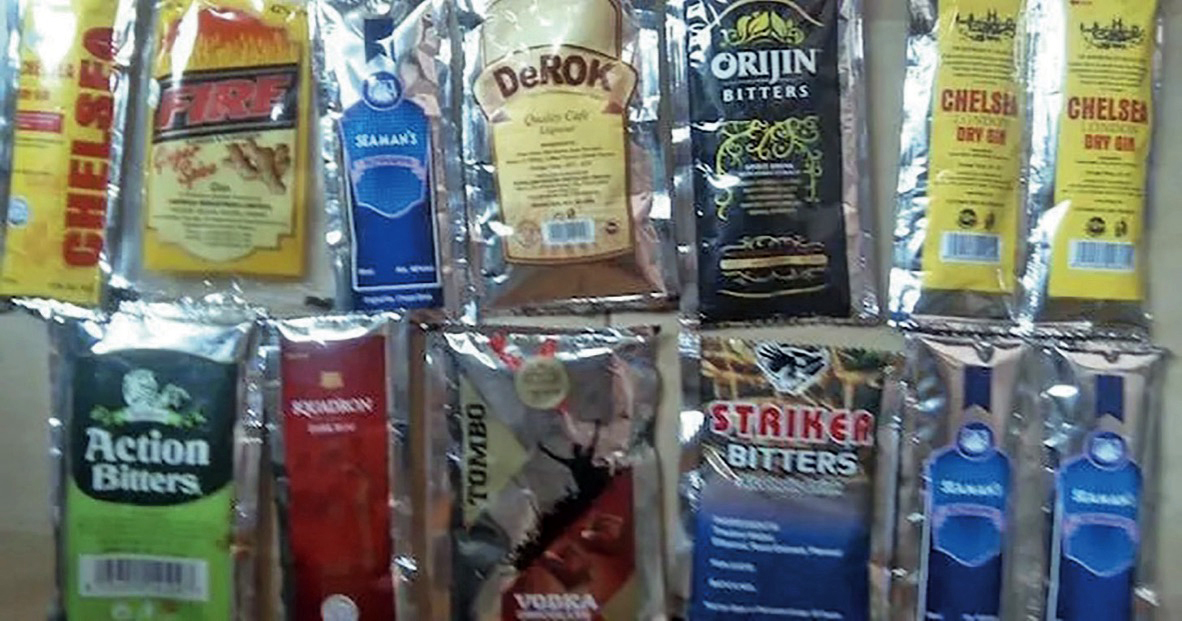
“NAFDAC investigations over the years reportedly revealed widespread misuse and abuse of the products by underage consumers. The agency linked such consumption to a range of social and public health challenges, including domestic violence, road accidents, school dropouts, substance dependency and other anti-social behaviours.”
From Fred Ezeh, Abuja
When the National Agency for Food and Drug Administration and Control (NAFDAC) moved in January 2026 to enforce a long-awaited ban on alcoholic beverages packaged in sachets and small PET bottles below 200ml, many public health advocates celebrated what they considered a major victory in the campaign against underage drinking and substance abuse.
The decision was expected to restrict easy access to alcohol, particularly among children and adolescents, and reduce the growing social and health consequences associated with excessive consumption of cheap alcoholic drinks. However, more than six months after the enforcement began, the reality on the ground tells a different story.
Across major cities and rural communities, sachet alcohol and alcoholic drinks packaged in PET bottles below 200 millilitres remain readily available in kiosks, neighbourhood stores, roadside shops, motor parks and open markets. Their continued presence has raised questions about the effectiveness of the ban and the capacity of regulatory authorities to enforce compliance.
For many Nigerians, especially low-income earners, the products remain attractive because they are cheap, portable and easily accessible. Ironically, these same qualities are what health experts identify as the major factors fuelling abuse among minors and vulnerable groups.
Why ban was introduced
NAFDAC’s decision did not come overnight. It was a result of increasing reports of alcohol abuse among young people. The agency had, for years, advocated stricter control over the sale and packaging of alcoholic beverages.
Investigations conducted by the agency linked the widespread availability of sachet alcohol to a range of public health and social problems, including addiction among youths, domestic violence, road accidents, school dropouts and other anti-social behaviours.

NAFDAC said the small-sized packages made it easier for children to purchase, conceal and consume alcohol without attracting attention from parents, teachers or law enforcement agencies.
The agency’s concerns were reinforced by disturbing reports from schools and communities. One of the incidents cited by NAFDAC involved a teacher who reportedly disclosed that a student claimed he could not sit for an examination without first consuming sachet alcohol. Such revelations strengthened the agency’s resolve to ensure that alcohol became less accessible to underage consumers.
Public health concern
For years, alcoholic beverages packaged in sachets and small-volume PET bottles have been among the fastest-selling products in Nigerian markets. Their popularity stems largely from their affordability and accessibility, making them attractive to low-income consumers.
However, health authorities argued that the same factors have also made them particularly appealing to minors and other vulnerable groups.
NAFDAC investigations over the years reportedly revealed widespread misuse and abuse of the products by underage consumers. The agency linked such consumption to a range of social and public health challenges, including domestic violence, road accidents, school dropouts, substance dependency and other anti-social behaviours.
According to NAFDAC Director-General, Prof. Mojisola Adeyeye, merely placing warning labels on the products would not adequately address the problem. “Many parents don’t know their children take alcohol in sachets because the pack size can be easily concealed and the sachet is cheap,” she said while defending the agency’s position on the ban.
The agency insisted that the policy was not intended to punish manufacturers or consumers, but to protect young Nigerians from easy exposure to alcohol.
Long road to enforcement
The campaign against sachet alcohol dates back several years. In December 2018, NAFDAC, the Federal Ministry of Health and the Federal Competition and Consumer Protection Commission (FCCPC) signed a five-year Memorandum of Understanding (MoU) with the Association of Food, Beverage and Tobacco Employers (AFBTE) and the Distillers and Blenders Association of Nigeria (DIBAN). The agreement provided a roadmap for the gradual phase-out of alcohol sold in sachets and small-volume PET bottles.
As part of the arrangement, manufacturers were directed to reduce production by 50 per cent from January 31, 2020, while preparing for a complete phase-out by January 31, 2024.
But when the deadline approached, industry operators mounted strong opposition.
Members of DIBAN and AFBTE argued that the ban would threaten investments, lead to job losses and disrupt businesses. They embarked on advocacy campaigns and lobbied policymakers, eventually attracting the attention of the National Assembly.
Following intense negotiations, the implementation deadline was extended to December 31, 2025, giving manufacturers additional time to exhaust existing stock and reconfigure production facilities.
As the new deadline drew closer, NAFDAC repeatedly reminded stakeholders that the extension would not be renewed. The agency insisted that public health considerations must prevail over commercial interests. Despite fresh resistance from industry players, enforcement officially commenced in January 2026.
Resistance and counter-protests
Even before the enforcement date arrived, opposition to the policy remained intense. The industry operators, perhaps, operating through civil society groups publicly challenged the decision. One of the groups was the Concerned Citizens of Nigeria (CCN), which staged a peaceful protest in Abuja and beyond against the enforcement of the ban.
The group’s convener, Comrade Peter Harry, argued that the policy could have unintended economic consequences, including job losses and disruptions for small and medium-scale enterprises.
He asked that the stakeholders should reconsider the decision in view of its potential impact on businesses and consumers.
Harry also questioned the circumstances surrounding the 2018 Memorandum of Understanding (MoU), claiming that findings available to his group suggested that the agreement was signed under pressure and therefore deserved fresh consideration.
The protest reflected the broader debate that has accompanied the phase-out policy from its inception: how to balance economic interests with public health concerns.
Ban without visible impact
The expectation was that sachet alcohol would have gradually disappeared from the shelves by now, but that was not the case. Instead, many consumers report that the products remain as visible as ever.
Visits to markets and neighbourhood retail outlets in several parts of the country reveal that numerous brands continue to circulate openly, often displayed alongside other beverages.
Commercial drivers, artisans and young people remain among the major consumers, while concerns persist that minors could still purchase the products without significant restrictions.
The situation has triggered concerns among public health advocates who argued that the success of any regulatory measure depends largely on consistent enforcement. For them, the continued availability of the products raises critical questions, some of which are; Are manufacturers still producing them illegally? Are old stocks still circulating six months after the deadline? Or are enforcement efforts being undermined by powerful interests?
Other News
Challenge of enforcement
Observers believe that enforcing a nationwide ban on a product with deep market penetration is easier announced than accomplished. Nigeria’s vast informal retail network presents a significant challenge for regulators. Thousands of small shops and street vendors operate outside structured distribution systems, thus making monitoring difficult.
In addition, allegations persist that influential interests within political and economic circles may be slowing down enforcement efforts due to the recurring resistance that has accompanied every stage of the phase-out process which has fuelled public suspicion.
Some analysts argue that NAFDAC may also be facing enormous pressure from stakeholders whose economic interests are tied to the continued sale of the products. Others believe the agency requires stronger collaboration with state governments, security agencies and community leaders to effectively enforce the ban.
Protecting the next generation
Beyond the debates over enforcement lies a larger concern: the protection of Nigerian children and young people from alcohol abuse.
Public health experts maintain that restricting access to alcohol is one of the most effective strategies for reducing underage drinking.
They argued that when alcoholic beverages are sold in cheap, portable and concealable packages, they become particularly attractive to adolescents. Hence, the continued presence of sachet alcohol in the marketplace therefore represents more than a regulatory challenge; it is a public health issue with implications for education, security and national development.
As Nigeria continues its battle against substance abuse among young people, the effectiveness of the sachet alcohol ban will likely be judged not by policy declarations but by what is available on store shelves.
However, whether the policy ultimately succeeds will depend on the willingness of regulators, manufacturers, distributors and communities to place public health above commercial interests and ensure that the spirit of the ban is matched by meaningful action on the ground.
Why NAFDAC remains firm
Despite the controversies surrounding the policy, NAFDAC said it remains adamant that the ban is necessary. Its Director-General, Prof. Adeyeye has repeatedly stressed that only two categories of products are affected in the ban, name, spirit drinks packaged in sachets and alcoholic beverages sold in PET or glass containers below 200ml.
She argued that scientific evidence and public health considerations justify the measure. “The decision was rooted in scientific evidence and public health considerations. We cannot continue to sacrifice the wellbeing of Nigerians for economic gain. The health of a nation is its true wealth,” she stated.
The NAFDAC boss also disclosed that the agency would continue working with the Federal Ministry of Health and Social Welfare, the National Orientation Agency (NOA) and the FCCPC to intensify public awareness campaigns on the dangers of alcohol misuse.
She said the agency remains committed to ensuring that only safe and properly regulated products are available to Nigerians.
Consumers speak
A resident of Kurudu, a suburb of Abuja, Mr. Constance Eke, described sachet alcoholic beverages as an affordable alternative for many low-income consumers struggling with the rising cost of living and increasing prices of conventional alcoholic drinks.
Eke, who said he has been consuming sachet alcohol and alcohol sold in small containers for more than seven years, explained that economic hardship pushed him and many others toward the products.
He disclosed that he was introduced to sachet alcohol by a friend a few years at a time when the rising cost of goods and services, including alcoholic beverages, was putting pressure on his income.
He said: “I came in contact with sachet alcohol and small-container alcoholic drinks through a friend when life began to hit us hard because of the economic situation in the country and some government policies. Before our very eyes, the prices of beer and other alcoholic drinks kept increasing almost every month. They were gradually becoming too expensive for many of us. At some point, it became difficult to afford them regularly.”
He admitted that frustration over the rising cost of living influenced his decision to switch to sachet alcohol, but maintained that he has no regrets about the choice. “I don’t know if I should say it was frustration that pushed me into consuming sachet alcohol, but I can tell you that it has served as a major substitute for beer and other alcoholic beverages that are fast becoming products that only the wealthy can afford,” he said.
Eke said he was aware of the Federal Government’s ban on the production and sale of alcoholic beverages in sachets and small containers, which took effect earlier this year, but noted that the products remain available in many retail outlets. “I know about the ban, and honestly I was worried when it came into effect. But I am glad the products are still available, even though the prices have gone up slightly,” he said.
He recalled experiencing anxiety at the beginning of the year when supplies began to dwindle in many neighbourhood shops. “The shop owner I patronise told me that supplies had dropped sharply because manufacturers had stopped production following the ban by NAFDAC.
“At that point, I thought the products would disappear completely from the market. But over time, supplies started improving again and they are now easier to find than they were earlier in the year,” he added.
Meanwhile, a shop owner in Jikwoyi, Abuja, who requested anonymity, confirmed that supplies of sachet alcohol have increased in recent months.
The retailer said the products virtually disappeared from the market shortly after enforcement of the ban commenced, creating panic among both sellers and consumers.
“There was a period when getting supplies was very difficult. Many distributors stopped bringing the products and customers kept asking questions because they could not find them.
“However, in the last few months, the situation has improved significantly. The products are beginning to appear more regularly in the market compared to what we experienced at the beginning of the year,” the shop owner said
The trader added that despite the improved availability, prices have risen due to supply challenges and increased transportation costs.
Nevertheless, he maintained that the demand for sachet alcohol remains strong, particularly among low-income earners who view the products as a cheaper alternative to bottled alcoholic beverages.
He noted that many customers who previously consumed beer and other branded alcoholic drinks have shifted to sachet products as economic realities continue to squeeze household budgets.
“The demand is still there because many people cannot afford the regular drinks they used to buy. For them, sachet alcohol remains the most affordable option available,” he said.
The bigger question
The continued availability of sachet alcohol six months after enforcement raises a broader question about regulatory compliance in Nigeria. While policies may be well intentioned and supported by evidence, their effectiveness ultimately depends on consistent enforcement, stakeholder cooperation and public support.
For advocates of the ban, the issue goes beyond regulating a product. It is about protecting children and young people from exposure to substances that can jeopardize their health, education and future prospects.
For opponents, however, the challenge is ensuring that public health interventions do not unnecessarily undermine businesses, jobs and livelihoods.
As the debate continues, one fact remains evident: sachet alcohol has not disappeared from Nigerian shelves. Whether the policy eventually achieves its intended objective will depend largely on the determination of regulators, the compliance of manufacturers and distributors, and society’s collective commitment to addressing the growing problem of alcohol abuse among young people.