Follow Us on Google
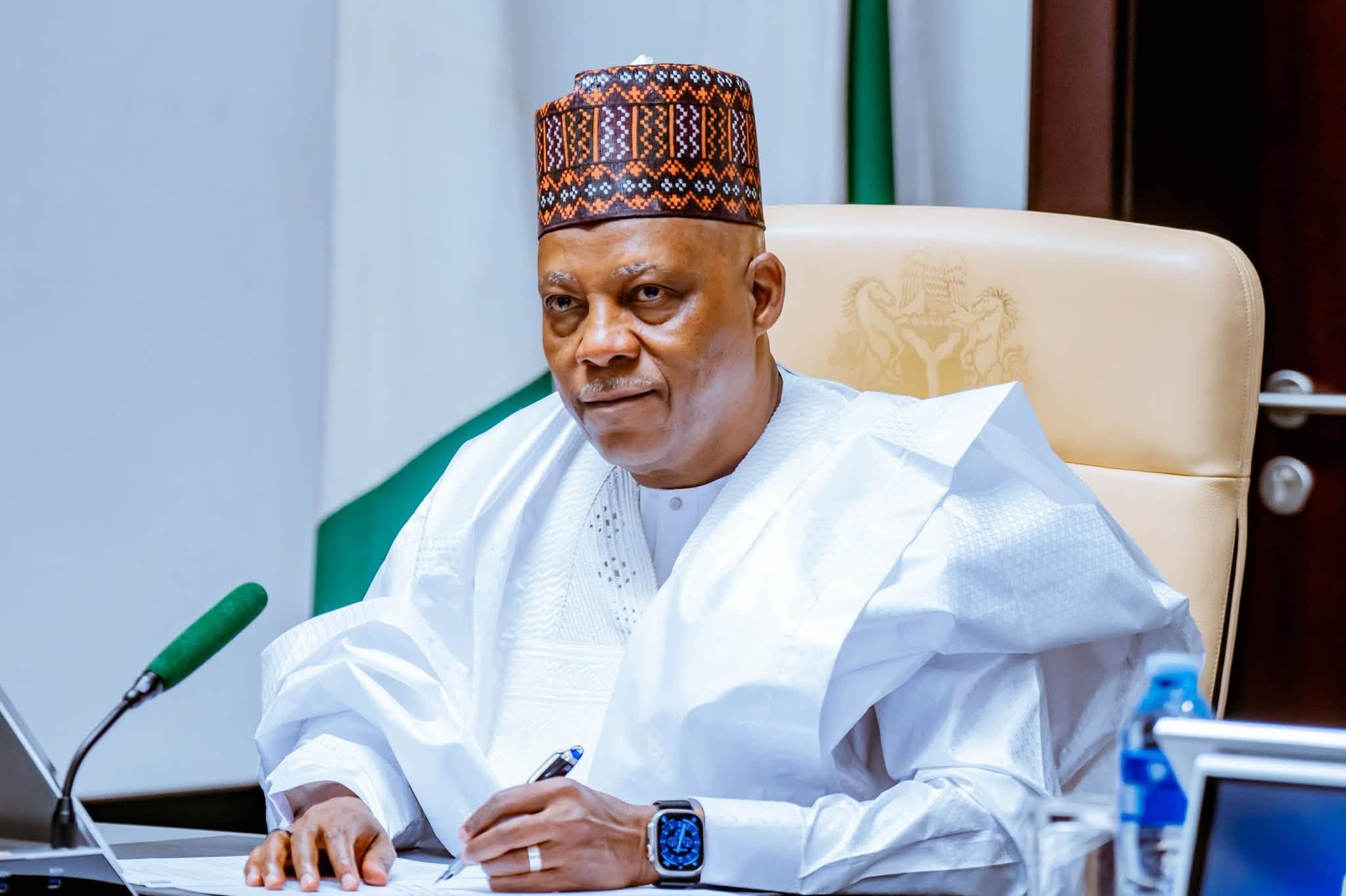
From Isaac Anumihe and Adline Elechi, Abuja
The Federal Government today flayed the fragmented nature of producing data in Nigeria which, to a large extent, results in conflicting figures.
The Vice-President, Kashim Shettima, who spoke at the 50th anniversary of the Chartered Institute of Statisticians of Nigeria (CISON), said that federal agencies, state governments, local governments and private institutions often collect information using different classifications, definitions, systems and reporting schedules.
So, the result can be duplication, gaps and conflicting figures, he said.
“We need interoperating systems, common standards and clear institutional responsibilities. The informal economy remains difficult to measure adequately. Millions of Nigerians earn their livelihoods through small businesses, informal trade, household enterprises, artisanal production and subsistence agriculture. If these activities are poorly captured, we risk underestimating economic contribution and designing policies that overlook the very people who need them the most. Agricultural statistics need greater precision and frequency. In a country where food security, rural livelihood and inflation are closely connected, reliable data on crop yields, cultivated land, livestock, storage losses and market prices are indispensable,” Shettima said.
Other News
The Vice-President, who spoke through his Technical Assistant, Fred Eklaga, maintained that information can help anticipate shortages and direct support to the life of a nation, noting that timeliness and public trust matter. Statistics that arrive late, he said, may describe yesterday’s problem, while government is already making tomorrow’s decision.
“Methodological revisions and unexplained discrepancies can also undermine confidence. Our statistical institutions must be independent in their professional judgements, transparent in their methods and accountable for the quality of their outcomes. Finally, we must strengthen statistical literacy. Data are not useful merely because they exist. Citizens, executives, legislators and public servants must understand what indicators mean, what they commit and what conclusions they can reasonably support. These challenges are not an indictment of the dedicated professionals who work on our statistical system. They are a call to equip professionals with better institutions, technology, funding and authority,” the VP further noted.
Earlier, the President of CISON, Dr Godday Ebuh, stated that for five decades, statistics in Nigeria speak for themselves more clearly, saying that population and household data, national accounts, price indices, and statistics on agriculture, health, education, labour, trade and public finance have enabled Nigerians to measure problems, expose disparities and allocate scarce resources more wisely.
“Yet, data do more than describe reality. Data go further than to describe reality. It challenges us to change it. Behind every credible indicator are professionals whose discipline, objectivity and public service help Nigeria answer two essential questions. Where are we now? And what must we do next? These are critical issues and burning issues. We therefore salute the pioneers who laid the foundations of Nigeria’s statistical system, the institutions that advance standards and professional practice; the teachers who prepare generations of statisticians, and the practitioners whose evidence has strengthened policy, research, interpretation and public accountability,” he said.
Ebuh noted that no government can predictably plan what it does not measure, manage what it does not understand, or improve what it refuses to understand. Governments must therefore provide predictable and adequate funding for the national statistical system, protect the professional and operational independence of statistical institutions; recruit, train and retain qualified statisticians, analyse administrative data and guarantee timely public access to credible statistics.