Follow Us on Google
• as IPI Nigeria President warns media in ‘distress,’ urges united front against press repression
From Juliana Taiwo-Obalonye, Abuja
Vice President Kashim Shettima has assured practicing journalists that the federal government owes them space of practice devoid of harassment, intimidation, or fear.
He underscored the indispensable role Nigerian journalists play as the nation’s foremost protection against authoritarian tendencies, emphasising press freedom as a non-negotiable principle under President Bola Tinubu’s administration.
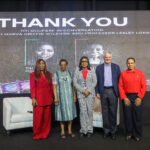
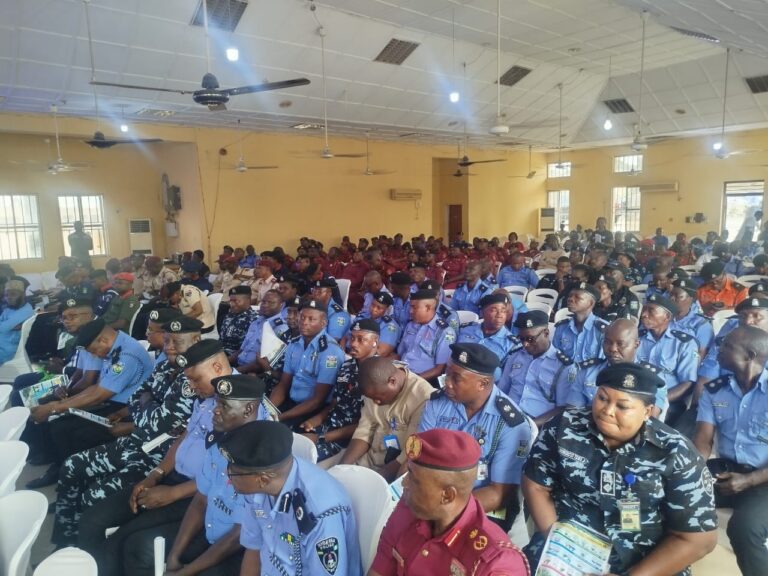
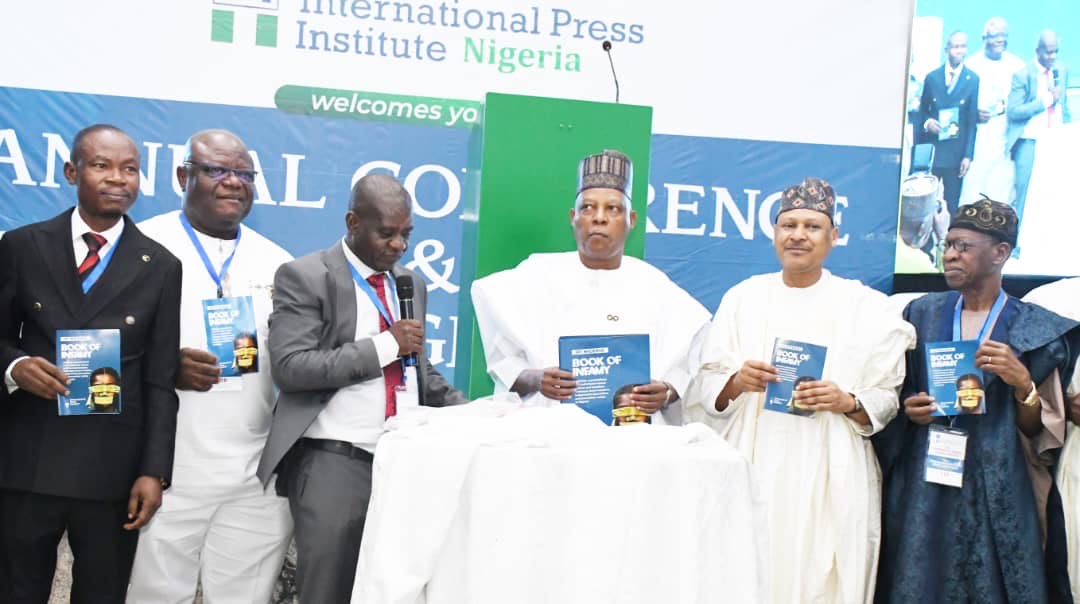
Speaking at the 2025 International Press Institute (IPI) Nigeria Conference and Annual General Meeting in Abuja, themed “Addressing Media Repression and Safeguarding Democratic Accountability in Nigeria,” Shettima stressed the government’s determination to provide journalists with a secure space free from harassment and intimidation.
“We owe you a space of practice devoid of harassment, intimidation, or fear. That much is non-negotiable. And as a government, we must continue to create an environment where truth can thrive without obstruction and where the work you do is protected rather than policed,” he declared, framing these protections as fundamental to sustaining democracy.
The Vice President highlighted how journalists have served as stabilising forces in times of national tension by correcting misinformation and holding power accountable.
Shettima praised the resilience of Nigeria’s media, stating, “It is impossible, utterly impossible, to have a successful dictator in Nigeria. Never in our history has any person or government succeeded in suppressing the media permanently.” He commended journalists for resisting foreign disinformation campaigns, saying, “You have stood firmly against disinformation and refused to surrender your pens to falsehoods or foreign puppeteers. This honourable stance sets you apart.”
Other News
Nevertheless, he challenged media practitioners to uphold high ethical standards. “There are those who fabricate stories and refuse to retract when confronted with incontrovertible evidence,” he warned, urging the profession to foster a culture that prioritizes verification over virality and nationhood over nihilism. “You have stood firm in the coldest nights of national adversity, and you have outlived those who attempted to place their boots upon your freedom. You have been the life-size mirror of our nation, reflecting us not as we wish to be seen, but as we truly are,” Shettima added, cautioning that “a nation with a silenced press becomes one where public officers lose their way and citizens lose their voice.”
Minister of Information and National Orientation Mohammed Idris reaffirmed the Tinubu administration’s commitment to enhancing press freedom and independent journalism. He described President Tinubu and Vice President Shettima as among “the most media-friendly leaders Nigeria has produced.” Idris noted that government-media relations are being actively reinvigorated and emphasized that the government operates on the principle that “a free press is the amplifier of an engaged citizenry.” He assured that security and regulatory agencies now work under stricter protocols, particularly during civil demonstrations, balancing national security needs with the protection of media freedoms. “This administration’s approach is not a retreat into control but a move to create mechanisms for dialogue and ethical reporting within Nigeria’s own cultural context,” Idris explained.
IPI Nigeria President Misikilu Mojeed said the conference aimed to critically reflect on journalism practice in Nigeria and called for collective action to safeguard journalists. “Solidarity is the journalists’ greatest line of defence,” he stressed, urging the federal government to direct state governments, security agencies, and other actors to cease harassment of journalists and bolster protections nationwide.
He emphasised the urgent need for collective action to defend press freedom, describing the current media environment as “in distress” due to increasing repression and attacks on journalists.
He stated, “Journalism is not a crime. And journalists are not criminals. The Constitution protects freedom of expression. The courts have affirmed it. But in practice, we continue to see arbitrary arrests, intimidation, censorship, and violence.”
He called on Nigerian journalists to remain united in solidarity, warning, “When a journalist is arrested in Kano, colleagues in Akwa Ibom must care. When a newsroom is attacked in Niger State, reporters in Lagos must speak out.”
Highlighting alarming statistics, he revealed that Nigeria dropped 10 places in the global Press Freedom Ranking this year, now ranked 122nd, and noted that Nigeria is “one of West Africa’s most dangerous and difficult countries for journalists.”
Mojeed recounted appalling cases including arbitrary arrests, media shutdowns, abductions, and cybercrime accusations leveraged against the media.
He urged the Federal Government to take decisive steps: “We urge the government to call state governors, security agencies, and other officials involved in impunity against media and journalists to order… Nigeria has no functioning state protection system for journalists. This must change.”
In a poignant tribute, Mojeed honoured the late Rafat Salami, IPI Nigeria’s treasurer, whose dedication to journalism despite immense suffering inspired the establishment of a prize in her name at the University of Abuja to perpetuate values of “integrity, courage, and selfless service.” He concluded by warning, “Any further attack on journalists will be fiercely resisted going forward.”
IPI Global Executive Director Scott Griffen commended IPI Nigeria’s dedication to defending press freedom amid considerable challenges and called for genuine collaboration among stakeholders to promote independent journalism in Nigeria.