Follow Us on Google
From Kenneth Udeh, Abuja
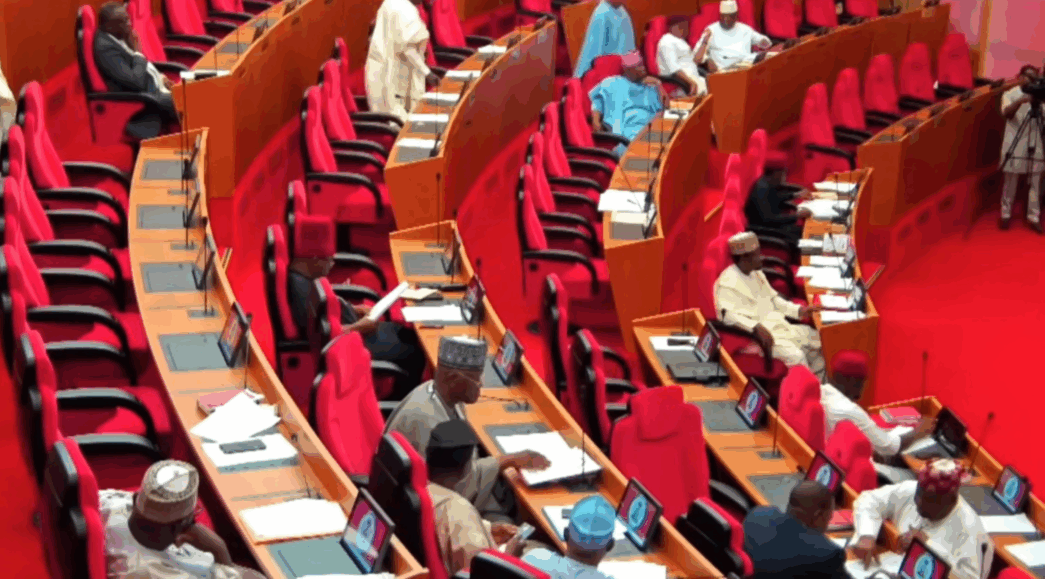
The Nigerian Senate will reconvene for an emergency plenary sitting tomorrow at 12noon, despite having earlier adjourned sittings until February 26.
The development was formally conveyed in an official notice dated February 8, by the Clerk of the Senate, Emmanuel Odo, on the directive of the President of the Senate, Godswill Akpabio.
Part of the the notice to senators read: “I am directed by the President of the Senate, Godswill Akpabio, to inform all Senators of the Federal Republic of Nigeria that an emergency sitting of the senate has been scheduled to hold on Tuesday, 10 February, 2026 by 12noon at Senate Chamber. Senators are kindly requested to note this emergency sitting date and attend. All inconveniences this will cause to Senators are highly regretted.”
This confirmation came days after the Senate adjourned plenary last Thursday following the passage of the Electoral Act (Amendment) Bill, 2026, to allow lawmakers participate in the ongoing budget defence sessions by Ministries, Departments and Agencies (MDAs) ahead of the final consideration of the ₦58.47 trillion 2026 Appropriation Bill, scheduled for March 17.
Although the official notice did not state the reason for the emergency session, the timing suggests a connection to the intense national controversy trailing the Senate’s handling of key provisions in the Electoral Act amendment, particularly Section 60(3).
During clause-by-clause consideration of the bill, the Senate, presided over by Akpabio, adopted a motion moved by Senate Chief Whip, Tahir Monguno and seconded by Deputy Senate President, Barau Jibrin, to reject the proposed Section 60(3).
The rejected amendment sought to make real-time electronic transmission of election results from polling units to the INEC Result Viewing (IReV) portal mandatory. It proposed that: “The presiding officer shall electronically transmit the results from each polling unit to the IReV portal in real time and such transmission shall be done after the prescribed Form EC8A has been signed and stamped by the presiding officer and/or countersigned by candidates or polling unit agents, where available.”
Instead, the Senate retained Section 60(5) of the Electoral Act, 2022, which states that, “The presiding officer shall transfer the results, including the total number of accredited voters and the results of the ballot, in a manner as prescribed by the Commission.”
Other News
Other rejected proposals reportedly included provisions that would have allowed voters to download or reprint missing or unissued Permanent Voters’ Cards (PVCs).
At the conclusion of deliberations, Akpabio announced the constitution of a conference committee to harmonise differences between the Senate and House of Representatives’ versions of the bill.
The Senate’s committee includes Simon Lalong, Adeniyi Adegbonmire, Tahir Monguno, Adamu Aliero, Orji Uzor Kalu, Abba Moro, Asuquo Ekpeyong, Aminu Abbas and Tokunbo Abiru.
The House committee is chaired by Bayo Balogun and includes Fred Agbedi, Sada Soli, Ahmadu Jaha, Igariwey Iduma Enwo, Saidu Musa Abdullahi and Zainab Gimba.
The Senate’s decision has since triggered reactions from civil society organisations, opposition figures, election observers and professional bodies, who argue that the move weakens electoral transparency ahead of the 2027 general elections.
In response, 13 senators across party lines, led by Enyinnaya Abaribe, addressed journalists at the National Assembly, insisting that the Senate did not reject electronic transmission of results.
Abaribe stated: “We came out to correct the wrong impression. The Senate did not, I repeat, did not reject electronic transmission of results.”
Meanwhile, civil society groups are reportedly mobilising for protests at the National Assembly to demand the restoration of Section 60(3) to make real-time transmission compulsory.