Follow Us on Google
From Okwe Obi, Abuja
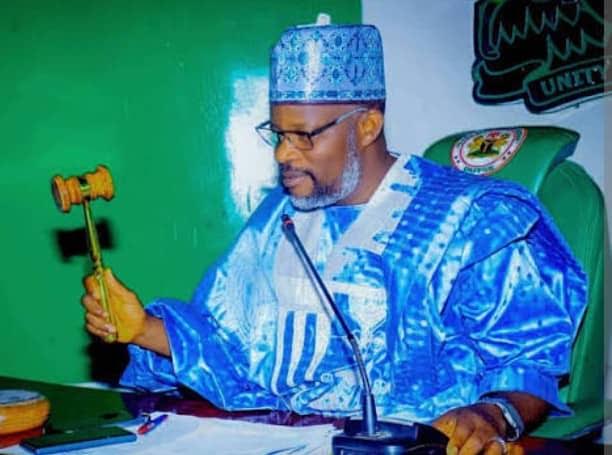
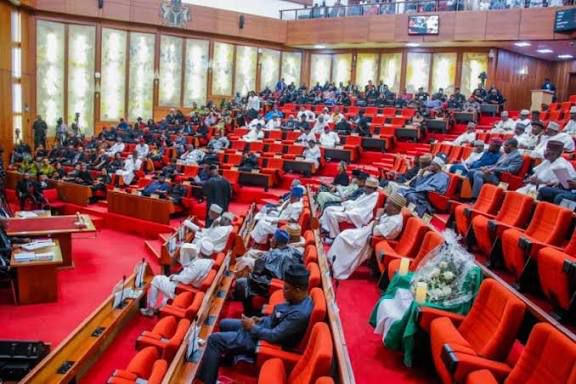
The Lawmaker representing Kwara North Senatorial District, Senator Sadiq Sulieman Umar, has said the Senate remains committed to enacting laws to create more jobs for the teeming population.
Umar, who spoke at the at the unveiling of a fashion warehouse in Abuja, said the government would partner with different organisations to create jobs for citizens.
He encouraged the Embroidery Chief and his team to look beyond the distribution of embroidery materials but fine tune ways on how to produce the machinery in the country.
Represented by the former Local Government Chairman of Kaiama Local Government Area in Kwara State, he said: “On his own part, whatever he can do by legislation and by contact with government functionary to make sure that this outfit receives support, he will do it.
“He said you should be looking further beyond the distribution of embroidery materials into bringing home the technology of producing the machinery yourselves.”
Also, the Embroidery Chief, Abdusalam Lukman, charged the Federal Government to incorporate embroidery and digital garment design into the national youth employment initiatives.
Lukman said that such an initiative would easily reduce unemployment rate, create jobs and dowse economic pressure on Nigerians.
According to him, the reason behind the launch of the embroidery business is to create job opportunities especially for young people without the need for years of university education.
He said: “Nigeria is at the point where we need to create jobs locally. Embroidery has a practical solution to this. Embroidery requires a lot of labour. It is technology-driven.
“It has a direct link to fashion, which is one of the strongest creative in the Nigeria sector. This industry can easily attract the young generation.
“So, what we want from the government is to support training and certifications, to incorporate embroidery into youth employment programmes, to give access to equipment funding easily.”
He emphasised that the beneficiaries would be taught how to operate, maintain, and digitise designs for the single industrial embroidery machine with Moroccan coding function.
“We train them to become employable and to also become employers of labour,” Abisalam explained.
While highlighting the broader economic benefits, he noted that reducing youth unemployment through such practical sectors would alleviate pressure on foreign exchange.
He said: “We started producing most of the imported items and that has reduced the pressure on foreign exchange, which is good for the economy.”
Abdulsalam solicited government partnership, positioning embroidery as a practical, technology-driven field with strong links to Nigeria’s vibrant fashion industry.
He detailed that his organisation’s training model is a blend of free training for those who purchase machines and a monthly selection of ten individuals from an online application form.
“The initiative also maintains a WhatsApp community of over 500 members to connect trained operators and designers with business owners,” he said.
On his part, a comedian, Anita Alaire Afoke Asuoha, also known as Real Warri Pikin called for legislative and governmental backing for local embroidery machinery distribution and production.
‘’Right now, we are talking about three locations. We will be talking about West Africa in no distant future.
We have talked about support systems also for the machines and all the people procuring them. Like the honourable member said, we have talked about backward integration, local production.
So, we are not just importing, but we are also becoming that powerhouse within. I think that is also very important. I am really proud to be associated with this laudable project,’’ she added.