Follow Us on Google
From Kenneth Udeh, Abuja
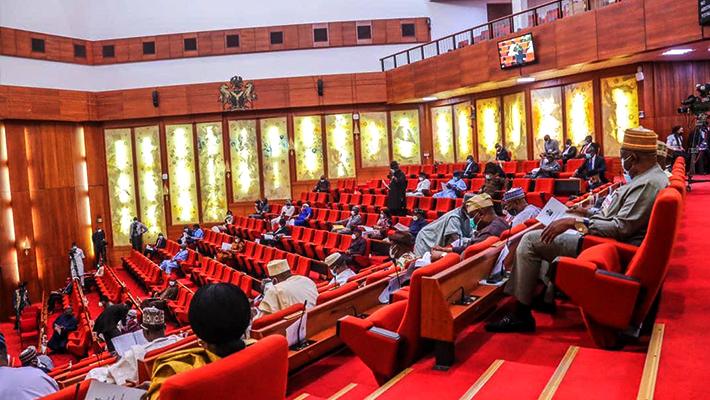
The Senate on Tuesday took a critical look at the growing crisis facing Nigerian farmers, as it considered a motion on the need to urgently address the sharp decline in prices of agricultural produce amid persistently high costs of farm inputs.
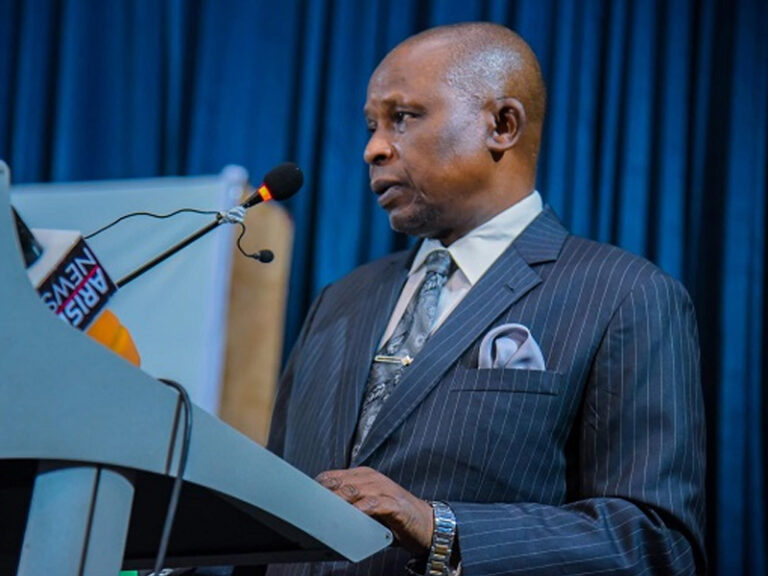
The motion, sponsored by the Senator representing Gombe Central Senatorial District, Distinguished Senator Mohammed Danjuma Goje, was debated during plenary presided over by Senate President Godswill Akpabio.
Leading the debate, Senator Goje acknowledged the Federal Government’s efforts in bringing down the prices of food items across the country through import waivers and special permissions for large scale food importation, noting that the measures had brought much needed relief to Nigerians grappling with high food inflation.
However, he warned that the same policy intervention had created a new and serious challenge for local farmers.
The Senator is his lead debate observed that while prices of farm produce have continued to decline sharply, the cost of essential farm inputs such as fertilizers, pesticides, insecticides and other agro-chemicals has remained extremely high.
This imbalance, he noted, has resulted in widespread market distortion, leading to massive post-harvest losses as farmers struggle to sell their produce at fair or profitable prices.
According to his motion, the situation has led to wastage, spoilage, income erosion and severe nutritional and economic setbacks within farming communities, gravely threatening the livelihoods of millions of smallholder farmers who form the backbone of Nigeria’s food production system and depend almost entirely on agriculture for survival.
The Senator further drew the attention of his colleagues expressing concern that the persistent fall in farm-gate prices could discourage farmers from investing in the next planting season, posing “a clear and present danger” of reduced domestic food production, rural economic stagnation and a worsening national food security situation.
The Lawmaker also warned that without urgent government intervention, the enormous labour, time and resources invested by farmers would be wasted, while Nigeria’s growing dependence on imported food commodities would weaken national food sovereignty, undermine local value chains, distort domestic markets and expose the economy to global price volatility and foreign exchange pressures.
The Senator stressed that effective coordination among Ministries, Departments and Agencies (MDAs), state governments, commodity boards, agricultural cooperatives and other stakeholders is crucial to ensuring fair pricing, adequate storage facilities, efficient transportation systems and improved market linkages.
Contributing to the debate, Senator Sunday Karimi highlighted the security challenges affecting agricultural production, noting that many farmers are unable to access their farmlands due to insecurity.
“We are all aware of insecurity in the country where farmers are not going to the farm,” he said. “There was a time this country was worried that rice was sold for almost ₦180,000 per bag.”
He acknowledged that the government’s decision to allow temporary food importation had helped bring down prices, but noted the dilemma created for farmers.
“We must be able to strike a balance between the two options,” Karimi said, stressing that while farmers deserve incentives and support, food prices must remain affordable for Nigerians.
Senator Olajide Ipinsagba cautioned against isolated price interventions, describing pricing as a function of demand and supply. He argued for a holistic regulatory framework that addresses prices of all essential commodities, warning that selective interventions could create economic imbalances.
“Prices have to do with supply and demand,” he said, adding that factors such as fuel costs and transportation expenses must also be addressed to achieve sustainable price stability.
Other News
On his part, Senator Ede Dafinone expressed reservations about introducing fresh subsidies, warning that such measures could distort market forces and echo past subsidy challenges inherited by the current administration.
“I support the move to sustain our farmers,” he said, “but I am wary of introducing a fresh subsidy at this point in our administration.”
Senator Victor Umeh defended the Federal Government’s intervention through food importation, describing it as a necessary economic response to scarcity caused by insecurity and low production.
“When there is serious scarcity of any item, the government has to intervene,” he said. “The prices that have come down are to the benefit of ordinary citizens.”
Umeh stressed that while prices must continue to fall, farmers should be supported through inputs, security and policies that encourage increased production rather than artificial price hikes.
Also contributing, Senator Sani Musa focused on the high cost and distribution challenges of fertilizers, lamenting the role of middlemen in diverting inputs meant for farmers. He disclosed ongoing efforts to reform fertilizer importation and production policies, adding that government plans to make farming implements more affordable.
He expressed optimism that with improved access to tractors, pesticides and other inputs, Nigerian farmers would record better yields and profit margins in subsequent harvest seasons.
At the end of deliberations, the Senate acknowledged the complexity of balancing affordable food prices with the protection of local farmers, insisting that urgent, well-coordinated and sustainable interventions are required to safeguard Nigeria’s agricultural sector and national food security.
Following deliberations, the Senate presided by the Senate President Godswill Akpabio made the following resolutions via prayers;
urged the Federal Government to design and implement a Special Emergency Intervention Package for farmers affected by the collapse in agricultural produce prices to cushion losses and ensure household stability.
It also called for the establishment of commodity boards to develop a framework for stabilising prices of major agricultural commodities and to implement a Guaranteed Off-take Programme, under which government would purchase produce directly from farmers at benchmark prices.
In addition, the Senate urged the introduction of broad-based subsidies for agricultural inputs, particularly fertilizers and other farm inputs, and prioritisation of investments in strategic agricultural infrastructure such as storage facilities, rural roads, processing centres and irrigation systems to reduce post-harvest losses and improve farmers’ profitability.
The lawmakers further urged the Federal Government to review the current import waiver and special import permit policies to ensure that Nigerian agricultural produce can compete favourably with imported alternatives. State governors were also called upon to take concrete steps to support farmers within their respective states.