Follow Us on Google
• Tinubu seeks confirmation of FRC, FCSC nominees
From Adesuwa Tsan, Abuja
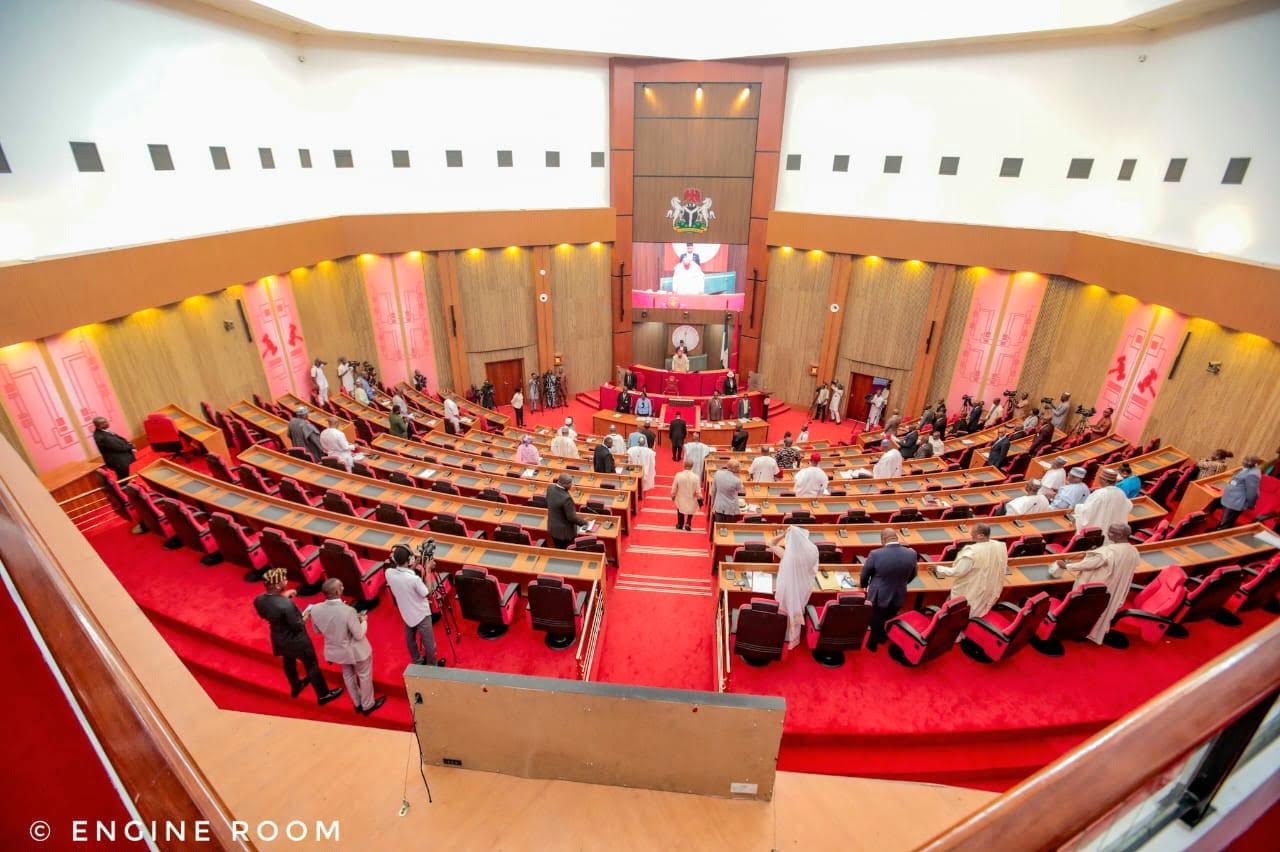
The Senate, yesterday, extended implementation of the capital component of the 2025 Appropriation Act from September 30 to December 31, 2026, to give Ministries, Departments and Agencies (MDAs) more time to complete ongoing projects and utilise funds already released.
The extension was approved through passage of the Appropriation Repeal and Enactment Act 2025 Amendment Bill 2026 after the upper chamber considered and adopted the report of the Committee of Supply.
The bill, numbered SB 1067, passed second and third readings on the same day.
On the same day, President Bola Tinubu forwarded the 2026 statutory budget proposal of the Niger Delta Development Commission (NDDC) to the Senate for consideration.
The proposal targets youth empowerment, power, education, healthcare, security and agricultural productivity in the oil-producing region.
Senate President, Godswill Akpabio, who read the President’s communication on the floor, referred the proposal to the Senate Committee on Regional Development for consideration.
Tinubu also asked the Senate to confirm Dr Abdullahi Maikano Saidu as Chairman of the Board of the Fiscal Responsibility Commission (FRC), alongside Mohammed Asmau, Mohammed Aliyu Makama and Dr Suleiman Gidado as members of the board.
The President invoked Section 5(3) of the Fiscal Responsibility Commission Act, 2007, in seeking confirmation of the nominees.
The request was referred to the Senate Committee on Finance for consideration and report within two weeks.
Tinubu also nominated Engineer Sani Ndanusa as non-career ambassador and High Commissioner-designate to The Gambia.
The nomination, made pursuant to Section 171(2)(c) and (4) of the 1999 Constitution, as amended, was referred to the Committee on Foreign Affairs.
In another communication, the President sought confirmation of Engineer Wakili Bukar as a member of the Federal Civil Service Commission (FCSC), representing Bauchi, Borno and Yobe states, for a second and final five-year term.
The nomination was referred to the Committee on Establishment.
Tinubu also transmitted the National Postgraduate Medical College Amendment Bill, 2026, which seeks to rename the institution and expand its mandate to enable it award PhD degrees in clinical medicine, dentistry and related fields.
According to the President, “The Federal Minister of Justice has vetted and finalised the Bill in line with drafting standards and constitutional provisions.”
The bill was referred to the Committee on Rules and Business.
The President further forwarded the National Research and Development Fund Establishment Bill, 2026, which seeks to consolidate fragmented research funds across ministries, departments and agencies into a single competitive funding mechanism under the Federal Ministry of Innovation, Science and Technology.
The proposed fund is expected to receive direct funding from the Nigerian Content Development Fund and strengthen collaboration among research agencies, academia and the private sector, as well as promote commercialisation of locally developed technologies.
Tinubu said the initiative would help “drive the commercialisation of homegrown technologies to reduce foreign technological dependency.”
Other News
The Senate was also informed that the President had assented to the Agricultural Research Council of Nigeria Amendment Bill, 2026, which has now become law.
Meawhile, on the extension of the 2025 capital budget, Senate Leader, Opeyemi Bamidele, said additional time was necessary to enable MDAs complete projects for which appropriations had already been made and funds released.
He said capital budget implementation involved several stages, including procurement, contract execution, mobilisation, certification of works and payment, which could not always be concluded within the existing timeframe.
“The essence of this proposed extension is to provide the necessary legal and administrative window for ministries, departments and agencies of the Federal Government to fully implement capital projects for which appropriations have been made and funds released,” he said.
Bamidele warned that allowing the September 30 deadline to expire could create difficulties for MDAs handling projects already at advanced stages.
“Allowing the current implementation deadline to lapse without providing additional time could create avoidable difficulties for MDAs in completing projects for which resources have already been appropriated and released.”
He added that a significant amount of capital funds already released to MDAs remained unutilised, while several critical infrastructure projects were at various stages of completion.
“Allowing such projects to stop or remain incomplete merely because of the expiration of the current statutory implementation period could have serious implications for value for money and could further contribute to the proliferation of abandoned or uncompleted projects.”
Bamidele stressed that the extension did not amount to a fresh appropriation.
“The bill does not seek to introduce a new appropriation. Rather, it seeks to provide additional time within the existing legislative framework for the implementation of the capital component of the 2025 appropriation, thereby ensuring that appropriated funds are utilised effectively, transparently and for the intended purposes,” he said.
Senate Chief Whip, Tahir Monguno, however, blamed delays in budget implementation partly on the centralised payment system domiciled in the Office of the Accountant-General of the Federation and urged the Executive to review the policy.
“So long as that system is not consigned to the dustbin of history, so shall we continue to have this ugly scenario of non-implementation of the budget, necessitating the National Assembly to extend the lifespan of the budget.
“So, I think there is a need for the Executive to have a look at this policy that has continued to constitute a cork in the wheel of implementation of the budget,” Monguno said.
Akpabio said the extension was necessary to prevent further proliferation of abandoned projects across the country.
“It is not good for us to have abandoned projects littered across the nation since most contractors have not either completed their jobs or have been fully paid in respect of the 2025 Appropriations Act.
“It would have been wrong for us to just allow the 30th of September to come and go without extending the period within which the Minister of Finance and the Federal Government can settle most of these contracts,” he said.
Akpabio urged the Executive to use the additional three months to settle outstanding payments and push ongoing projects towards completion.
“I hope that this extended period will be utilised to ensure that all payments are made and all necessary contracts are done for the benefit of the Nigerian people,” he said.
The legislation extends the lifespan of the capital component of the 2025 budget to December 31, 2026.
The Senate subsequently adjourned plenary till October 13, with Akpabio announcing that the Senate’s security summit would hold on October 12 and 13.