Follow Us on Google
From Adesuwa Tsan, Abuja
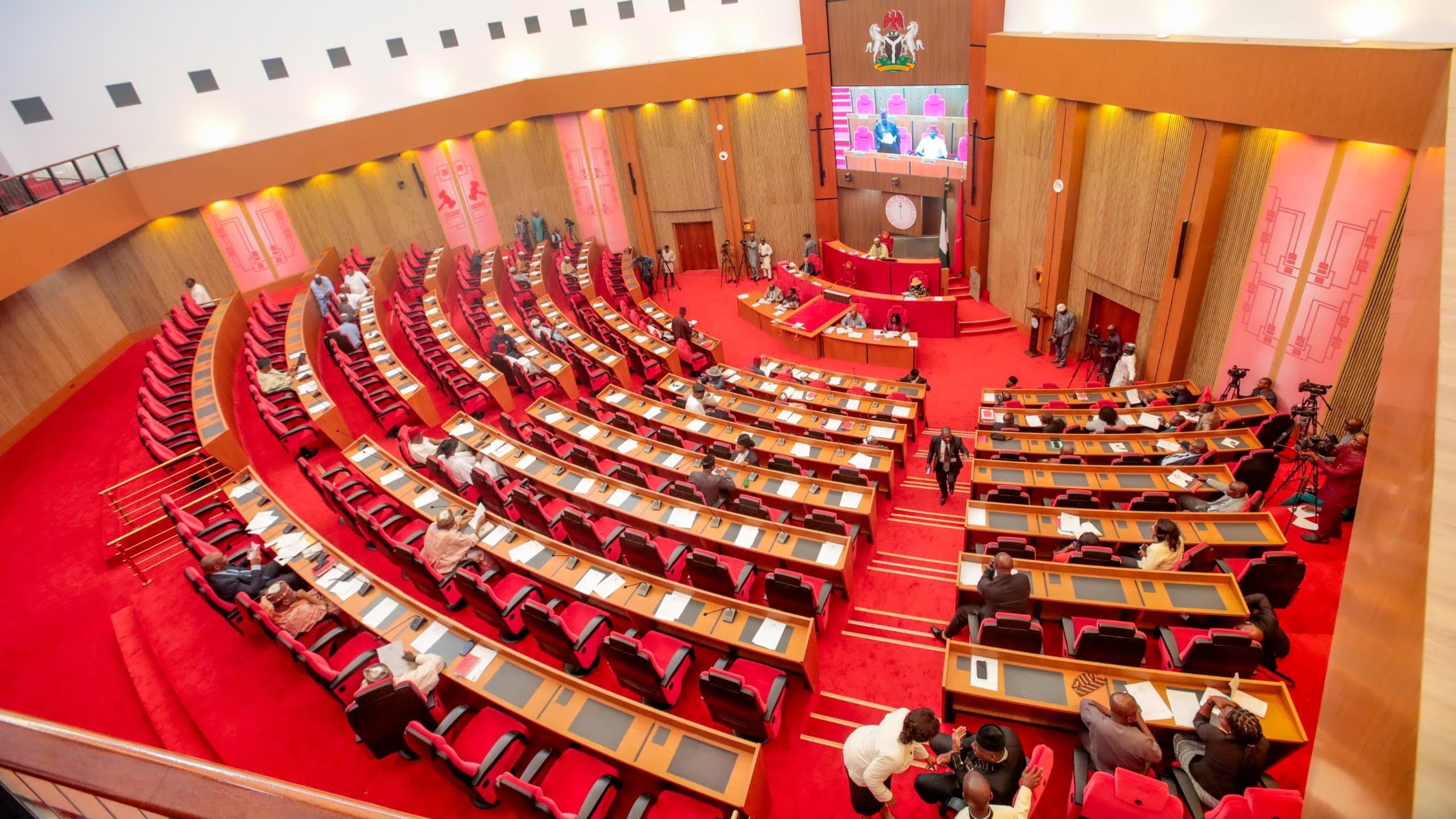
In a move to restructure the financing of the Nigeria Police Force, the Senate on Tuesday passed the Nigeria Police Trust Fund (Establishment) Bill, 2025, for a second reading, with a proposal to increase its statutory allocation to 1 per cent of revenue accruing to the Federation Account.
This comes as lawmakers voiced concerns over the fiscal burden and constitutional implications of the plan.
The legislation, sponsored by Senate Leader Opeyemi Bamidele, seeks to repeal the 2019 Act and replace it with a more comprehensive legal and institutional framework to strengthen the funding, administration, and operational support of the police.
Opening the debate on the bill, Bamidele framed the proposal as a strategic response to Nigeria’s deepening security challenges. He stated that the intervention is designed to tackle persistent issues facing the police, including inadequate funding, outdated equipment, weak infrastructure, and low morale among personnel.
According to him, the country’s evolving threat landscape—marked by insurgency, banditry, kidnapping, and cybercrime—underscores the urgency of building a modern, better-equipped policing system.
He further explained that the bill introduces a diversified funding model that goes beyond statutory government allocations to include development levies, international grants, and contributions from the private sector.
In addition, the proposal outlines enhanced governance mechanisms, such as a multi-stakeholder board and a Project Implementation Committee, aimed at improving transparency, accountability, and the efficient execution of projects under the fund.
Other News
However, despite the push for reform, the bill drew cautionary interventions from several senators.
In his contribution, Abdul Ningi warned that increasing statutory deductions could significantly deplete the Federation Account, noting that cumulative allocations may ultimately reduce the pool of funds available for distribution among the three tiers of government. He also flagged accountability concerns, particularly in relation to donor-sourced funding.
Similarly, Ibrahim Dankwambo questioned the coherence of the proposed funding structure, especially against the backdrop of ongoing national conversations around state policing, and urged clearer alignment with broader policy directions.
On his part, Abdulfatai Buhari expressed reservations about the management of the fund, advocating a performance-based disbursement model that would ensure measurable outcomes and minimise waste.
Defending the bill, Chief Whip Mohammed Tahir Monguno argued that the funding framework remains constitutionally sound, provided it is anchored on legislation duly enacted by the National Assembly.
In his remarks, Senate President Godswill Akpabio clarified that the proposed law is not limited to addressing funding shortfalls but also targets structural inefficiencies in the administration of the Trust Fund. He acknowledged the concerns raised by his colleagues and emphasised the need for a system that delivers visible and measurable impact across police formations nationwide.
Following deliberations, the Senate adopted the bill through a voice vote and referred it to the Committee on Police Affairs for further legislative consideration, with a report expected within two weeks.