Follow Us on Google
From Adesuwa Tsan, Abuja
The Senate has called on the economic team of President Bola Tinubu to commence the process of reverting to the former priority-based budgeting system, warning that the current envelope framework had outlived its usefulness and is undermining effective service delivery.
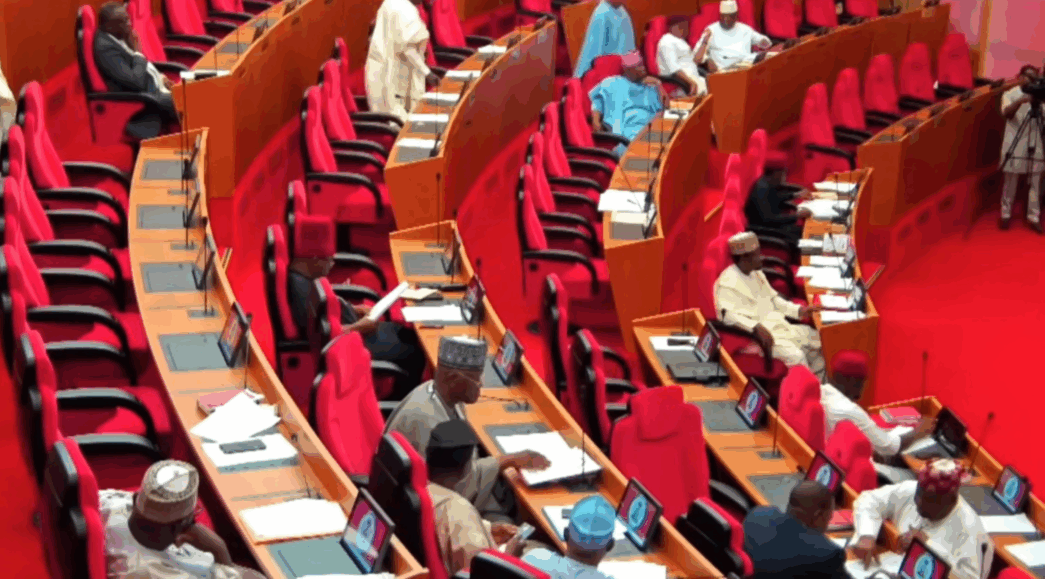
The position was made known yesterday by Chairman of the Senate Committee on Finance, Sani Musa, during an interactive hearing and budget defence session with the federal government’s economic management team at the National Assembly.
In attendance at the session were the Minister of Finance and Coordinating Minister of the Economy, Wale Edun; the Minister of Budget and Economic Planning, Senator Atiku Bagudu; the Chairman of the Nigeria Revenue Service, Zach Adedeji; representatives of the Group Managing Director of the Nigerian National Petroleum Company Limited (NNPCL); the Governor of the Central Bank of Nigeria; and the Comptroller-General of Customs, among others.
The lawmakers also urged President Tinubu to immediately remove the Registrar General of the Corporate Affairs Commission (CAC), Hussein Magaji, for repeatedly failing to honour invitations extended by the Senate Committee on Finance.
Describing the engagement as timely and critical, Musa said Nigeria’s 2026 fiscal cycle must go beyond routine macroeconomic adjustments to embrace structural reforms capable of repositioning the economy for sustainable growth and fiscal resilience.
“This meeting is not routine. The 2026 fiscal cycle must reflect not only macroeconomic adjustments, but structural reforms capable of repositioning our economy for sustainable growth, fiscal resilience and development,” Musa said.
He explained that recent budget performance reviews with heads of Ministries, Departments and Agencies (MDAs) exposed significant weaknesses in the envelope system, which he said prioritises expenditure inputs rather than measurable performance outcomes.
“The incremental allocation model has outlived its usefulness. It promotes routine expenditure expansion rather than strategic prioritisation,” he stated.
According to him, the existing system makes it difficult to realistically assess budget implementation and fiscal discipline.
“You can see on paper that there is money, but where is the money? If, by December, we cannot assess ourselves realistically, then the system is failing. We must return to a disciplined budget cycle where one fiscal year ends before another begins,” Musa added.
He stressed that Nigeria must urgently transition to a performance- and priority-based budgeting framework aligned with global best practices.
“Nigeria cannot aspire to global competitiveness while operating a budgeting framework anchored in outdated assumptions. We need to do a new economic outlook. We need to go back to advanced countries,” he said.
Also speaking, Senator Jimoh Ibrahim called for sweeping reforms in revenue management and data infrastructure, lamenting the absence of an integrated national revenue tracking platform.
“How do we monitor revenue when we do not even have a national server?” he queried.
“It is not good that we do not have a public service email system, not Gmail, not Yahoo, but official .gov addresses. Every public servant should have an official email, and we must build a central server and data bank. Any economy without data is too weak,” he added.
Lawmakers further questioned the utilisation of budget support approved for the implementation of the 2024 and 2025 budgets, amid concerns over poor releases for capital projects.
Musa warned that delayed fund releases, weak revenue remittances and under-execution of capital projects were eroding public confidence in the budgeting process.
Other News
“These patterns widen fiscal deficits, weaken service delivery and erode the credibility of the budgeting process,” he said, emphasising that borrowing must translate into productivity, infrastructure development and long-term growth.
Senator Orji Uzor Kalu urged the economic team to focus more on improving the microeconomic environment so that Nigerians at the grassroots can experience tangible economic relief.
Similarly, Senator Victor Umeh of Anambra State questioned claims of economic improvement tied to the strengthening of the Naira, arguing that it could reflect weak liquidity in the economy.
“If the Naira is strong against the dollar, it shows that we don’t have money to buy the dollar. People don’t have money to buy the dollar, therefore, the monetary value of the dollar will be going down. If you pay contractors now, the demand for dollars will go up,” Umeh said.
He also criticised the slow implementation of the 2025 budget, noting that February was almost over without significant capital releases, thereby shortening the effective lifespan of the budget.
In his response, Finance Minister acknowledged that although government revenue had improved, high debt servicing costs were placing significant pressure on available resources.
“Though revenue has increased, the high interest on debt servicing is draining it. We are servicing debt running up to N152 trillion,” he said, adding that about N30 trillion was inherited from the previous administration, while the current government’s contribution was “in the 20s.”
On the proposed return to priority-based budgeting, Edun said the process would begin with MDAs before being reviewed by the finance team and ultimately approved by the president.
“The prioritisation will be from MDAs first, then the finance team, and then Mr President will have the final say. The payment method will be improved. We should not throw the baby away with the bath water but seek to improve it,” he added.
Edun further assured lawmakers that efforts were ongoing to boost remittances to the Federation Account, citing President Tinubu’s directive on NNPCL remittances as part of broader revenue optimisation measures.
On the controversy surrounding the CAC Registrar General, Kalu moved a motion calling for his immediate removal, describing his repeated failure to appear before the committee as disrespectful.
“This man has been insulting the Senate and we cannot take it anymore,” Kalu declared, with the motion seconded by Senator Adams Oshiomhole.
Ruling on the matter, Musa said: “Any MDA that we invite almost every time will tell us that he is in the villa.”
“The Registrar General has refused on so many occasions to honour the invitation and the calls of this committee. Section 89 has given us this power.”
The committee warned MDAs against ignoring legislative oversight, stressing that compliance with invitations is a constitutional obligation.
“Oversight is not an optional courtesy. It is a constitutional requirement,” Musa said.
Meanwhile, as the Senate awaits the executive bill proposing amendments to the Petroleum Industry Act, the committee directed the NNPCL to submit detailed documentation on its remittance obligations to the Federal Government, including compliance levels and timelines.