Follow Us on Google
Earmarks crude oil production benchmark of 1.84mbpd, ₦1,512/$ exchange rate, 4.68% GDP growth for 2026, slashes crude price per barrel to $60
From Adesuwa Tsan, Abuja
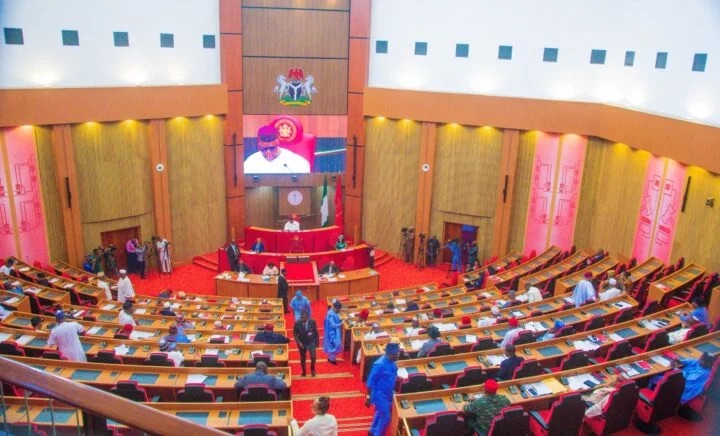
The Senate has approved the 2026–2028 Medium-Term Expenditure Framework (MTEF) and Fiscal Strategy Paper (FSP) sent by President Bola Tinubu for consideration and approval.
This was sequel to the consideration and adoption of the report of its Committee on Finance on the 2026–2028 Medium-Term Expenditure Framework (MTEF) and Fiscal Strategy Paper (FSP), which was laid by Sani Musa on Thursday.
Endorsing key macroeconomic benchmarks and fiscal assumptions proposed by the Federal Government, the lawmakers sustained the benchmark for domestic crude oil production at 1.84 million barrels per day (mbpd) for 2026, with output projected to rise to 1.88mbpd in 2027 and 1.92mbpd in 2028.
The committee noted that the projection reflects improved optimism compared with earlier assumptions under the 2024 fiscal framework, which had been impacted by persistent production challenges.
For crude oil benchmark, the Red Chamber reduced the prices of US$64.85, US$64.30 and US$65.50 per barrel for 2026, 2027 and 2028 respectively, to US$60 for 2026, US$65 for 2027 and US$70 for 2028 in recognition of the global geopolitical tensions in Europe and the Middle East and the sensitivity of global crude oil price.
On foreign exchange, the report endorsed an exchange rate benchmark of ₦1,512 to the dollar for 2026, improving to ₦1,432.15 in 2027 and ₦1,383.18 in 2028. The committee said the projections align with the Central Bank of Nigeria’s policy objective of stabilising the naira through improved coordination between fiscal and monetary authorities, following heightened volatility witnessed in 2024.
The Senate also sustained inflation projections of 16.5 per cent for 2026, 13 percent for 2027 and 9 per cent for 2028, expressing confidence in the monetary authority’s commitment to moderating inflationary pressures over the medium term. This contrasts with the elevated inflation outlook under the 2024 projections, which reflected exchange rate adjustments and rising energy costs.
On growth, the framework projected a real Gross Domestic Product (GDP) growth rate of 4.68 per cent for 2026, rising to 5.96 per cent in 2027 and 7.9 percent in 2028. According to the committee, the projections are anchored on ongoing economic reforms and the expected gains from tax reforms, which are anticipated to begin yielding stronger outcomes from 2026.
In line with the activation of the Tax Act and broader fiscal reforms, the committee recommended the implementation of a national scanning policy within the national single window of the Nigerian Revenue Service, in collaboration with relevant agencies. The measure, it said, would enhance revenue assurance, reduce leakages, improve trade facilitation and strengthen transparency and national security.
On the fiscal framework, the report put proposed federal government spending for 2026 at ₦54.46 trillion, with projected Federal Government retained revenue of ₦34.33 trillion. New borrowings were estimated at ₦17.88 trillion, covering both domestic and foreign loans, while debt savings were valued at ₦15.52 trillion.
The committee further sustained provisions for pensions, gratuities and retirees’ benefits at ₦1.376 trillion, with the fiscal deficit projected at ₦20.13 trillion. Statutory transfers were put at ₦3.152 trillion, while 2sinking fund contributions were estimated at ₦388.54 billion.
Total recurrent non-debt expenditure was projected at ₦15.265 trillion with special intervention spending for recurrent and capital expenditure pegged at ₦200 billion and ₦14 billion respectively.
Presenting the report, Senator Musa said all oil benchmarks, revenue projections and fiscal assumptions were comprehensively captured in the document. He expressed appreciation to the Senate leadership and members of the Committee on Finance for their commitment to the assignment.
“It is our sincere hope that the approval of these recommendations will serve as a catalyst for sustainable economic prosperity in this country,” he said.
With the adoption of the report, the Senate cleared the way for the Federal Government to proceed with the preparation of the 2026 Appropriation Bill in line with the approved 2026–2028 medium-term fiscal framework.
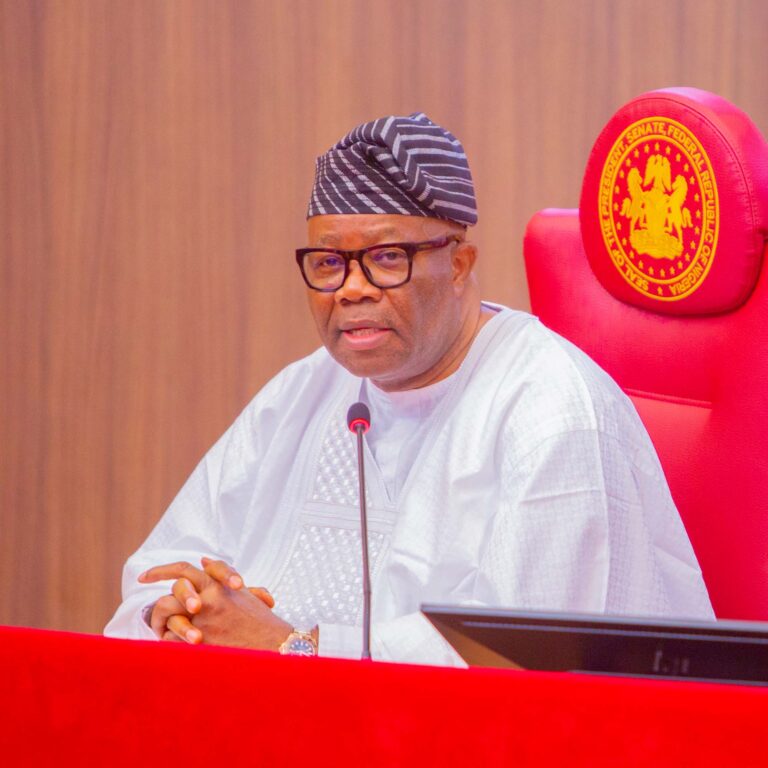
In his remarks, Senate President, Godswill Akpabio, disclosed that the 2026 budget presentation by President Tinubu will be done between “today and 31st December.”
He also emphasised that the MTEF-FSP document approved is a working document that can be adjusted if the need arises, adding that its passage was necessary to enable the executive to lay the proposed 2026 budget.