Follow Us on Google
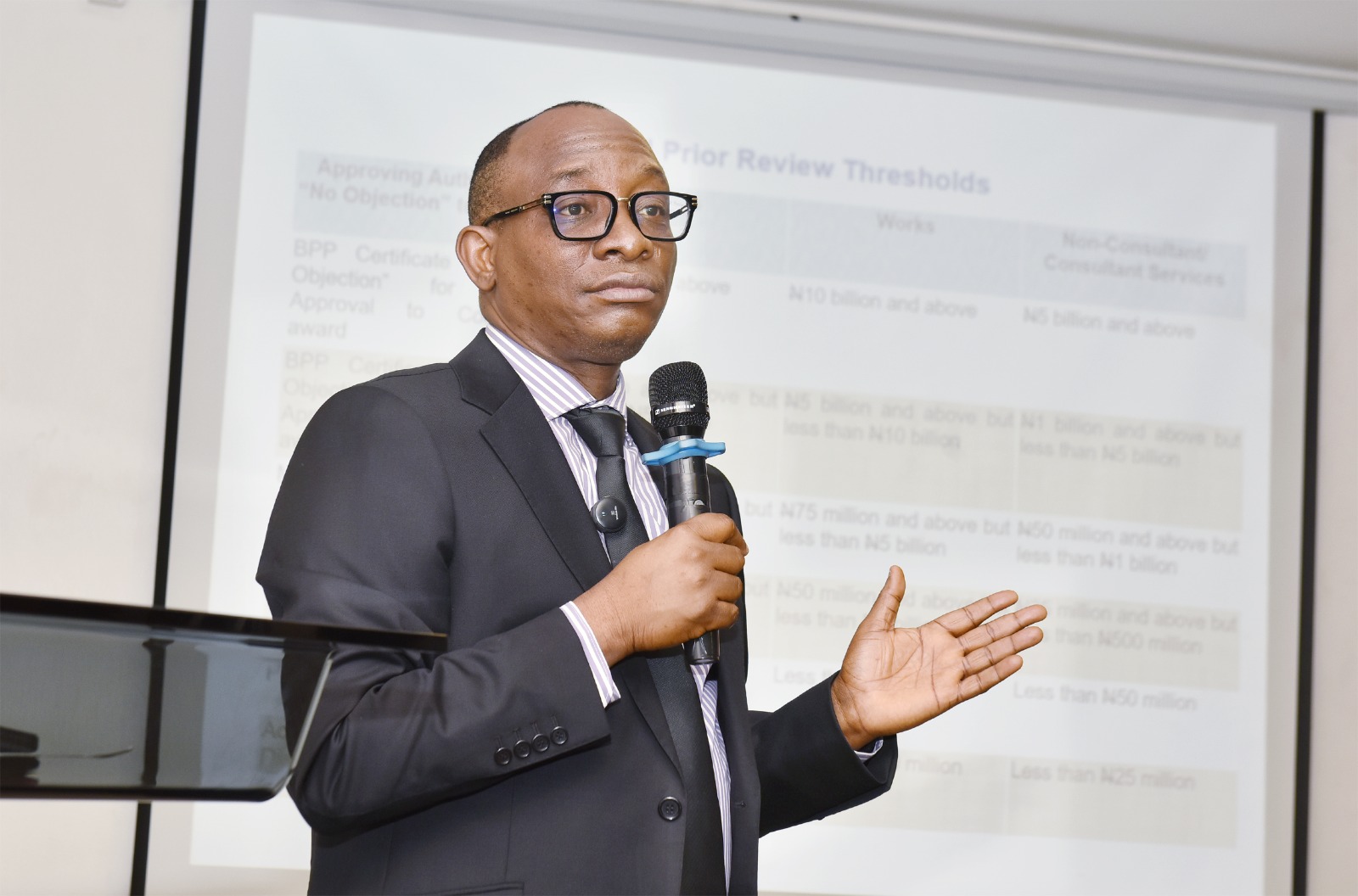
The Bureau of Public Procurement (BPP) has charged Civil Society Organisations (CSOs) to partner with the agency to enhance transparency in the procurement process.
The Director-General, BPP, Adebowale Adedokun, stated this on Wednesday in Abuja at the official launch and unveiling of the Advocates for the Promotion of Transparent Procurement Initiatives (APTPI), a CSO pushing for greater oversight of the procurement process.
Adedokun, while stating that the Federal Government’s procurement reforms were yielding results, noted that there was a need for gradual institutionalisation and awareness among stakeholders.
Nonetheless, the BPP boss also challenged civil society organisations to broaden their scrutiny of public procurement beyond the federal government, saying the sub-national level controls a significant portion of public funds.
According to him, “Have you thought about states? You know, states are taking loans. And I think this, your group should also think well. While we focus on federal, the bulk of the money is at the sub-national level.
“And they are getting money, how well are they doing procurement processes? Why we focus on federal? The big pie is at the sub-national level.”
He explained that the Bureau’s long-term agenda included the development of a National Procurement Strategy that would bring the federal, state and local governments under a common procurement framework.
Other News
“Part of the key agenda going forward is what I call National Procurement Strategy that combines federal, state and local government together,” Adedokun said.
The Secretary, APTPI board, Ayorinde Dola-Johnson, in his remarks, stated that the size of the 2026 budget, which provides approximately N32.2 trillion for capital expenditure, makes procurement governance an issue requiring the attention of all stakeholders.
Dola-Johnson noted that the critical question begging for an answer was not how much government planned to spend, but how much value Nigerians would derive from the expenditure.
According to him, procurement failures could result in loss of public resources through inflated prices, poor planning, weak competition, unnecessary variations, abandoned projects, contract splitting, ineffective supervision, and other inefficiencies, with citizens ultimately bearing the consequences.
He explained that the APTPI was established to bridge the gap between public institutions, citizens, procurement professionals, researchers, development partners, and civil society.
“We believe government institutions must be held accountable, but we equally recognise the enormous operational, institutional and fiscal pressures under which many public officials work,” Dola-Johnson said.