Follow Us on Google
The Senate Committee on Customs has commended the Nigeria Customs Service (NCS) for generating ₦7.3 trillion in 2025, surpassing its ₦6.5 trillion revenue target for the year.
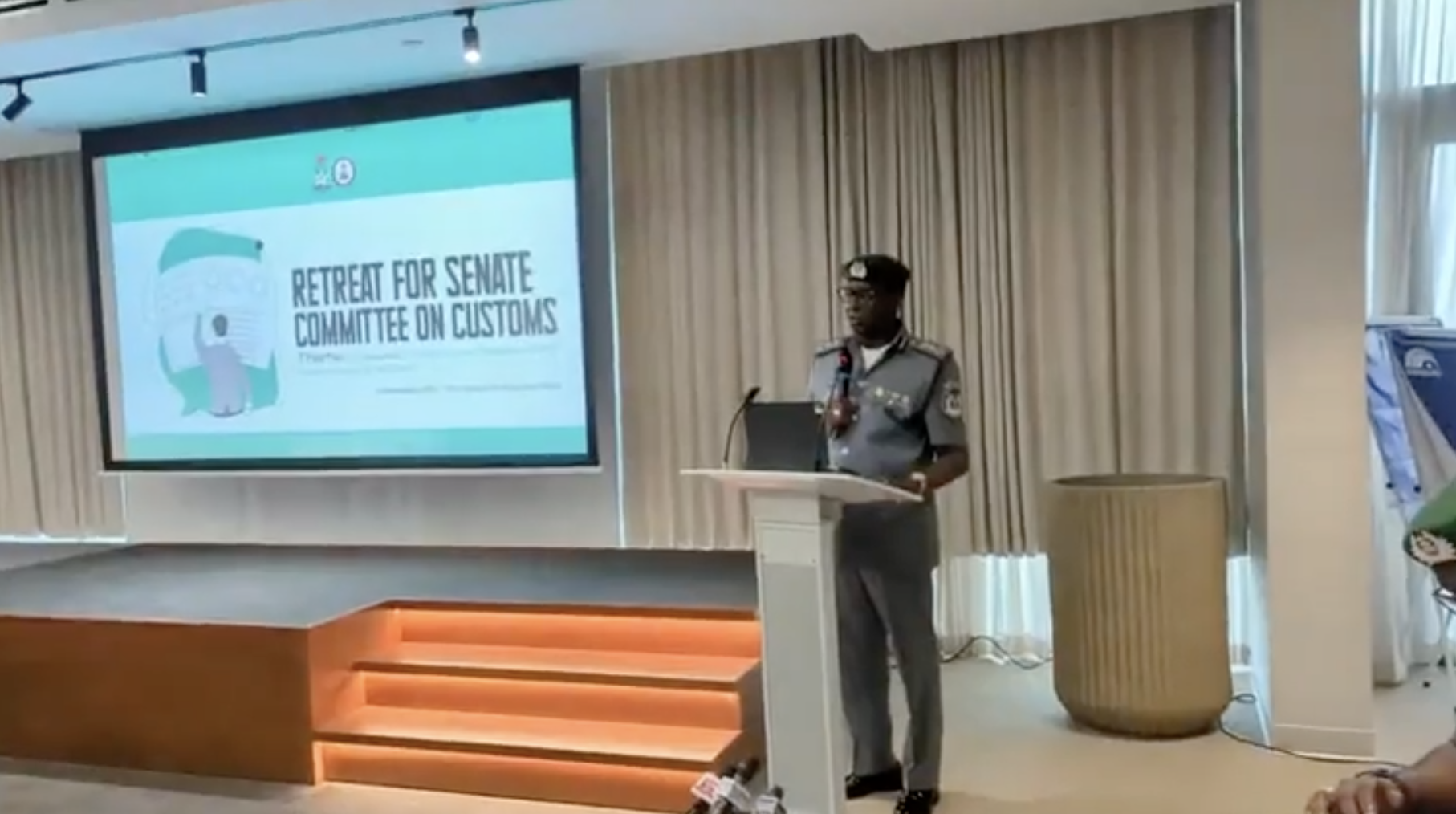
The commendation came during a retreat themed “Legislative Oversight in the Context of NCS Modernisation and Reforms”, organised for the committee on Wednesday in Abuja.
Declaring the retreat open, the committee’s chairman, Senator Jibrin Isah, praised the Service under the leadership of Comptroller-General Bashir Adewale Adeniyi, citing improved revenue generation, trade facilitation and anti-smuggling operations.
“We must commend the Nigeria Customs Service under the leadership of Comptroller-General Bashir Adewale Adeniyi for surpassing its revenue target in 2025. There has been a quantum leap in revenue generation, improved trade facilitation, and robust anti-smuggling activities,” he said.
Isah, who commended the Comptroller-General, the management and staff of the Service for the performance, urged the NCS to identify and address its operational challenges to achieve even stronger results in 2026.
He pledged the committee’s readiness to provide legislative support where needed, assuring that members would emerge from the retreat as better advocates for the Service.
The lawmaker also congratulated Adeniyi on his re-election as Chairperson of the World Customs Organization (WCO) Council, describing it as a major achievement for Nigeria and evidence of the country’s growing recognition in global customs administration.
Other News
In his keynote address, Adeniyi called for stronger engagement between the legislature and the Service beyond periodic accountability sessions, arguing that oversight built solely on such encounters remains weak.
He disclosed that the Service collected ₦7.27 trillion in 2025, exceeding its target by 10.24 per cent, and had already generated ₦3.35 trillion between January and May 2026, alongside a decline in smuggling activities.
The Comptroller-General, however, cautioned against measuring performance by figures alone, insisting that sustainable revenue growth must be anchored in stronger systems rather than favourable economic conditions such as currency adjustments.
He explained that modernisation within the Service is aimed at replacing officers’ discretion with standardised rules, risk-based systems, automated valuation references and data-driven targeting to reduce vulnerabilities in customs operations.
Adeniyi credited the Nigeria Customs Service Act 2023 with providing the legal framework driving reforms, including electronic processing, advance rulings, Authorised Economic Operator status and sustainable funding mechanisms. He also thanked lawmakers for providing the legal environment that has enabled the reforms.
He urged the committee to focus its oversight on systemic outcomes rather than isolated incidents, specifically citing cargo release times and the exemption and waiver regime as areas warranting closer legislative scrutiny, while pledging the Service’s openness to constructive criticism.