Follow Us on Google
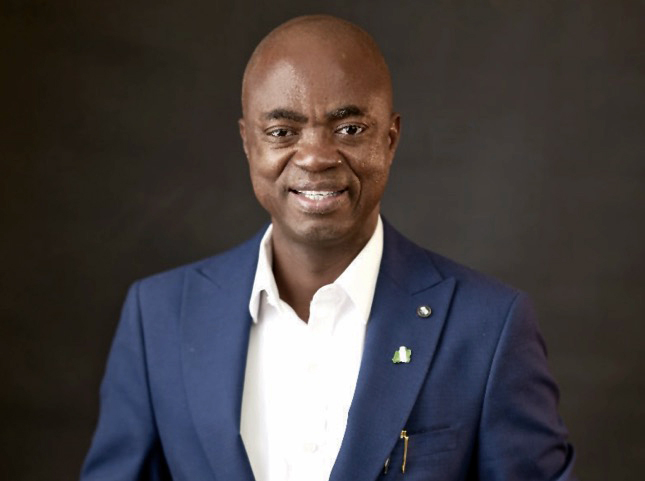
By Adeobowale Johnson
Nigeria’s worsening security challenges have once again come under intense scrutiny following a strongly worded open letter by security expert and strategist, Mathew Ibadin, who is urging the Federal Government to establish a massive emergency intervention fund for the Nigeria Police Force to strengthen internal security and restore public confidence in law enforcement.
In the detailed communication addressed to President Bola Ahmed Tinubu, Ibadin commended the appointment of Inspector General of Police (IGP) Tunji Disu, describing him as “one of Nigeria’s finest police officers,” while stressing that meaningful reform of the police would remain difficult without urgent and substantial financial support.
According to the security expert, the country is facing a critical moment in its internal security management, one that requires bold investment, strategic planning, and a renewed commitment to modern policing. He argued that the Nigeria Police Force, despite being the primary agency responsible for internal security, has remained chronically underfunded for decades.
“I am beaming a search light on serious setbacks which, if eliminated, would enhance the success of the new IGP,” Ibadin wrote, noting that many of the obstacles confronting the police today have hindered the performance of previous Inspectors General.
At the heart of Ibadin’s proposal is the creation of an Emergency Intervention Fund (EIF) valued at no less than N3 trillion, which he believes would provide the financial backbone needed to overhaul the Nigeria Police Force and reposition it to meet modern security demands.
He noted that since the administration of former President Alhaji Shehu Shagari, which ended in 1983, Nigeria has not implemented any dedicated emergency funding framework specifically for the police.
“Achieving success is an uphill task without adequate funding,” Ibadin stated, emphasising that no organisation can deliver results when resources are insufficient.
Drawing comparisons with past reforms, he recalled how the Shagari administration invested heavily in police equipment, tactical hardware, and specialised units such as mobile police formations and Special Weapons and Tactics teams.
“The government invested heavily in police gear and tactical hardware like Armoured Personnel Carriers, assault rifles, and other advanced arms precisely for the police,” he wrote, adding that intelligence operations were also strengthened to enable proactive crime prevention.
One of the major operational deficiencies highlighted in the letter is the absence of adequate aviation capability within the Nigeria Police Force. Ibadin pointed out that while South Africa operates dozens of police helicopters, Nigeria – with a significantly larger population — has only a handful of functional aircraft for law enforcement operations.
“South Africa has about 47 police helicopters with a population of about 65 million people, whereas Nigeria with a population of over 240 million people has less than three functional police helicopters,” he noted.
He argued that at least 50 helicopters would be required to effectively support surveillance, rapid deployment, and emergency response operations across the country.
Beyond air support, he also raised concerns about the shortage of operational vehicles, stating that each state requires hundreds of patrol vehicles to ensure effective policing.
“At least 500 operational vehicles are required for each of the 36 states and the Federal Capital Territory to enable the police carry out their operations effectively,” he said.
Another troubling issue identified by the security strategist is the financial burden often placed on citizens who report crimes to the police.
He observed that individuals frequently bear the cost of transportation, logistics, and investigations — a situation he described as abnormal and counterproductive.
“Any case involving logistics, transportation or investigation more often than not is funded by the person who brought the case to the Nigeria Police,” Ibadin wrote, contrasting the practice with what obtains in many developed and developing countries.
He further lamented the poor welfare conditions of police personnel, especially junior officers, describing their living conditions as among the worst in the public service.
“The living condition of Nigeria police officers, especially the junior ranks, are among the most deplorable in the country,” he stated.
Ibadin also questioned the adequacy of retirement benefits for officers who dedicate decades to national service.
“How can you pay a retirement benefit of just about N2.5 million in today’s Nigeria after a police officer has served the country for 35 years?” he asked.
The open letter also addressed the strained relationship between the police and the public, noting that low trust levels have been fuelled by allegations of corruption, inefficiency, and inadequate professionalism.
According to Ibadin, these challenges are closely linked to poor funding and weak institutional support.
Other News
“The Nigeria Police Force has long struggled with earning the respect of the public they serve,” he wrote, adding that improved welfare, training, and operational capacity would help rebuild confidence.
He stressed the need for modern training in emerging security fields such as cybersecurity, intelligence gathering, and digital investigation, warning that outdated skills could limit the effectiveness of officers in combating sophisticated criminal networks.
“The Nigeria Police Force should be thoroughly trained on modern security courses such as cybersecurity, intelligence and investigation,” he said.
Ibadin also highlighted the growing threat of crime on Nigeria’s highways, linking the problem to inadequate patrol coverage and poor deployment of security personnel.
He suggested that thousands of mobile police officers recently withdrawn from VIP protection duties could be redeployed to strengthen highway security.
“Withdrawing 11,566 mobile police officers from VIPs was an excellent move by Mr. President,” he wrote. “However, most of the MOPOLs are now redundant. That may make them constitute a security risk.”
To address the situation, he proposed the establishment of buffer zones and mini barracks along major highways to support officers on duty and improve response time during emergencies.
Another major concern raised in the letter is the absence of a comprehensive national crime database within the Nigeria Police Force.
Ibadin warned that poor data management has weakened investigations and allowed repeat offenders to escape proper tracking.
“The absence of a comprehensive and interconnected database in the Nigeria Police Force leads to inefficient investigations,” he noted.
He also criticised the current recruitment process, which he believes relies too heavily on quota systems rather than merit.
“Policing is a profession and must be treated as such,” he wrote, advocating the recruitment of young professionals trained in fields such as criminology, forensic science, cybersecurity, and drone operations.
While acknowledging President Tinubu’s commitment to police reform, Ibadin stressed that the success of the current police leadership would depend largely on sustained government support and decisive action.
He referenced previous statements by the President affirming the administration’s resolve to modernise the police.
“I will transform Nigeria Police into a modern professional force,” President Tinubu had declared during the Nigeria Police Award and Commendation Ceremony in Abuja. “Our ideas of a modern police force go beyond superficial changes.”
Ibadin also cited remarks by the Chief of Defence Staff, who recently emphasised the importance of strengthening the police to address Nigeria’s complex security challenges.
“Armed Forces alone cannot solve Nigeria security challenges,” the defence chief had stated.
A Blueprint for Reform
In conclusion, the security expert maintained that establishing an Emergency Intervention Fund remains the most practical path to transforming the Nigeria Police Force into a modern, efficient, and respected institution.
He emphasised that meaningful reform requires urgent investment, strategic leadership, and sustained political will.
“It will be very difficult, if not impossible, for any police officer appointed to head the Nigeria Police to effect significant positive changes without an emergency intervention fund,” Ibadin warned.
Describing the proposed fund as a national security necessity rather than a financial luxury, he urged the Federal Government to act swiftly.
“Establishing an Emergency Intervention Fund for the Nigeria Police is crucial to enhance their capacity to tackle security challenges, improve operational effectiveness, and boost morale,” he stated. “It is time for the federal government to prioritise this initiative, ensuring our police force is equipped to safeguard Nigeria’s security and stability.”