Follow Us on Google


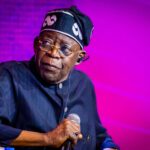
The first part of this piece was published on May 4, 2023, exactly 25 days to the inauguration of the 16th President of Nigeria, Bola Ahmed Tinubu. Coincidentally, as expected, his first official meeting was to address the economic brouhaha, which raged across the country disrupting many businesses and eventually setting many tongues of opponents and proponents of his economic policy wagging and nagging, as many were surprised over the issue of the removal of fuel subsidy. The government should investigate deeper into this issue, which the immediate past President described as “a scam”.
Buhari had argued how during his time as a petroleum minister, from 1976 to 1978, there was no mention of subsidy payment.
When he ran for President in 2011, Buhari, who doubled as the minister of petroleum resources, criticised former President Goodluck Jonathan’s proposal to end fuel subsidies, calling it a fraudulent policy.
Buhari had vehemently contended that there was no fuel subsidy in an interview, claiming that the economic strategy had given the previous administration a way to grease the wheels of corruption.
He had boosted that, if elected, hwe would end fuel subsidies and further lower the price of petrol, or premium motor spirit, at the pump.
“Who is subsidising who?” he queried while explaining why subsidy payment was a fraud.
“If anybody told me about subsidy, he is a fraud. There is so much fraud I don’t want to talk about, but the day I have to talk about it, I will invite a petroleum economist to come and tell me who is subsidising Nigerians,” he fumed.
“What I understand that Nigeria should charge Nigerians is the cost of one barrel at the wellhead and then the cost of transportation to the refinery, the cost of refining it and its cost at the pump.”
Frankly, Buhari completely failed in his official duty as the President of the Federal Republic of Nigeria by allowing fraud in the system he supervised. He noticed the trend of fraud and left it to flow to this distasteful level and all he could do was to cry foul, instead of handing the files of the organization to any of the anti-graft agencies for thorough investigation, thereby bringing those responsible to face the law.
The same lackadaisical attitude was exhibited in the Nigeria Air scandal, where a borrowed plane was painted in Nigeria’s colours. Was that not a fraud? Yet the government kept sealed lips and went on to organize a “corrupt” ceremony. As it stands, Nigerians are critically studying the body language of the President Tinubu administration just as they erroneously studied the body language of President Buhari, to see Tinubu has the willpower to investigate the alledged oil subsidy fraud. Maybe for the first time a past President would be recalled from retirement for questioning, afterall, Buhari appointed himself as the petroleum minister of Nigeria against all odds, and he is not above the law of the land.
Available data shows that the expected average daily truck-out is 64.96 million litres of petrol. According to Buhari’s finance minister, Zainab Ahmed, the daily payment for subsidy was N18.39 billion.
These disclosures were made before a session of the ninth National Assembly House ad hoc committee looking into the regime of petroleum subsidies from 2017 to 2021. She said, “The total amount of subsidy is N18.397 billion per day,” adding, “So, if you are projecting for the full year, it would be N6.715 trillion. If you are projecting for half a year, it would be 50 per cent of that.”
She added that independent oil marketers received a subsidy of N1.774 trillion over a four-year period.
It is, therefore, very clear that the Tinubu administration may not have been well briefed on the true situation on the table before assumption. In as much as one would be pitying Tinubu, he had already forewarned us all not to empathize with him, afterall, his eyes were wide open before accepting the offer. Another Herculean task is how he would face the security leaders who may still be looking at him as a “civilian” as it may not have dawned on them that the man who addresses them is constitutionally their President and Commander-in-Chief. This is Tinubu’s first face-to-face meeting with service chiefs and other security chiefs; he was only used to addressing the state police commissioner as a governor. This time round, he is in control of security all over the country, unlike when he was in charge of Lagos State.
The frank talk of the President at the first meeting with security leaders surely was to closely and personally assess the level of commitment, patriotism and respect for both the President and the country.
All the security leaders served under the previous administration and their scorecards are well known to Tinubu as well as ordinary Nigerians and critical security observers.
Security is an open secret and there are agencies that need to be rejigged for better performance while there are those whose performance were not up to expectations, and there are security organizations whose performances are noteworthy.
Indeed, most of the security leaders want to continue in office despite their poor performance. Others are rejigging their strategies to conform with Tinubu’s security policy.
Among security institutions that have buckled up and redoubled their efforts so far are the National Drug Law Enforcement Agency, the Nigerian Army, Nigerian Navy, Economic and Financial Crimes Commission, Nigeria Customs Service, Directorate of State Services (DSS), Nigeria Air Force, the Civil Defence Corps, Nigeria Police and the Nigeria Immigrations Service.
The President needs no soothsayer to point out the security institutions that had over the years contributed to solving problems of insecurity in the country.
Even Nigerians are aware of security agencies whose performance has been stellar.For instance, a village located along the Nigerian border was surrounded by bandits who attacked and killed several villagers, including their village head, and kidnapped over 20 women and youths. Meanwhile, the village head had earlier made a clarion call to the government to improve security in the village.
Definitely, the villagers know who to hold responsible for the security lapses that eventually led to the heinous attack.
Furthermore, members of a church that was ransacked by armed hoodlums in the city centre, know which security agency is to be held responsible for failing in their constitutional responsibility to protect lives and properties.
(To be continued)
SECURITY QUOTE
“You cannot have a disharmony in an orchestra like the Nigeria security, if you want to secure the country.”
(President Bola Tinubu’s remarks to the intelligence services on disunity among security agencies)