Follow Us on Google

From Isaac Job, Uyo
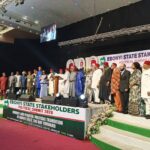
Worried by the spate of financial flows from Nigeria and African continent to Europe, America and other countries, SecFin Africa in partnership with Africa Network For Environmental and Economic Justice ( AEEJ) have trained Civil Society Organizations ( CSOs) and the media to check trends of illicit financial flows from Nigeria and Africa to other parts of the world.
Addressing participants during a 2 day workshop in Uyo on the theme: “Strengthening CSOs and Media Capacity to Contribute to the Fight Against Illicit Financial Flows (IFFs), Executive Director, Africa Network For Environmental and Economic Justice (ANEEJ) Rev. David Ugolor observed that illicit financial flows continue to pose one of the most serious threats to Nigeria’s economic stability.
Ugolor listed avenues of siphoning funds in Nigeria to include corruption, money laundering, procurement fraud, tax evasion, trade mis invoicing, profit shifting and other illicit practices .
He explained that Nigeria has lost much funds that would have been channeled into education, healthcare, infrastructure, environmental protection and job creation.
“The scale of this losses on yearly basis should trouble everyone of us.
“The burden of these falls hardest on ordinary citizens. Resources that should have expanded public services and lifted communities out of poverty are instead diverted away from national and state development priorities.
“The results are weaker public institutions, diminished trust in government, deepening inequality in many parts of the country and worsening insecurity”.
He mentioned the present Benin- Sapele road where the contractor is reported to have carted away N140b leaving the people to face untold hardship.
“Benin-Sapele-Warri failed road project has caused untold hardship to Nigerians.
“This is a clear case of illicit financial flows as the people continue to suffer”, he added.
Ugolor recalled that Nigeria has built a robust legal , policy and institutional architecture such as EFCC, ICPC NFIU and Code of Conduct Bureau , Bureau of Public Procurement to tackle illicit funds challenges .
He regretted that the siphoning of funds abroad continued to persist despite the efforts of government agencies that could stop the menace.
He disclosed that the persistence of illicit fund flows showed that the legal frameworks and federal institutions alone were not enough to checkmate perpetrators of these financial crimes .
“They must be matched by vigilant citizens, active state governments and empowered civil society working together at every level. This is precisely where civil society organizations come in.
“CSOs serve as a bridge between citizens and public institutions, they raise awareness, track public spending, push for policy reform, demand accountability and give voice to communities affected by poor governance and corruption”.
Ugolor said the workshop would equip participants with practical knowledge and tools to understand illicit financial flows, Nigeria legal and institutional response mechanisms and based approaches to advocacy and accountability.
He, therefore, called on CSOs’ representatives to arm themselves with outcomes of the training to handle challenges of illicit financial flows in Nigeria and Africa.
The Operations Coordinator for SecFin Project Philippe Pacaud in his remarks said that some of the illicit funds from Nigeria and Africa are used to sponsor terrorism and corruption.
“It is known to us that illicit funds flows are used to sponsor terrorism and we must tackle it immediately”, he said.
The Economic and Financial Crimes Commission in a goodwill message to participants at the workshop noted that over N1.230trn have been siphoned from Nigeria in the last one year and urged resource persons to evolve strategies where illicit financial flows can be blocked in Nigeria and Africa.
The Commission which was represented by the Head of Public Affairs Theresa Nwosu said the partnership was necessary to develop new plans and modalities to check the illicit trends.
“The time has come for CSOs to join in the advocacy to stop illicit financial flows from Nigeria and Africa continent to other parts of the world”.