Follow Us on Google
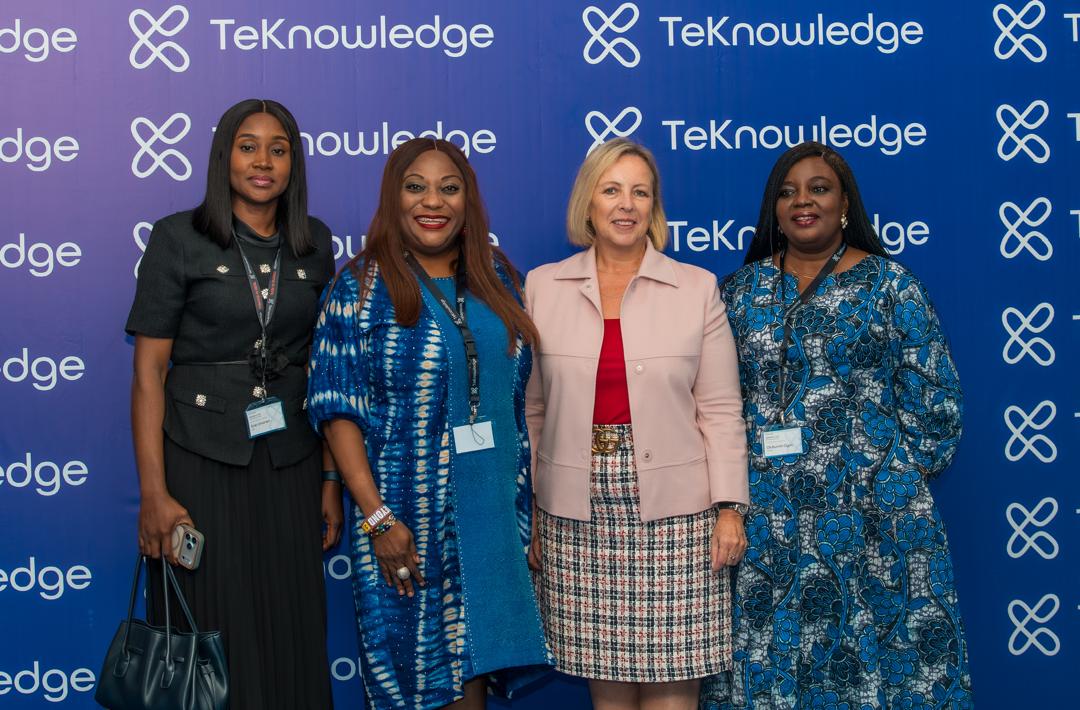
Women need to play a more active role in shaping how artificial intelligence is developed, governed and deployed, rather than simply adapting to decisions made by others, speakers and participants at the Women in AI Executive Forum hosted by TeKnowledge in Lagos, have said.
Held under the theme “Why Women Voices Matter in the Age of AI,” the forum brought together more than 30 senior women leaders and emerging female professionals through a mentor-mentee format to explore the leadership skills, opportunities and responsibilities that will matter as AI transforms workplaces and societies.
The discussion focused on a fundamental question: How do we ensure that the future of AI is shaped by diverse perspectives?
Opening the conversation, Aileen Allkins, President and CEO of TeKnowledge, challenged participants to think beyond simply using AI tools and consider their role in understanding and influencing the technology.
“We need to move away from just knowing how to use AI to understanding how it is built, the kind of data AI uses and how decisions are made,” Aileen said. She emphasised that women leaders do not need to become AI engineers or technical specialists to participate meaningfully in the conversation. Instead, they need the curiosity and confidence to learn, ask questions and engage with issues around AI policy, risk, data, governance and impact.
“Women have a unique opportunity because very few people know everything about AI right now. We can research, learn and put ourselves in the room and have a voice,” she said.
The forum also featured a roundtable discussion between mentors and mentees on the leadership qualities that will matter most in the AI era. Participants identified curiosity, courage, judgement and discernment as critical qualities for leaders navigating an increasingly AI-enabled world.
For emerging women professionals, the discussion also highlighted the importance of mentorship in helping the next generation understand not only the opportunities AI presents, but also its risks and implications.
Ola Williams, Chief Growth & AI Officer for Microsoft Middle East and Africa who joined Aileen in leading the conversation on “Leading in the Age of AI: Why Diverse Leadership Creates Better Outcomes”, urged women leaders to move beyond simply experimenting with AI and take a more active role in determining how it is integrated within organisations.
“The question is not whether we are all using AI today. It is more about leading the conversation within an organisation and making AI work in a way that ethically drives business outcomes,” she said.
She also emphasised the responsibility of today’s leaders to prepare the next generation of women for an environment in which AI will increasingly shape careers, workplaces and opportunities.
As AI becomes more deeply embedded across organisations, participants discussed the importance of human judgement and responsibility. While AI can generate recommendations and options, leaders must still be able to question those outputs, understand their implications and determine whether they align with organisational values and objectives.
The forum reinforced the role of mentorship in this process. By pairing experienced women leaders with emerging professionals, the conversation created an opportunity for participants to share perspectives on navigating AI, while encouraging mentors to help their mentees build the confidence and understanding required to participate in future AI-related decisions.
Aileen encouraged participants to leave the forum with a practical commitment rather than allowing the conversation to remain at the level of dialogue.
She urged women to identify one thing they could do differently, whether learning more about AI policy, understanding how AI tools are being used in their organisations, asking questions about the data behind those tools or simply becoming more informed about the risks and opportunities AI presents.
The Women in AI Executive Forum represents a step in that direction, while forming part of a broader series of engagements that TeKnowledge plans to convene to keep the conversation moving and create more opportunities for women to engage with the implications of AI.
For TeKnowledge, the objective is not simply to increase awareness of AI, but to encourage more women leaders to become informed participants in the decisions that will shape its future. As Aileen noted during the forum, the future of AI will continue to evolve, but human qualities such as creativity, empathy, judgement and intuition will remain important.
The objective now is to ensure that women are not only prepared for that future but are actively helping to shape it.