Follow Us on Google
By Rita Okoye
Amid a rapidly evolving global biomedical landscape, the call for stronger antimicrobial stewardship interventions and increased professional training in microbiology and biotechnology is becoming increasingly urgent.
It is predicted that antimicrobial resistance will result in more deaths than cancer, diabetes, and hypertension, put together, in 2050. Hence the need for urgent interventions including a One Health approach.
From the challenges of fake drugs, fake doctors, unauthorized pharmacists (chemists), failing medications, inadequate medical interventions, inappropriate diagnostics, improper disposal of medical wastes, corruption, among others, experts say that the future of science depends not just on groundbreaking discoveries but on the people trained to carry them forward. We need to
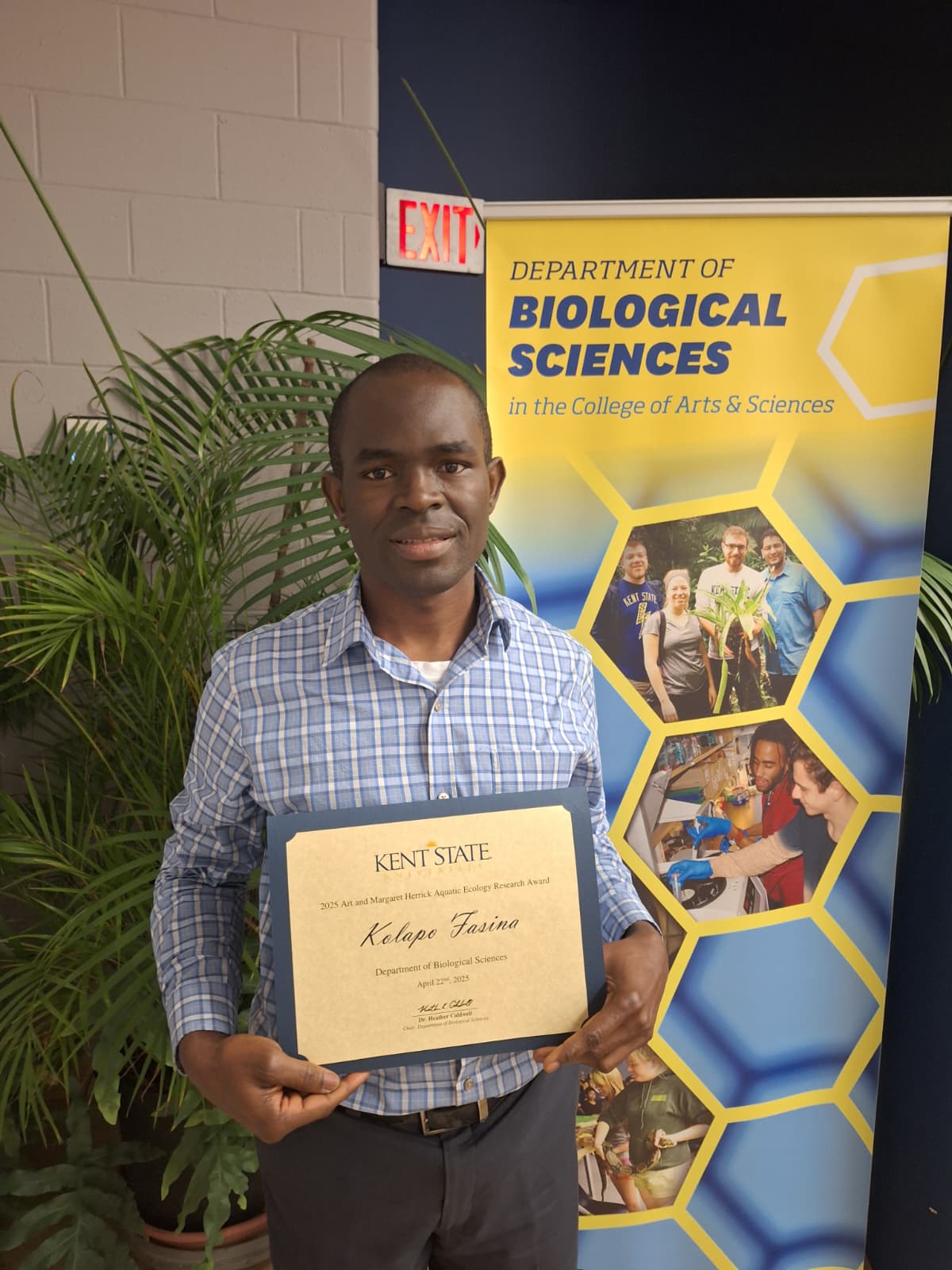
One voice contributing to this conversation is Kolapo Fasina, a doctoral researcher in Cell and Molecular Biology at Kent State University, Ohio.
Through his dual roles as a Graduate Teaching Assistant and Logistics Coordinator, Fasina has been directly involved in shaping the laboratory experiences of students in General Microbiology, ensuring they acquire not just technical competence of managing microorganisms around us, but how they develop antimicrobial resistance and how it can be mitigated.
“Too often, the next generation of scientists struggle not because they lack interest, but because they lack access to consistent, practical training and mentorship,” Fasina explains in discussions about his teaching work.
His role involves designing experiments, coordinating with teaching assistants, and guiding students from diverse backgrounds in laboratory methods—work that has highlighted the importance of mentorship as a tool for excellence in science education.
This emphasis on mentorship also comes at a time when institutions worldwide are grappling with the scourge of pandemics, economic recessions, leading to loss of research funds. For Fasina, whose background spans microbiology and agricultural biotechnology in Nigeria and biomedical research in the United States, the issue is personal. His years at the Rubber Research Institute of Nigeria, where he advanced from the position of Research Officer to Principal Research Officer in the biotechnology division, revealed how as a young scientist, he was able to make significant progress despite limited resources. Through collaboration with fellow and senior colleagues within and outside RRIN, he was able to consistently harness research opportunities and make progress.
Now, at an R1 university in the U.S. where there are more resources for research at his disposal, he sees a different challenge: the young scientists are highly distracted with social engagements and entertainments, keeping the from exploring their full academic potentials. The need to mentor and carefully guide younger people in STEMM fields such as antimicrobial stewardship is becoming more expedient.
In Fasina’s study, he observed that many rivers are burdened with the continuous release of effluents from wastewater treatment plants (WWTPs). These WWTPs obtain sewage from diverse places; particularly healthcare-related facilities such as hospitals, pharmaceutical companies, care homes, apartments, etc., making rivers potential reservoirs of emerging pollutants such as pharmaceuticals and antimicrobial resistance genes. His study detected several ARGs from such rivers, demonstrating a new horizon for antimicrobial stewardship. Since most global antimicrobial stewardship initiatives have focused on healthcare facilities, Fasina sees this new approach of mitigating AR from the bottom up, and he has used mentoring of undergraduate students at KSU in the use of cutting edge research facilities with the hope of building the next generation of stewardship warriors.
Fasina’s view aligns with the broader shift in scientific communities. Organizations like the American Society for Microbiology (ASM), where he was a Fellow of the prestigious Future Leaders Mentorship program (2023–2025), have increasingly highlighted mentorship as a cornerstone of scientific progress. His selection for the fellowship placed him among a global cohort of scientists tasked with rethinking how mentorship can empower young researchers and strengthen the pipeline of scientific talent. Also, the mentorship he receives from his academic advisor and co-advisor at Kent State has greatly improved his critical thinking skills, grant writing and scientific prowess.
The impact of this approach can already be seen in Fasina’s recognition at Kent State. Since 2022, he has received several awards including the Three Minute Thesis Competition Award at Kent State University, which is a global competition developed by the University of Queensland, Australia, currently being done in over 200 universities in the world. He has also secured research awards and grants from the American Society for Microbiology, Canadian Society of Microbiologists, among other prestigious organizations, honoring his efforts and encouraging him to carry out his proposed academic endeavors and present his projects at local and international conferences. This recognition underscores the broader point: mentorship is not ancillary to science—it is central to building a resilient and innovative research culture.
Today, Kolapo now engages in mentorship activities involving several undergraduate and graduate students at KSU. He mentors incoming graduate and higher-level undergraduate students on scientific research skills, conference presentation skills, and career development. These efforts have resulted in his mentees securing university-wide funding opportunities to support their research, including KSU’s Summer Undergraduate Research Experience (SURE). Others have been able to make college experience more seamless, by making well-informed choices on the right labs to work, present papers at conferences, as well as secure great opportunities post-graduation.
For countries like Nigeria, where Fasina began his career, the implications are even more pressing. Limited funding, infrastructural challenges, and brain drain continue to threaten scientific development. But bridging these gaps, he argues, requires more than policy shifts—it requires committed professionals who can guide and inspire the next generation, just as much as it requires investment in laboratories and technology.